Hyperlocal AI Compute Pods
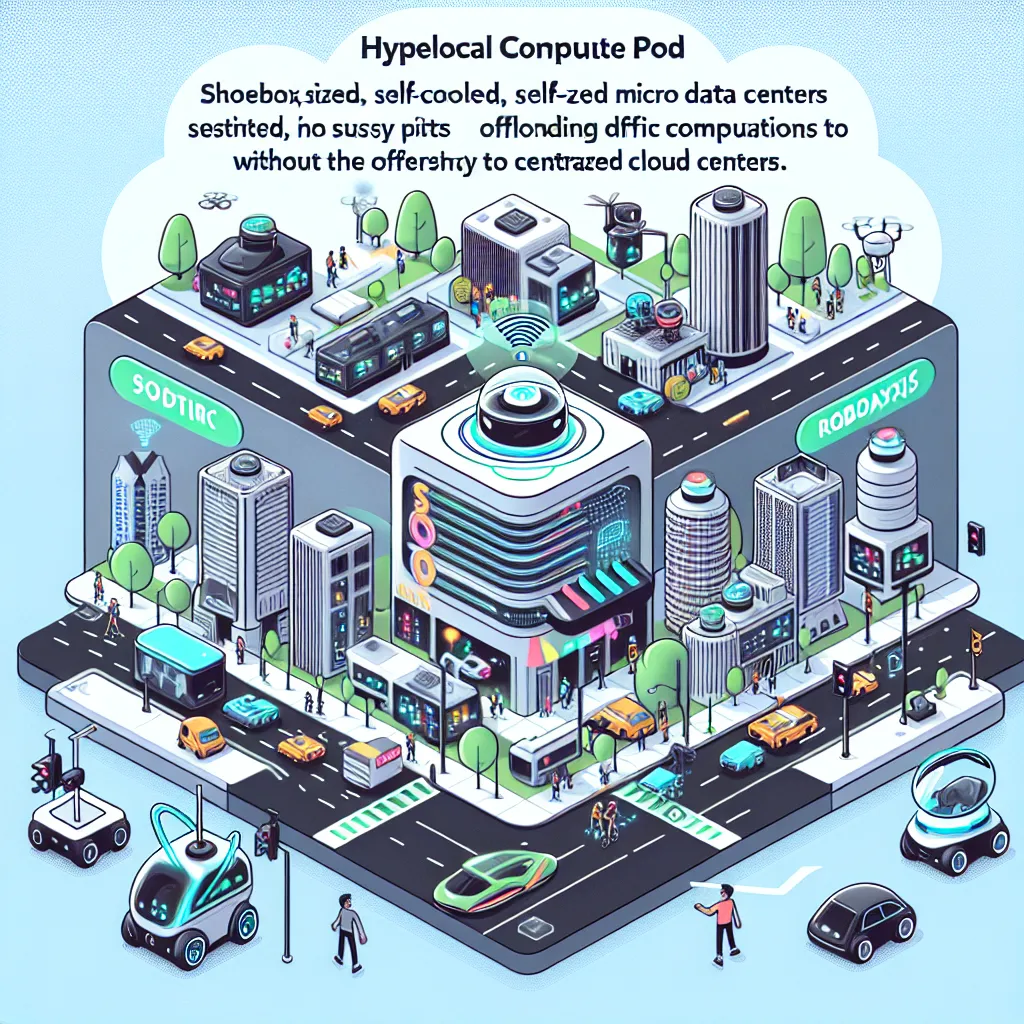
Centralized compute slows down real-time AI tasks. Hyperlocal Compute Pods — shoebox-sized, self-cooled micro data centers — placed in urban hotspots would allow latency-critical apps like autonomous vehicles, drones, or AR glasses to thrive. Why now? As AI edges into the physical world, proximity matters more than raw horsepower. Example: A city grid deploys compute pods at every major intersection, allowing robotaxis and smart traffic lights to offload computation instantly and securely without needing a round trip to centralized cloud centers.
Description
No additional description provided.
The Pitch
The relentless advancements in artificial intelligence are pushing the boundaries of what's possible in real-time applications like autonomous vehicles, drones, and augmented reality glasses. However, as AI continues to make inroads into the physical world, the traditional model of centralized computing is becoming a bottleneck. The latency involved in sending data back and forth to distant cloud centers is proving to be a critical issue, especially for applications that require near-instantaneous processing. This scenario calls for a paradigm shift in how computational tasks are handled, paving the way for Hyperlocal Compute Pods.
The Problem Centralized cloud computing, while powerful, introduces latency that hampers the performance of real-time, latency-critical applications. For instance, an autonomous vehicle navigating through a busy city cannot afford delays caused by distant server processing. Each millisecond lost can be the difference between smooth navigation and potential hazards. As AI-driven applications become more integrated into everyday life, the proximity of computation resources to the point of data generation becomes paramount.
The Solution Enter Hyperlocal Compute Pods: self-cooled, shoebox-sized micro data centers strategically placed in urban hotspots. These compute pods bring the power of cloud computing right to the edge, drastically reducing latency and enabling real-time AI applications to function seamlessly. By deploying these pods at key locations, such as major city intersections or high-density urban areas, latency is minimized, providing a fast, reliable, and secure system for data processing.
Product Details - **Form Factor**: Compact, shoebox-sized units for easy deployment in urban environments. - **Cooling System**: Self-contained, energy-efficient cooling mechanisms to ensure optimal performance without external cooling infrastructure. - **Security**: Built-in security features, including encryption and secure boot, to prevent unauthorized access. - **Scalability**: Modular design that allows for scaling according to demand, supporting various AI and IoT applications. - **Connectivity**: Provides seamless integration with existing network infrastructure, ensuring reliable data transmission and reception.
Tools for Launching an MVP - **Edge Computing Frameworks**: Utilize platforms like EdgeX Foundry to manage devices and data at the edge. - **Containerization**: Employ Docker or similar tools to ensure consistent deployment and operation across various environments. - **Monitoring Solutions**: Implement solutions like Prometheus for real-time monitoring and diagnostics of the compute pods. - **Orchestration Tools**: Use Kubernetes for easy management and scaling of containerized applications.
Go-to-Market Strategy - **Partnerships**: Collaborate with city planners and infrastructure companies to integrate compute pods into urban development projects. - **Pilot Programs**: Launch pilot initiatives in tech-forward cities to create proof-of-concept deployments and gather valuable feedback. - **Industry Collaborations**: Partner with automotive, telecommunications, and smart city developers to expand application use cases. - **Public Awareness**: Conduct educational campaigns to highlight the benefits of reduced latency in safety-critical applications like autonomous vehicles.
Business Model - **Subscription Model**: Offer a subscription service for businesses needing dedicated compute pods for their applications. - **Usage-Based Pricing**: Charge based on the amount of computational power used, similar to current cloud computing pricing models. - **B2B Partnerships**: Establish agreements with businesses that require edge computing solutions, providing tailored packages and support.
Conclusion As AI increasingly interacts with the physical world, reducing latency is not just a luxury—it’s a necessity. Hyperlocal Compute Pods offer a cutting-edge solution to bridge this gap, providing the infrastructure needed for the next generation of real-time applications. By placing computation closer to where data is generated, these pods enable more responsive, reliable, and efficient processing, heralding a new era in AI-driven innovation.