Hyper-Personalized AI Tutors for Individual Learning
Education is stuck in one-size-fits-all modes — even with ChatGPT, learners get generic responses. Problem: Students have unique learning styles and gaps that AI doesn’t adapt to. Solution: Hyper-personalized AI tutors — agents that diagnose a student’s style, pace, strengths, and weaknesses — then adapt lesson plans and explanations accordingly, updating dynamically. Why Now: New developments in small personalized models (like Mistral, Pythia) make per-student models affordable. Example: A student struggling with geometry could have an AI tutor that shifts between visual, text, or interactive learning modes based on what clicks best for them — not just generic explanations.
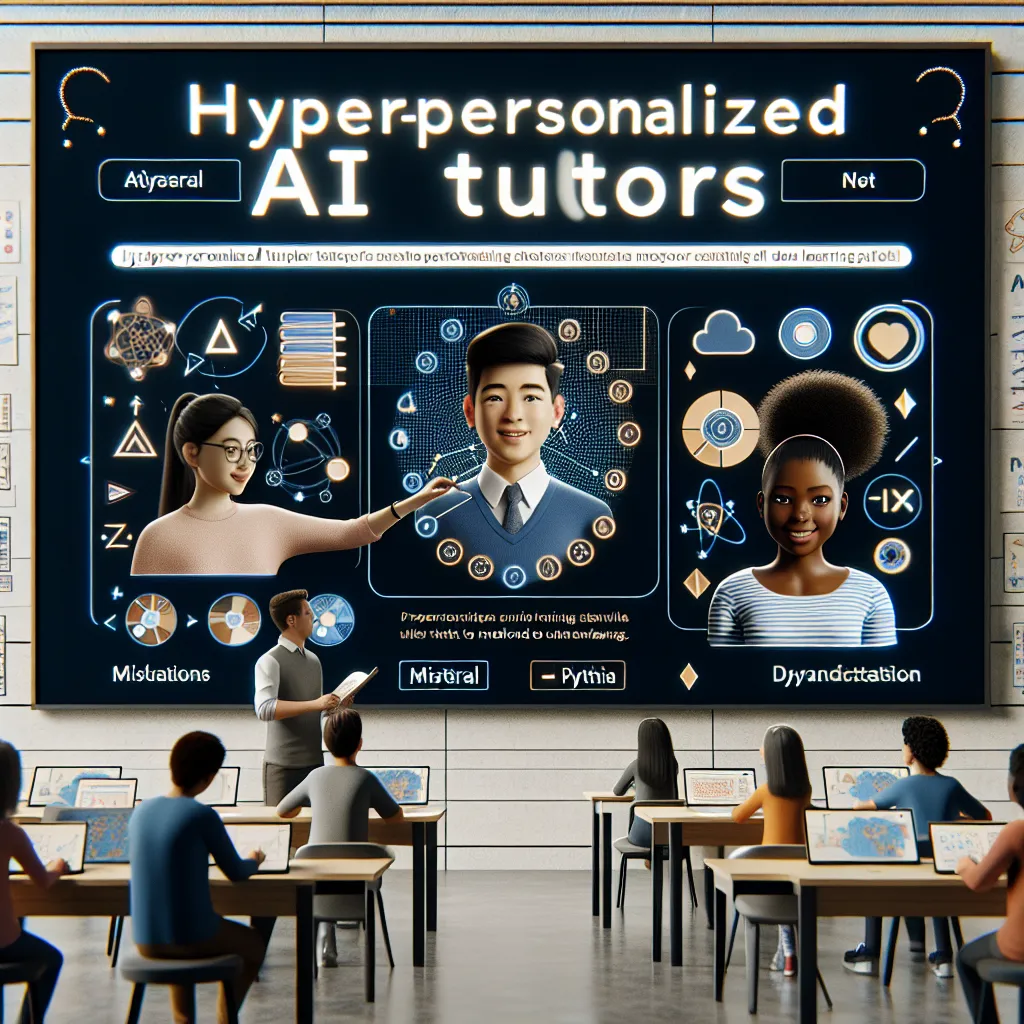
Description
No additional description provided.
The Pitch
In the rapidly evolving landscape of education, traditional methods have struggled to keep pace with the diverse needs of students. Despite the advent of advanced technologies like ChatGPT, learners often receive generic feedback that fails to address their individual learning patterns. The existing educational model remains a one-size-fits-all approach, which does not cater to the unique learning styles and knowledge gaps of each student.
The Problem
Students exhibit varied learning styles, paces, strengths, and weaknesses, yet most educational systems do not adapt to these discrepancies. Students struggling with specific subjects often face frustration due to the lack of personalized support, leading to disengagement and potential academic setbacks. Current AI tools, while powerful, do not offer the individualized interaction needed to overcome this challenge.
The Solution
The key to addressing this educational gap lies in the development of hyper-personalized AI tutors. These intelligent agents can assess a student's unique learning style, identify their strengths and weaknesses, and adapt lesson plans and explanations dynamically. Such AI tutors can modify their teaching methods to better engage with students by switching between visual, textual, or interactive learning modes based on what resonates most with the individual. For example, a student having difficulty with geometry could receive tailored visual aids and interactive practice problems, ensuring that they grasp the concepts effectively.
The Opportunity
Recent advancements in small, personalized AI models, such as Mistral and Pythia, have made it feasible to create customized AI solutions that are affordable and accessible. These developments present an opportunity to revolutionize the way educational content is delivered, ensuring that each student receives a learning experience tailored specifically to their needs.
Product Details
The AI tutor product is designed to be a dynamic learning companion that evolves with the student. It will integrate seamlessly into existing educational platforms, providing real-time feedback and adjustments to the learning material. Key features include:
1. Diagnostic Assessment - An initial evaluation to determine the student’s learning style and areas of improvement. 2. Adaptive Learning Paths - Customized lesson plans that evolve based on student progress and preferences. 3. Interactive Learning Modes - A variety of learning modes, including visual, textual, and hands-on interactions, to suit different learning styles. 4. Dynamic Feedback - Real-time analysis and feedback to help students grasp concepts more effectively. 5. Progress Tracking - Continuous tracking of student progress to adjust learning strategies and goals.
Tools for MVP
To bring this concept to life, several tools and technologies can facilitate the development and launch of a minimum viable product: - Machine Learning Libraries: Utilize libraries such as TensorFlow or PyTorch to build and train the personalized AI models. - Natural Language Processing: Implement NLP frameworks to understand and respond to student inquiries with precision. - Cloud Computing Platforms: Deploy scalable models using platforms like AWS or Google Cloud to ensure reliability and performance. - User Feedback System: Develop a feedback loop to collect data on user interaction and refine the AI's performance over time.
Go-to-Market Strategy
The go-to-market strategy focuses on collaboration with educational institutions and online learning platforms to integrate the AI tutor seamlessly. Initial efforts can include: - Partnerships with schools and educational technology companies to pilot the AI tutor with targeted student groups. - Offering a freemium model to entice early adopters and gather valuable user feedback for iterative improvements. - Leveraging social media and educational forums for awareness and promotions. - Engaging with educational influencers and thought leaders to build credibility and advocacy.
Business Model
The business model will emphasize accessibility while ensuring sustainability. Suggested models include: - Subscription-based service for institutions and individual learners to access advanced features. - Licensing agreements with educational platforms for integration of the AI tutor. - Offering premium features, such as advanced analytics and personalized coaching, as add-ons.
In conclusion, the introduction of hyper-personalized AI tutors represents a transformative opportunity in education, enabling students to learn in ways that resonate best with them. By leveraging state-of-the-art AI technologies and a strategic approach to market entry, this innovation has the potential to reshape educational paradigms and unlock the full potential of every learner.