Hybrid Workflows Marketplace for Automated Task Division
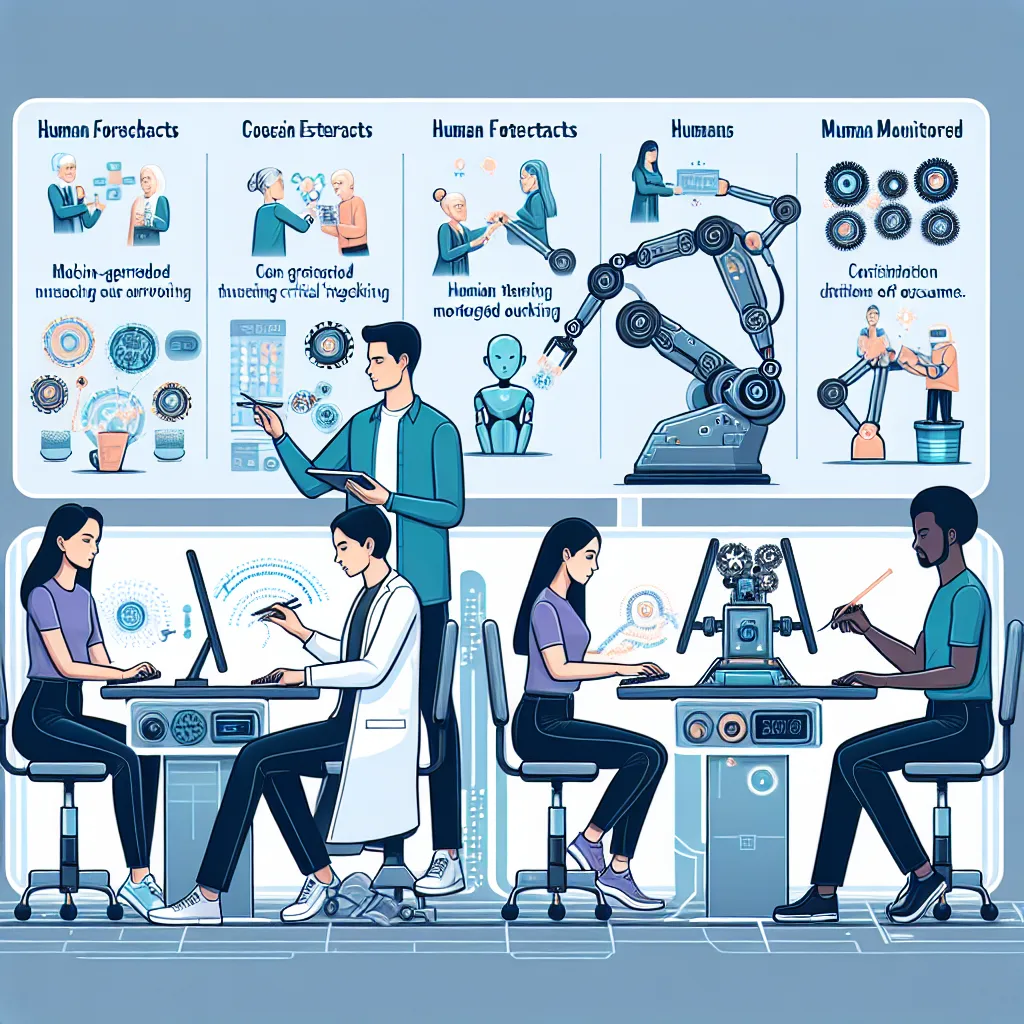
As automation scales, most work won’t disappear outright — it will fracture. Tasks that used to live inside a single job now split cleanly between machines and humans, but companies still hire and assign work as if jobs are indivisible units. A marketplace that automatically decomposes work into AI-doable and human-critical components would let companies assemble hybrid workflows on demand instead of choosing between full automation or full staffing. This exists now because AI can already scope its own limits with surprising accuracy. Picture a product team posting a “launch analysis” task and receiving a workflow where AI generates forecasts, humans pressure-test assumptions, and another AI monitors outcomes — all priced, timed, and coordinated as a single unit of work rather than a job description.
Description
No additional description provided.
The Pitch
In the evolving landscape of work, automation technology is reshaping roles and responsibilities. The rapid advancement of artificial intelligence (AI) has enabled machines to perform tasks that were once thought to be the exclusive domain of humans. However, this doesn't necessarily mean that jobs are being eliminated. Instead, work is becoming fragmented, with tasks being split between AI and humans. Despite this shift, companies often continue to operate under traditional frameworks, treating jobs as single, inseparable units of work. This unmet need presents an opportunity for a marketplace that dynamically decomposes tasks, leveraging the strengths of both AI and human input to achieve maximum efficiency and effectiveness.
**Backstory**
The advent of AI has pushed the boundaries of what machines can accomplish, allowing for astonishing levels of accuracy and efficiency in task execution. However, many businesses struggle to integrate AI into their existing workflows, often feeling compelled to choose between fully automating a process or maintaining a human workforce. This binary approach limits the potential of both human creativity and machine efficiency. Companies need a more nuanced solution that embraces hybrid workflows, tapping into AI's ability to scope its own limits and humans' unique cognitive capabilities.
**Problem**
Current work structures are inadequate to fully capitalize on the potential of AI. Organizations face the challenge of harmonizing human and AI contributions within their workflows. This lack of integration and coordination results in inefficient use of resources, increased operational costs, and missed opportunities for innovation. Businesses need a streamlined approach to assign tasks that optimally leverages human intelligence alongside advanced technology, managing costs while boosting productivity.
**Solution**
The proposed solution is a revolutionary marketplace platform that simplifies the decomposition of complex tasks into AI-manageable components and human-critical elements. This platform would offer businesses the ability to create and deploy hybrid workflows on demand. Users could post tasks, such as a launch analysis, and the platform would generate a coordinated workflow. Tasks like generating forecasts could be assigned to AI, while more nuanced tasks, like pressure-testing assumptions, would be allocated to humans. The platform would coordinate these components, providing seamless integration as if they were a single, cohesive unit of work.
**Product Details**
- **Task Decomposition Engine**: An intelligent algorithm that analyzes job descriptions to identify which components can be automated and which require human intervention. - **AI & Human Collaboration Suite**: Tools that facilitate seamless integration and communication between AI systems and human workers. - **Workflow Coordination**: Features that manage the timing and pricing of each component, providing transparency and efficiency. - **Performance Monitoring**: Built-in metrics and analytics to monitor outcomes and optimize future workflows.
**Tools for Easy MVP Launch**
- **No-Code Development Platforms**: To quickly build the initial prototype without extensive coding. - **AI Toolkits**: Utilize platforms like Google’s TensorFlow or OpenAI APIs to integrate AI functionalities. - **Collaboration Tools**: Employ solutions like Slack or Microsoft Teams for human collaboration aspects. - **Project Management Software**: Incorporate tools like Trello or Asana to help coordinate tasks and monitor progress.
**Go-To-Market Strategy**
- **Targeted Outreach**: Initiate with industries most affected by AI integration challenges, such as finance, healthcare, and logistics. - **Pilot Programs**: Launch pilot programs with select businesses to demonstrate effectiveness and gather testimonials. - **Partnerships**: Collaborate with AI solution providers and enterprise software companies for integrated offerings. - **Content Marketing**: Educate the market through blogs, webinars, and case studies that highlight the benefits of hybrid workflows.
**Business Model**
- **Subscription-Based Model**: Charge businesses a monthly fee based on the volume of tasks processed through the platform. - **Tiered Pricing**: Offer different service levels, including a basic package and premium features like advanced analytics and custom integrations. - **Performance-Based Pricing**: Implement pricing based on the savings or performance improvements delivered, aligning platform value with client success.
This platform will transform how companies approach work, ensuring competitive advantage by fostering a harmonious blend of human creativity and AI precision.