Hybrid Tobacco and Vaping Device
Description
introduce a hybrid tobacco and vaping device in the U.S., combining heat-not-burn (HNB) technology with vaping to offer a dual experience. The product would target smokers and vapers seeking a versatile, potentially less harmful alternative to traditional smoking. Key features include dual functionality, temperature control, a sleek design, and smart technology integration. The go-to-market plan involves careful navigation of FDA regulations, strong branding, and strategic distribution through both retail and direct-to-consumer channels. Marketing would focus on digital outreach and influencer partnerships, while scaling would involve expanding distribution and product lines. Despite regulatory and market challenges, the startup could differentiate through innovation and customer experience.
The Pitch
The hybrid tobacco and vaping device combines heat-not-burn (HNB) technology with vaping, offering users a dual experience in a single device. The device allows users to switch between traditional tobacco flavors delivered through HNB technology and a variety of flavored vapor options typical of e-cigarettes. This product targets consumers who seek the sensory experience of smoking without the full health risks associated with combustible cigarettes.
Key Features:
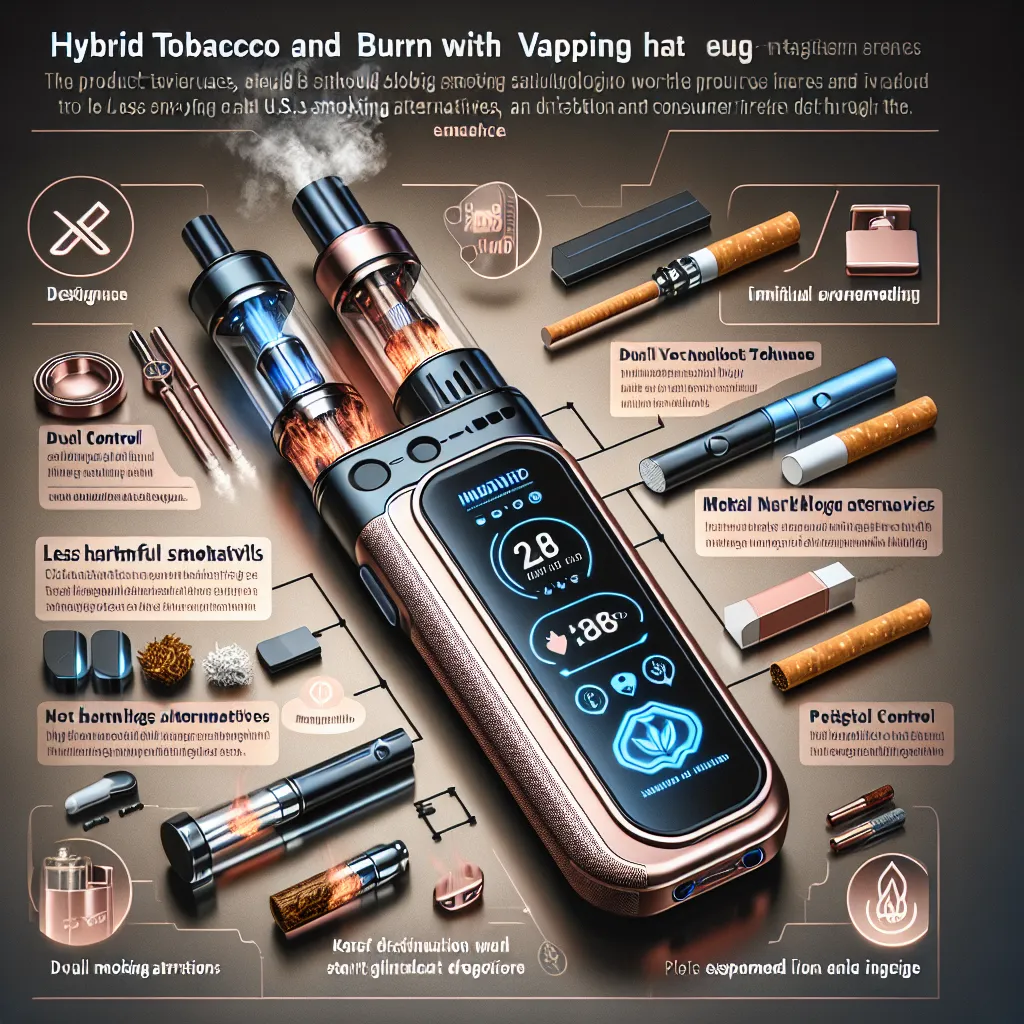
Dual Functionality: The device will have two separate chambers—one for tobacco sticks (HNB) and another for e-liquids (vape). Users can switch between the two modes seamlessly.
Temperature Control: Advanced temperature control to ensure optimal heating for both tobacco and e-liquids, ensuring consistent flavor and vapor production.
Compact Design: A sleek, portable design that is user-friendly and convenient for on-the-go use.
Smart Technology Integration: Bluetooth connectivity allowing users to control settings via a mobile app, track usage, and receive updates on device maintenance.
Long Battery Life: High-capacity battery designed to last through multiple sessions without needing frequent recharges.
Sustainability: Use of recyclable materials and a recycling program for used components (e.g., tobacco sticks, e-liquid pods) to appeal to eco-conscious consumers.
Target Audience:
Current Smokers: Individuals looking to transition away from traditional cigarettes but still desire the sensation of smoking.
Vapers: Existing e-cigarette users interested in exploring new devices that offer a combined experience.
Young Adults: Tech-savvy users attracted to innovative, customizable products.
Health-Conscious Consumers: Smokers and vapers seeking a potentially less harmful alternative to traditional smoking.
Go-To-Market (GTM) Plan 1. Product Development:
Prototyping and Testing: Develop prototypes and conduct extensive user testing to refine the design and functionality. Gather feedback from a diverse group of users to ensure the product meets market expectations.
Regulatory Compliance: Work closely with legal experts to navigate FDA regulations and ensure the product meets all health and safety standards. Submit a Pre-Market Tobacco Product Application (PMTA) to the FDA.
Manufacturing Partnerships: Partner with experienced manufacturers, preferably those with a background in producing electronic nicotine delivery systems (ENDS), to ensure high-quality production at scale.
2. Branding and Positioning:
Brand Identity: Create a strong brand that communicates innovation, quality, and a healthier alternative to smoking. The brand should appeal to both traditional smokers and modern vapers.
Product Positioning: Position the hybrid device as a premium product that offers the best of both worlds—traditional tobacco satisfaction and modern vaping versatility.
Key Messaging: Focus on the device’s dual functionality, ease of use, and potential health benefits compared to traditional smoking. Highlight the device’s innovative design and smart technology features.
3. Distribution Strategy:
Initial Launch in Select Markets: Start with a soft launch in states with a high concentration of smokers and vapers, such as California, Texas, and Florida. Use these markets to refine the product and marketing strategy before a broader rollout.
Retail Partnerships: Partner with specialty vape shops, tobacco retailers, and convenience stores to ensure the product is accessible to target consumers. Consider partnerships with online retailers like VaporFi or direct-to-consumer platforms like Amazon.
Direct-to-Consumer (DTC) Sales: Develop a robust e-commerce platform where consumers can purchase the device directly. Offer subscription services for consumables (tobacco sticks and e-liquid pods) to drive recurring revenue.
4. Marketing and Awareness:
Digital Marketing: Use social media platforms (Instagram, Twitter, TikTok) and influencer marketing to generate buzz among young adults and tech-savvy consumers. Focus on content that demonstrates the device’s unique features and user experience.
SEO and Content Marketing: Create informative content around the benefits of hybrid devices, targeting SEO keywords related to vaping, HNB products, and smoking cessation. Develop a blog and YouTube channel to educate consumers and drive organic traffic.
PR Campaigns: Launch PR campaigns to generate media coverage in tech, health, and lifestyle publications. Position the product as a groundbreaking innovation in the smoking and vaping industry.
Sampling and Promotions: Offer free samples at vaping and smoking-related events, as well as through partnerships with key retailers. Provide discounts for early adopters and loyalty programs to encourage repeat purchases.
5. Customer Support and Feedback:
Customer Service: Establish a dedicated customer service team to handle inquiries, provide support, and manage returns or exchanges.
User Feedback Loops: Create mechanisms for gathering user feedback through the mobile app, online surveys, and social media. Use this data to continuously improve the product and user experience.
6. Scaling and Expansion:
Broader U.S. Rollout: After a successful initial launch, expand distribution to additional states and regions. Consider entering international markets, particularly in Europe and Asia, where there is growing interest in HNB and vaping products.
Product Line Expansion: Develop additional products, such as customizable e-liquid flavors, limited-edition device designs, or accessories to enhance the user experience and drive brand loyalty.
Strategic Partnerships: Explore partnerships with tobacco and vaping industry leaders for co-branding opportunities or joint ventures. This could include licensing the technology or collaborating on R&D for future product iterations.
Financial Projections: Initial Investment: Estimated $10-15 million for product development, regulatory approval, marketing, and initial inventory.
Revenue Streams: Device sales, consumable sales (tobacco sticks and e-liquid pods), and subscription services.
Break-Even Point: Expected within 18-24 months, depending on market acceptance and regulatory approval timelines.
Profit Margins: High margins on consumables, with lower margins on the initial device sales to drive adoption.
Potential Risks and Mitigations: Regulatory Delays: Stay informed of regulatory changes and maintain close communication with legal advisors to navigate potential delays in product approval.
Market Acceptance: Conduct extensive market research and testing to ensure the product meets consumer expectations. Be prepared to pivot based on feedback.
Competitive Response: Monitor competitors closely and differentiate the product through superior design, technology, and customer experience.
By focusing on innovation, regulatory compliance, and strategic marketing, a startup can successfully introduce a hybrid tobacco and vaping device to the U.S. market and capture a share of the growing demand for next-generation nicotine products.