Home-Integrated Environmental Reminder System Innovation
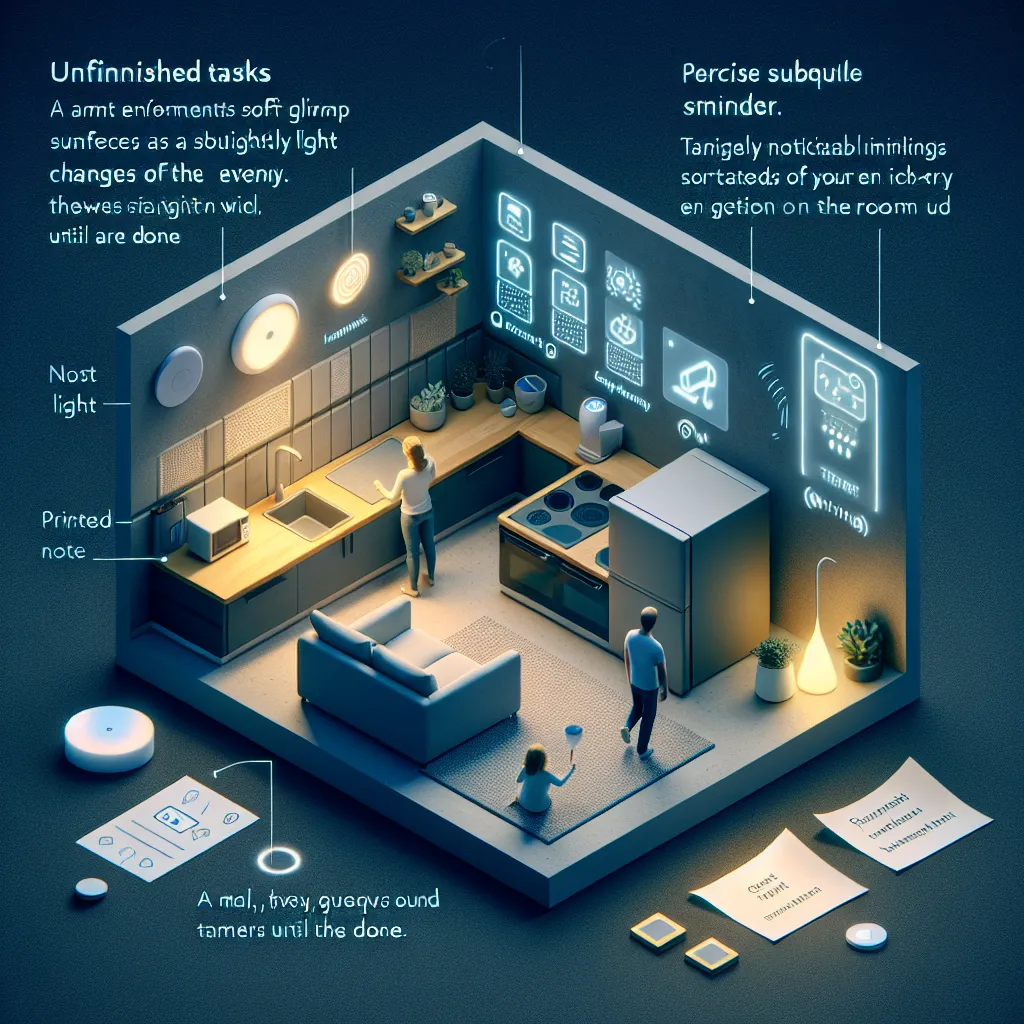
Digital reminders fail because they disappear into apps, lock screens, and smart displays that people stop noticing. What’s missing is a home-native reminder system that uses the environment itself to gently signal unfinished tasks. Instead of another notification, it could trigger subtle light changes, low-frequency sound cues, printed notes, or even physical indicators that stay present until the task is cleared. The insight is that reminders work better when they live in the room, not inside a device you forgot to check. This works now because smart homes are filled with screens, speakers, sensors, and connected gadgets, but almost none are orchestrated around memory and shared household coordination. A family could set one reminder and have it surface as a dimming light cue in the evening, a printed strip in the kitchen, and a soft house-wide prompt until someone actually handles it.
Description
No additional description provided.
The Pitch
In an era where digital notifications have become overwhelmingly prevalent, they have also become increasingly ineffective. Once novel, these reminders now blend into the noise of daily digital interactions, appearing on devices that often remain unchecked. This has created a gap for a more intuitive, home-integrated reminder system that leverages the environment to communicate tasks and reminders effortlessly.
Backstory: The proliferation of digital devices promised to make our lives more organized and efficient. However, over time, the initial excitement has been overshadowed by the saturation of alerts and reminders that often go unnoticed. Families and individuals have found themselves missing important notifications simply because these are buried among countless others or appear on screens that are not frequently checked.
Problem: Traditional digital reminders lack the physical presence needed to consistently capture our attention and drive action. This issue is exacerbated in communal living spaces, where coordination and shared tasks are common. Important reminders get lost in the clutter of digital notifications, resulting in missed tasks and household disorganization.
Solution: Introduce an ambient reminder system that transforms the home environment into a subtle but effective communication platform. By integrating with existing smart home technology, this system uses environmental cues, such as light changes, sound cues, printed notes, or tactile indicators, to keep reminders visible and persistent until they are acknowledged and acted upon.
Product Details: 1. Environmental Cues: Use existing smart bulbs to adjust lighting, signaling reminders through color changes or dimming patterns. 2. Audio Alerts: Employ low-frequency sound cues via smart speakers to gently nudge occupants about pending tasks. 3. Physical Indicators: Utilize devices like e-ink displays or small printers to generate tangible reminders that physically reside within commonly occupied spaces. 4. Integration: Seamlessly connect with popular smart home ecosystems to ensure ease of use and compatibility with various sensors and devices. 5. Personalization: Allow customization of reminder types and schedules, enabling users to choose how and when they are reminded based on task urgency and personal preference.
Tools for MVP Launch: - Smart home platforms (e.g., Google Home, Amazon Alexa, Apple HomeKit) for integration and control. - Prototyping tools like Arduino or Raspberry Pi for developing custom indicators and sensors. - Cloud services such as IFTTT or Zapier for automating reminder triggers and responses. - User feedback tools to gather insights and improve functionality based on real-world use.
GTM Strategy: 1. Target Market: Focus on tech-savvy families, busy professionals, and individuals with high household coordination needs who already own or are considering smart home devices. 2. Partnerships: Collaborate with smart home device manufacturers and service providers for bundled offerings and seamless integration. 3. Online Presence: Utilize digital marketing to reach target audiences through channels like social media, tech blogs, and home improvement platforms. 4. Demonstrations: Host webinars and virtual tours showcasing the system’s functionality in real-world scenarios. 5. User Advocacy: Develop a community of early adopters who can share experiences and benefits, creating organic growth through word-of-mouth.
Business Model: 1. Subscription Service: Offer a tiered subscription model providing users with varying levels of integration, advanced features, and premium support. 2. Hardware Sales: Provide optional dedicated devices that enhance the system, such as specialized light bulbs or e-ink displays. 3. Integration Licensing: Partner with manufacturers of smart home products, incorporating reminder capabilities into their existing devices for a licensing fee.
By leveraging the untapped potential of the home environment, this ambient reminder system offers a fresh approach to task management, turning everyday spaces into active participants in household organization.