Handheld Device for Non-Destructive Internal Imaging
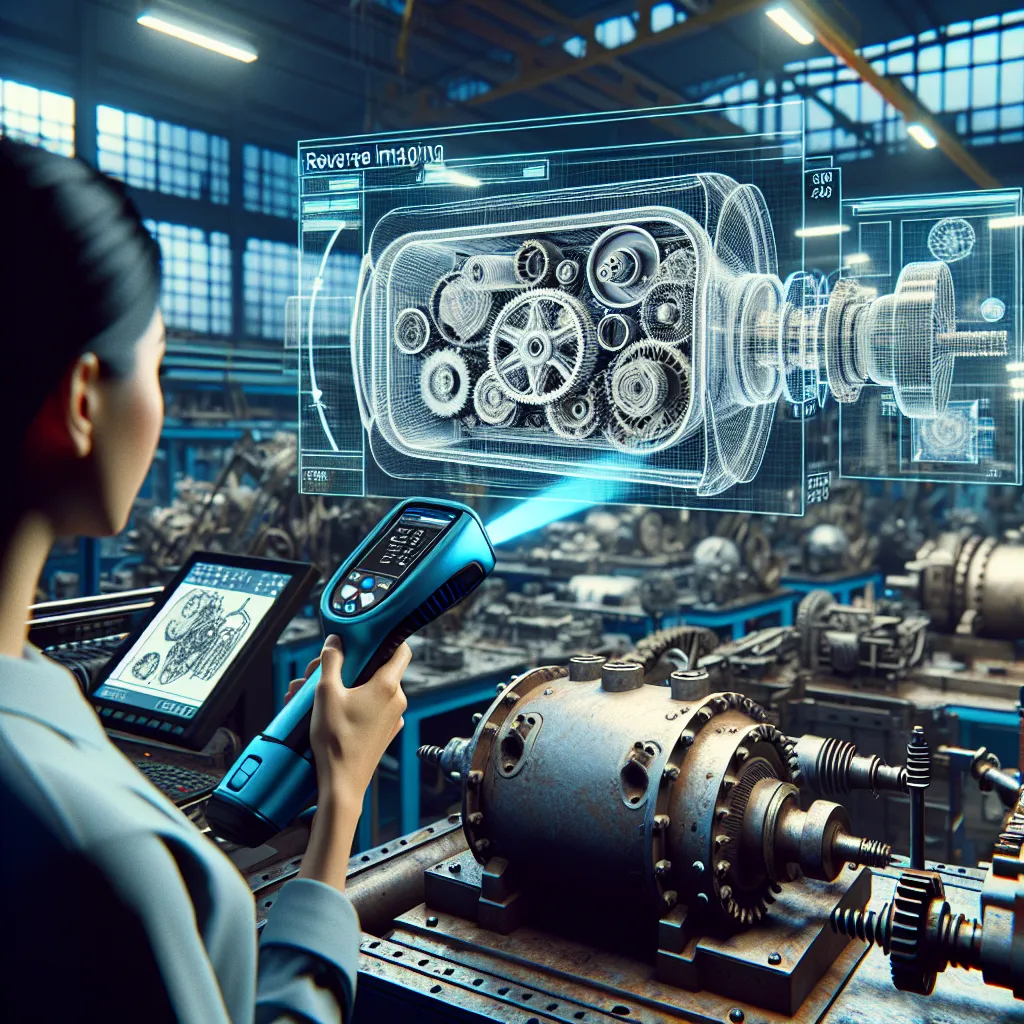
Factories and repair shops often deal with legacy equipment where the internal component layout is unknown, and technical drawings are lost. A startup could offer a mmNorm-based handheld reverse imaging device to scan and reconstruct the shapes of internal parts inside enclosures or castings—without dismantling. By mapping the shape of internal features, it would help replicate or reverse engineer them for repairs or replacement. Previously, this required destructive teardown or expensive CT scans. With mmNorm, even small internal parts behind metal or plastic can be modeled accurately. For example, a mechanical engineer at a power plant could use it to image the gear layout inside a sealed 30-year-old valve casing to reproduce it via 3D printing.
Description
No additional description provided.
The Pitch
In industries such as manufacturing and repair, dealing with outdated and legacy equipment is often challenging due to the lack of available blueprints or technical drawings. Traditionally, understanding the internal configuration of such equipment required either destructive methods or costly imaging solutions, making maintenance and parts replacement cumbersome and expensive.
Backstory: Factories and repair shops frequently encounter the issue of needing to service or replace components within legacy machinery. These devices often lack updated documentation or accessible blueprints, leaving engineers to guess the internal layout. Without this information, carrying out repairs or creating replacement parts becomes a time-consuming and inefficient process, often requiring the equipment to be taken apart or relying on expensive industrial CT scans.
Problem: The lack of accessible and affordable non-destructive tools for mapping the internal structures of legacy equipment results in increased downtime, higher maintenance costs, and potential for significant production delays. This problem not only affects operational efficiency but also hampers the ability to keep older equipment running safely and productively.
Solution: Introducing a handheld device based on mm-wave Norm technology, designed to scan and reconstruct the internal geometries of machinery and components without disassembly. This non-destructive method uses advanced imaging through barriers such as metal and plastic to create detailed models of internal components, which can then be used for replication or reverse engineering with tools like 3D printing.
Product Details: - A compact, user-friendly handheld scanner equipped with mm-wave Norm technology for industrial applications. - Capable of producing accurate 3D models of internal structures without the need to dismantle the equipment. - Suitable for use on a wide range of materials, including metal and plastic enclosures. - Portable and robust design, making it ideal for both factory floors and field use.
Tools and Technology: - Embedded software for on-device processing and real-time visualization. - Cloud integration for model storage and remote analysis, facilitating easy sharing and collaboration. - API access for integration with existing computer-aided design (CAD) software and repair management systems.
MVP Launch Strategy: 1. Identify key industry sectors where legacy system maintenance is prevalent, such as manufacturing, power generation, and aviation. 2. Develop a prototype based on user feedback from initial pilot programs in selected factories and repair shops. 3. Partner with industry leaders to validate capabilities and gather testimonials for marketing purposes. 4. Refine the product based on early user feedback, addressing any challenges or limitations encountered.
Go-to-Market Strategy: - Leverage partnerships with maintenance and repair organizations to position the device as an essential tool for efficient servicing. - Participate in industry trade shows and conferences to demonstrate the technology and its applications live. - Implement a targeted digital marketing campaign aimed at facilities and engineering managers, highlighting cost savings and increased maintenance efficiency.
Business Model: - Direct sales model targeting repair shops and factories, with an initial focus on large enterprises managing extensive legacy equipment. - Subscription-based model for cloud services that offer additional features such as extended storage, analytical tools, and API access for integration with existing digital infrastructures. - Offer training and certification programs to upskill customers on the effective use of the technology, creating an additional revenue stream.
By addressing the gap in affordable non-destructive reverse imaging solutions, this product can revolutionize how industries approach legacy equipment maintenance. It allows companies to extend the lifespan of their machinery cost-effectively, fostering greater efficiency and reducing operational downtime.