Grazing Goats Service Revolutionizes Land Management
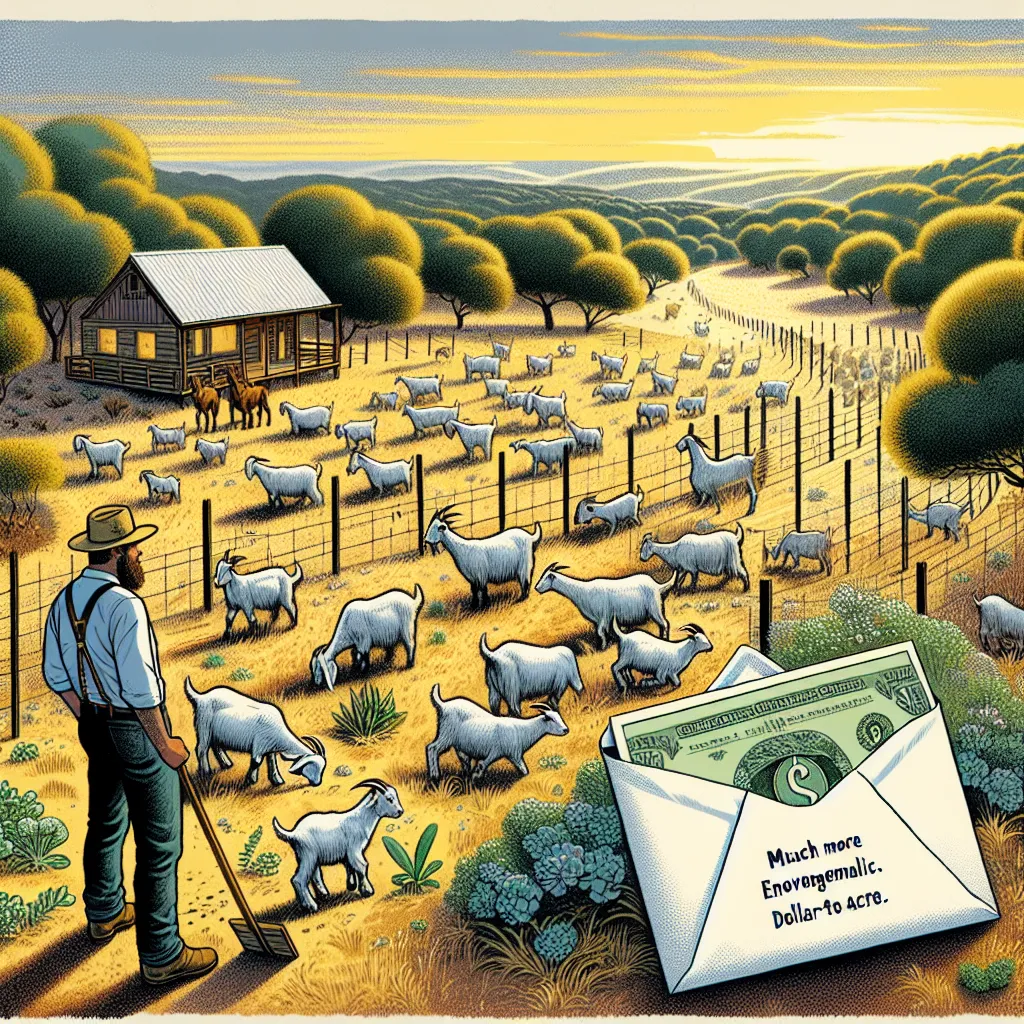
Land clearing for wildfire prevention or development is expensive and labor-intensive—costing up to $28,000 per acre in California. A goats-as-a-service (GaaS) model solves this using hungry goats to graze and clear brush naturally for $500–$1,000 per acre. It’s cheaper, environmentally friendly, and increasingly popular with municipalities and eco-conscious landowners. Companies like Goats on the Go already prove the model works. But most goat owners don’t market or package their services well, creating a middleman opportunity to match landowners with herders and handle logistics.
Description
No additional description provided.
The Pitch
In recent years, land management practices have gained significant attention due to the growing frequency and intensity of wildfires and the increased demand for land development. Traditionally, land clearing methods have been both expensive and labor-intensive. In places like California, the cost of clearing land can soar up to $28,000 per acre. Not only does this pose a financial challenge, but traditional methods also tend to have significant environmental impacts.
This is where innovative, sustainable solutions come into play. A goats-as-a-service (GaaS) model presents an environmentally friendly approach to land clearing. By utilizing the natural grazing habits of goats, land can be cleared at a fraction of the cost, ranging from $500 to $1,000 per acre. This method is not only economical but also supports ecological balance by reducing reliance on heavy machinery and chemicals.
While the concept is already being implemented by companies like Goats on the Go, the industry is far from saturated. A significant gap exists in how these services are marketed and delivered. Most goat owners do not have the necessary skills or resources to effectively market their services, creating an opportunity for a mediating platform that connects landowners with herders while handling logistical challenges.
Proposed Solution:
An online platform can be developed to bridge the gap between landowners in need of clearing services and goat herders offering grazing services. This platform will effectively operate as a matchmaking and logistics facilitation service, optimizing the GaaS model by making it more accessible and organized.
Key Features of the Product:
1. **User-Friendly Interface**: Easy navigation for both landowners looking for services and herders offering them.
2. **Database of Service Providers**: A comprehensive directory of goat herders, complete with detailed profiles, service areas, availability, and reviews.
3. **Automated Scheduling and Logistics**: Advanced scheduling tools to coordinate dates, manage herds, and streamline the deployment of services.
4. **Secure Payment System**: A built-in secure payment gateway to handle transactions between landowners and herders.
5. **Environmental Impact Calculator**: An integrated tool to show users the environmental benefits of choosing GaaS over traditional land clearing methods.
Tools for MVP Launch:
1. **No-Code Platforms**: Utilize platforms like Bubble or Adalo to quickly develop a functional prototype without extensive coding.
2. **Geo-Mapping Tools**: Integrate with Google Maps or Mapbox to provide precise location-based service matching.
3. **Payment Integration Software**: Leverage Stripe or PayPal for straightforward and secure payment processing.
Go-To-Market Strategy:
1. **Target Audience Identification**: Focus on municipalities, eco-conscious landowners, and commercial developers in wildfire-prone regions.
2. **Partnerships**: Collaborate with environmental organizations and local governments to advocate for goats as a sustainable land-clearing alternative.
3. **Digital Marketing**: Utilize SEO, social media campaigns, and content marketing to raise awareness and drive potential customers to the platform.
4. **Pilot Programs**: Launch small-scale pilot programs with select municipalities to refine the service model and gather testimonials.
Business Model:
The primary revenue stream will be a commission-based model where a percentage of each transaction is charged as a service fee. Additional revenue can be generated through subscription plans for landowners or herders seeking premium features, and potentially ad revenue from related service and equipment suppliers.
By leveraging technology and sustainable practices, this platform not only makes land management more efficient and accessible but also supports ecological conservation efforts. With the right execution, it has the potential to transform how land clearing is approached, making it both economically viable and environmentally responsible.