Global Marketplace for Zero-Carbon Data Center Workloads
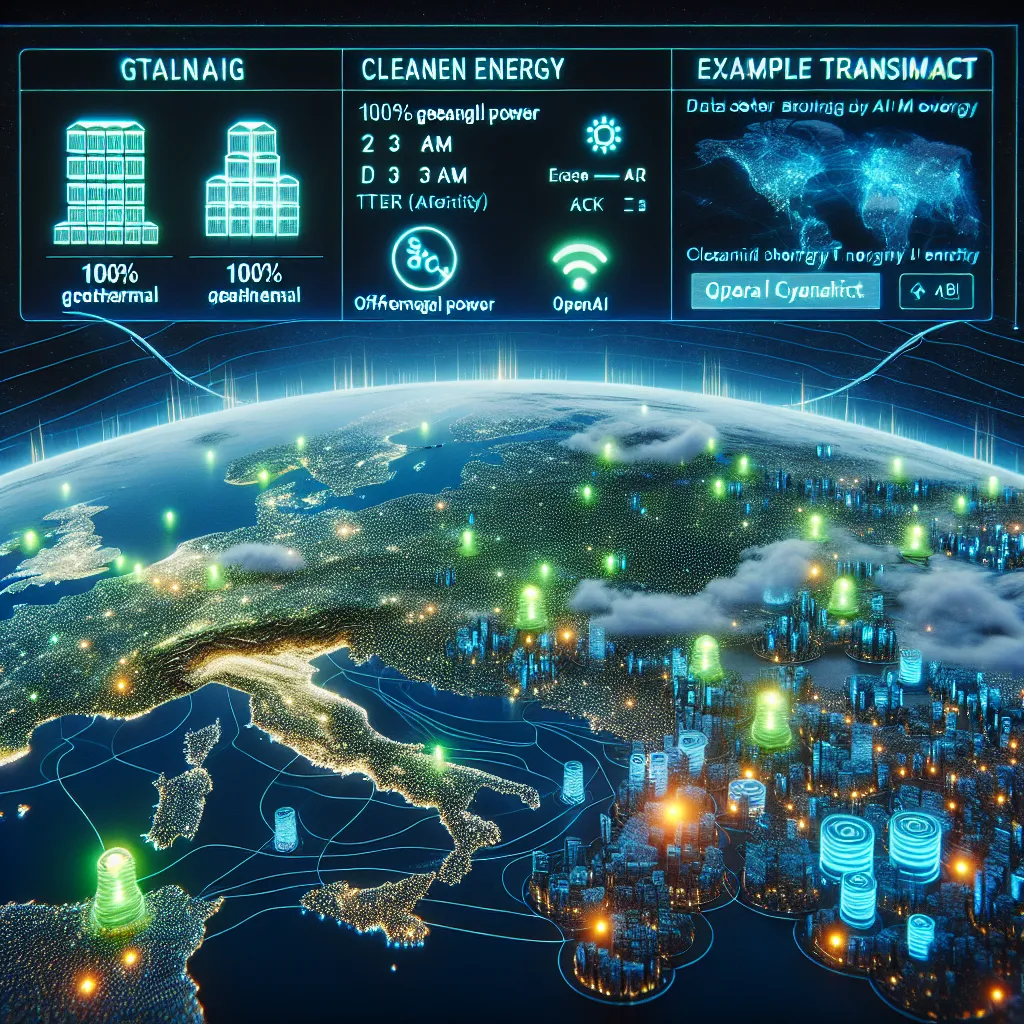
Problem: Not all data centers are equally green at all times. A model trained at 2 PM in Texas might be dirty, but clean at 2 AM in Norway. Solution: A global zero-carbon compute marketplace where workloads are traded, routed, and executed based on real-time clean energy availability — not location. AI models could “shop” for the cleanest, cheapest energy window worldwide. Why now? High-speed fiber, global DC interconnects, and real-time energy carbon data are increasingly available. Example: OpenAI needs to train a model — the job gets automatically routed to a green-data-center in Iceland at 3 AM with 100% geothermal power.
Description
No additional description provided.
The Pitch
In the current era of technological advancement and growing environmental awareness, the demand for sustainable computing solutions is rapidly increasing. With data centers consuming vast amounts of energy, it has become crucial to explore ways to minimize their carbon footprint. Enter the concept of a global zero-carbon compute marketplace—a transformative platform designed to align computational tasks with the cleanest energy sources available at any given time.
The underlying issue is that data centers worldwide experience varying levels of energy cleanliness throughout the day. For instance, executing a computation-intensive task at 2 PM in Texas might involve high carbon emissions due to reliance on fossil fuels, whereas the same task could be significantly greener if executed at 2 AM in Norway, primarily utilizing renewable energy.
This global zero-carbon compute marketplace provides an innovative solution by enabling workloads to be traded, routed, and executed based on real-time data about clean energy availability. The platform would act as an intelligent intermediary, allowing AI models and other computational tasks to shop for the cleanest and most cost-effective energy window globally.
The timing for this solution is ideal due to advancements in high-speed fiber optics, enhanced global data center interconnectivity, and the growing availability of real-time energy carbon data. These technologies collectively make it feasible to implement such a marketplace.
Imagine a scenario where a company like OpenAI needs to train a large model. With this marketplace, the task could automatically be routed to a green data center in Iceland at 3 AM, where geothermal energy offers a 100% clean power source, dramatically reducing the associated carbon footprint.
To bring this marketplace to life as a Minimum Viable Product (MVP), several key steps and tools can be employed:
1. **Product Development:** - Develop a platform that integrates with existing scheduling and workload management systems. - Incorporate real-time energy and pricing data APIs to provide accurate recommendations for workload execution. - Design a user-friendly interface that allows users to set preferences or constraints for energy sourcing.
2. **Tools and Technologies:** - Leverage cloud platforms and edge computing to ensure scalability and reliability. - Utilize machine learning algorithms to optimize routing decisions based on historical and predictive data. - Implement blockchain technology for secure and transparent trading of compute resources.
3. **Go-to-Market Strategy (GTM):** - Start with a focused outreach to enterprises with significant computational needs who are already committed to sustainability. - Build partnerships with renewable energy providers and data center operators to create a robust network of green computing hubs. - Develop pilot programs and case studies to demonstrate the environmental and cost benefits of the platform.
4. **Business Model:** - Implement a subscription-based model for regular users, with additional pay-per-use fees based on compute demand. - Offer premium features such as advanced workload prioritization and custom reporting on energy savings and environmental impact. - Explore revenue-sharing models with energy providers and data centers participating in the marketplace.
In conclusion, a global zero-carbon compute marketplace represents a groundbreaking shift in how computational tasks are managed and executed. By dynamically aligning workloads with the cleanest energy sources, this platform not only promotes greater sustainability but also introduces a cost-effective solution for companies committed to reducing their environmental impact.