Generative Personality Index: Measuring Idea Execution Potential
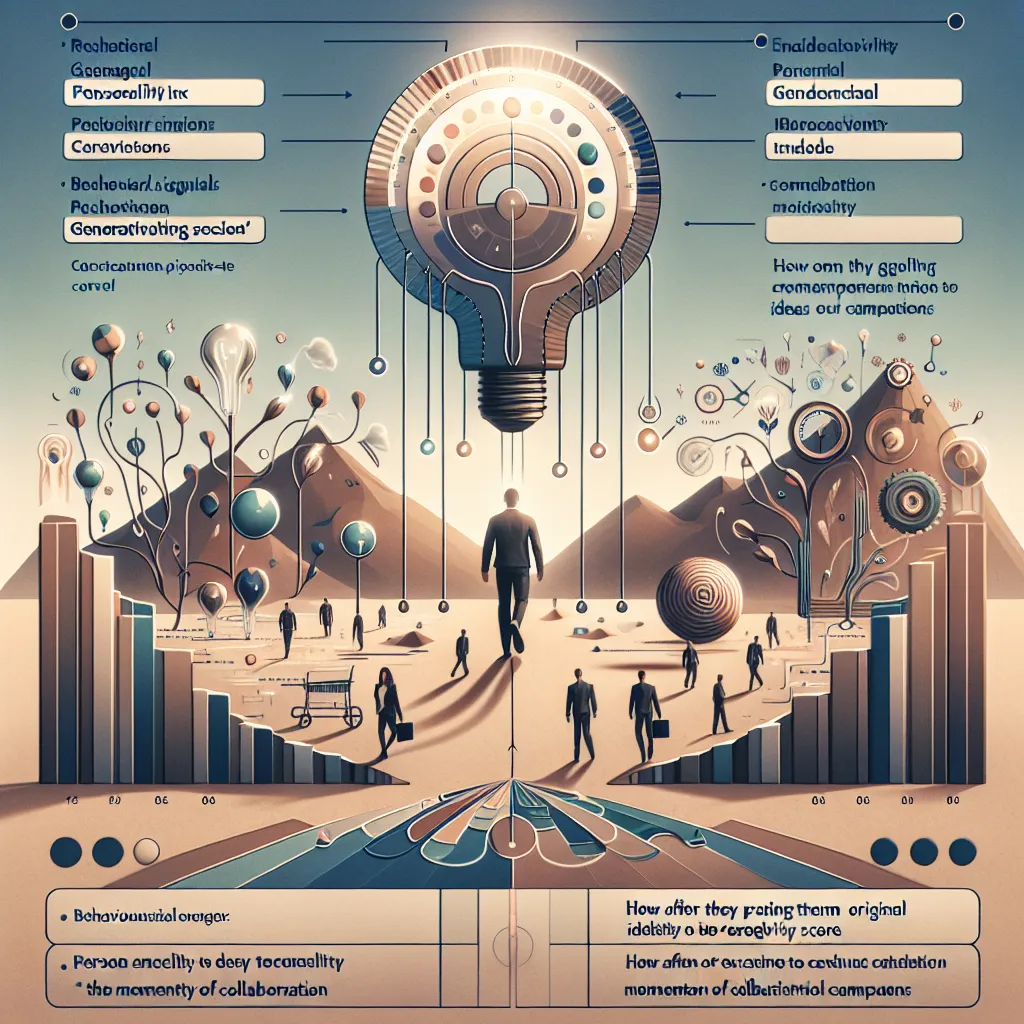
People struggle to evaluate how likely someone is to turn ideas into action, especially in hiring, founding teams, and creative collaborations. Traditional personality tests don’t capture someone’s “generative” capacity—how often they act on original thoughts, execute on them, and follow through. The Generative Personality Index (GPI) is a new assessment that tracks behavioral signals like personal project frequency, idea-to-execution timelines, and collaborative momentum to produce a quantifiable “generativity score.” This helps companies identify builders over talkers. For example, a startup hiring a founding marketer could prioritize applicants with high GPI scores—those who’ve repeatedly turned minimal input into launchable campaigns. Unlike Myers-Briggs or Big Five, GPI emphasizes real-world output and adaptability over internal traits or preferences.
Description
No additional description provided.
The Pitch
Understanding how effectively individuals turn ideas into action is a challenge faced across various industries, especially in contexts like hiring, forming founding teams, and fostering creative collaborations. Traditional personality assessments, such as the Myers-Briggs or Big Five, often fail to capture this critical aspect of an individual's potential—what we term generative capacity. This refers to the ability to consistently act on original thoughts, execute them effectively, and see them through to completion.
Enter the Generative Personality Index (GPI), an innovative assessment tool designed to address this gap. GPI evaluates behavioral indicators like the frequency of personal projects, the timeline from idea inception to execution, and the momentum maintained during collaborative efforts. These factors combine to produce a quantifiable generativity score, offering a more tangible metric for identifying individuals who are more action-oriented.
The GPI serves as a valuable resource for organizations aiming to distinguish doers from talkers, especially in high-stakes scenarios such as hiring for a startup's founding team. Consider the specific case of a company looking to hire a founding marketer. With the GPI, the company can prioritize candidates who have demonstrated their ability to transform limited resources into successful campaigns, thereby ensuring they choose candidates with a proven track record of execution.
Unlike traditional assessments, which focus on internal traits or preferences, the GPI emphasizes actual output and adaptability in real-world scenarios. This focus makes it a unique and powerful tool for any organization looking to build a team characterized by action and effectiveness.
For those interested in developing and launching the GPI as a Minimum Viable Product (MVP), several tools and strategies can facilitate this process. The first step is to create a prototype of the GPI, which might involve collaborating with behavioral psychologists to ensure the assessment is founded on robust psychological principles. Tools like survey platforms and data analytics software can help refine the assessment process and ensure the reliability and validity of the index.
Once the MVP is ready, a strategic Go-To-Market (GTM) approach is essential. Targeting early adopters will be crucial, particularly businesses and organizations that prioritize innovation and effective team-building. Leveraging partnerships with HR tech platforms and offering free trials can also help accelerate adoption and gather feedback for further refinement.
In terms of business model, a subscription-based approach could be effective, providing organizations with regular reports and insights into their teams' generative capabilities. Alternatively, licenses could be sold directly to enterprises, with value-added services such as workshops or consulting provided at an additional cost.
Overall, the GPI represents a novel approach to understanding and leveraging human potential, offering significant value to organizations seeking to build effective and innovative teams.