Generative AI-Designed Physical Infrastructure
Roads, airports, bridges — today’s infrastructure is designed by slow, manual processes. Generative AI could simulate, optimize, and design infrastructure at nation-scale — factoring in climate change, urban growth, and sustainability dynamically. Why now? As climate risks rise and cities expand unpredictably, static blueprints don’t cut it. Example: A government feeds demographic, environmental, and transportation data into the system. The AI designs a modular airport that can expand and contract efficiently over 30 years based on real-time urban growth, automatically testing 100,000+ scenarios for efficiency and durability.
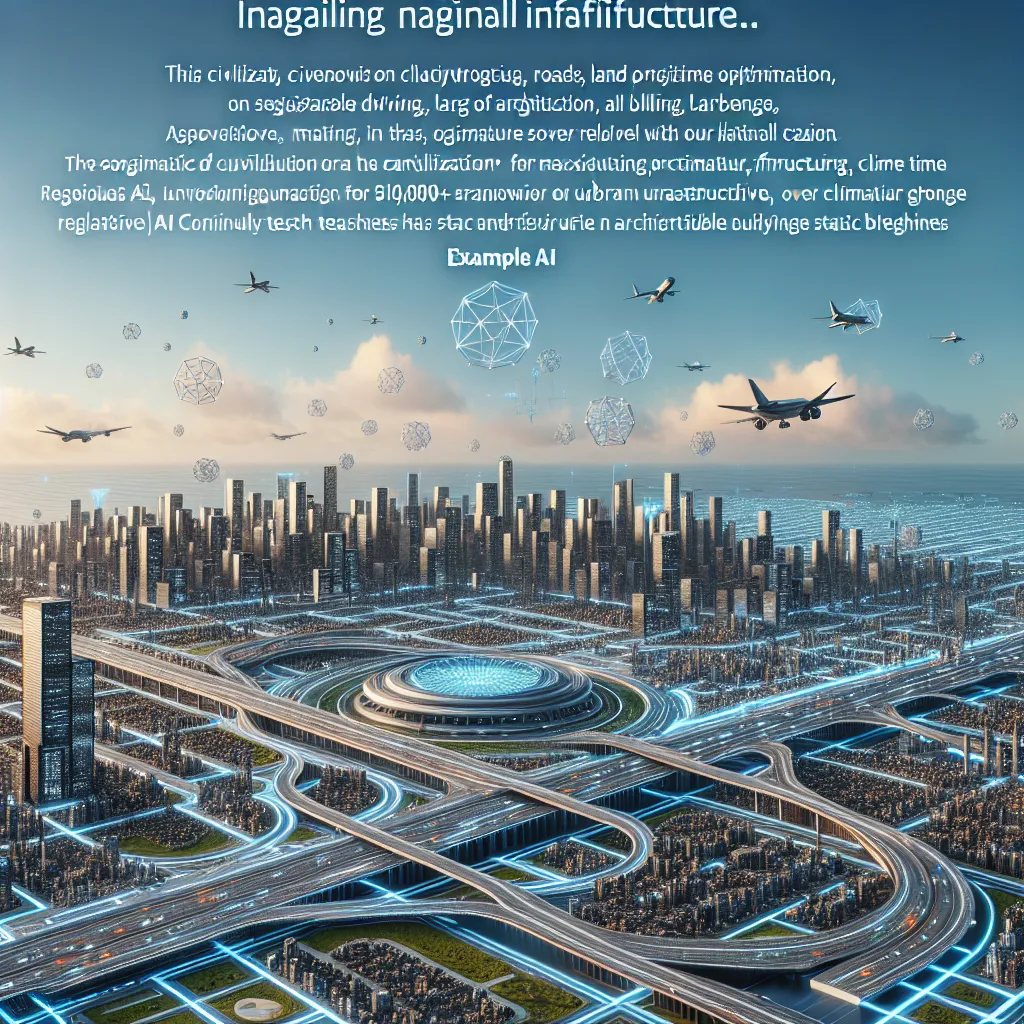
Description
No additional description provided.
The Pitch
In the evolving landscape of infrastructure development, traditional methods are increasingly falling short. With the twin challenges of climate change and rapid urbanization, there is an urgent need for innovative solutions that can adapt dynamically to changing conditions. A promising frontier in this domain is the use of Generative AI to transform how we design and implement infrastructure projects like roads, airports, and bridges. This approach allows for more efficient, adaptable, and sustainable infrastructure planning at a nation-wide scale.
Backstory
Historically, infrastructure design has relied on static blueprints and manual processes that are often time-consuming and inflexible. These methods struggle to account for the fluid nature of modern cities and the unpredictable impacts of climate change. Governments and urban planners find themselves constrained by these limitations, leading to projects that are frequently over budget and unable to adapt to long-term needs.
Problem
The core issue is that current urban planning and infrastructure design practices are inadequately equipped to deal with dynamic variables such as environmental changes and demographic trends. As urban areas expand and climate risks increase, there is a pressing challenge: how can infrastructure be designed to withstand these variables while maintaining efficiency and sustainability? Without innovative solutions, cities face the risk of infrastructure that is quickly outdated, vulnerable to environmental stresses, and inefficiently designed.
Solution
Generative AI offers a powerful solution to these challenges. By integrating demographic, environmental, and transportation data, AI systems can simulate and optimize infrastructure designs, taking into account a multitude of scenarios. This dynamic approach enables the creation of modular structures, such as airports or bridges, that can evolve over time in response to real-time urban growth and environmental conditions. Instead of relying solely on human intuition and limited data, generative AI can rapidly test over 100,000 scenarios, ensuring the most efficient and durable designs are selected.
Product Details
The proposed product is a comprehensive Generative AI platform specifically tailored for infrastructure design. Key features include:
1. Data Integration: Ability to seamlessly input and analyze vast amounts of data, including demographic trends, environmental impact assessments, and transportation needs.
2. Scenario Simulation: Rapid testing of various design scenarios to identify the optimal mix of efficiency, durability, and sustainability.
3. Modular Design Capabilities: Tools to design infrastructure elements that can be modified over time—expanding, contracting, or altering based on real-time data and future projections.
4. User-Friendly Interface: An intuitive platform accessible to urban planners and government officials, with minimal need for technical expertise.
Tools for MVP Launch
To create and deploy this product as a Minimum Viable Product, consider using the following tools:
- Cloud Computing Platforms: AWS or Google Cloud for robust data handling and processing capabilities.
- Machine Learning Frameworks: TensorFlow or PyTorch for building and refining generative models.
- GIS Tools: Esri's ArcGIS to integrate and visualize spatial data relevant to infrastructure planning.
- Data Analysis Software: Tableau or Power BI for creating insightful, easy-to-understand visualizations.
GTM Strategy
The Go-To-Market (GTM) strategy should focus on collaboration with government agencies, urban planning firms, and environmental consultancies. Key steps include:
1. Pilot Projects: Start with pilot projects in cities that are proactive about sustainable infrastructure, offering discounted or trial access to the platform.
2. Partnerships: Forge partnerships with key stakeholders in the urban planning and environmental sectors to increase credibility and reach.
3. Demonstrations and Workshops: Conduct live demonstrations and hands-on workshops to showcase the platform’s capabilities and ease of use.
4. Industry Conferences: Present at relevant industry events to capture the attention of a broader audience, including decision-makers and potential early adopters.
Business Model
The business model for the Generative AI platform can include:
1. Subscription-Based Model: Offer tiered subscription plans to accommodate different user needs—from small urban planning teams to large governmental bodies.
2. Consultancy Services: Provide expert consultancy for complex projects requiring custom AI model adjustments or additional integrations.
3. Data Services: Generate additional revenue by offering premium data services, such as predictive urban growth insights, to enhance the platform’s value.
Conclusion
By leveraging Generative AI, the infrastructure design process can be transformed to meet the urgent demands of today’s cities and tomorrow’s challenges. This approach not only promises greater efficiency and sustainability but also enables a future where infrastructure dynamically adapts to the world’s ever-changing landscape. As we confront unprecedented environmental and urban shifts, integrating such technology into our planning processes is both a necessity and an opportunity.