Gen Z Micro Co-Working Pods for Focus
Many Gen Z remote workers struggle with motivation, distraction, and isolation—despite having more flexibility than any generation before them. One rising productivity hack among them is “body doubling,” or working silently alongside others for accountability. But there’s no infrastructure built for this outside of TikTok livestreams and Discord servers. Enter the solution: local micro co-working pods (like mini WeWorks) offering pay-by-the-hour body doubling slots—quiet, focused, minimalist spaces where Gen Z can show up, plug in, and feel socially supported. According to Sherwood, while Gen Z doesn’t want full-time office life, they do want “somewhere to go,” and more structured social workspaces fit that need. For example, a recent grad juggling freelance gigs could book a 3-hour session at a pod in their neighborhood, where they work silently alongside others—with optional opt-ins for short social breaks, coffee, or networking. It’s the anti-office office: no boss, no distractions, just presence.
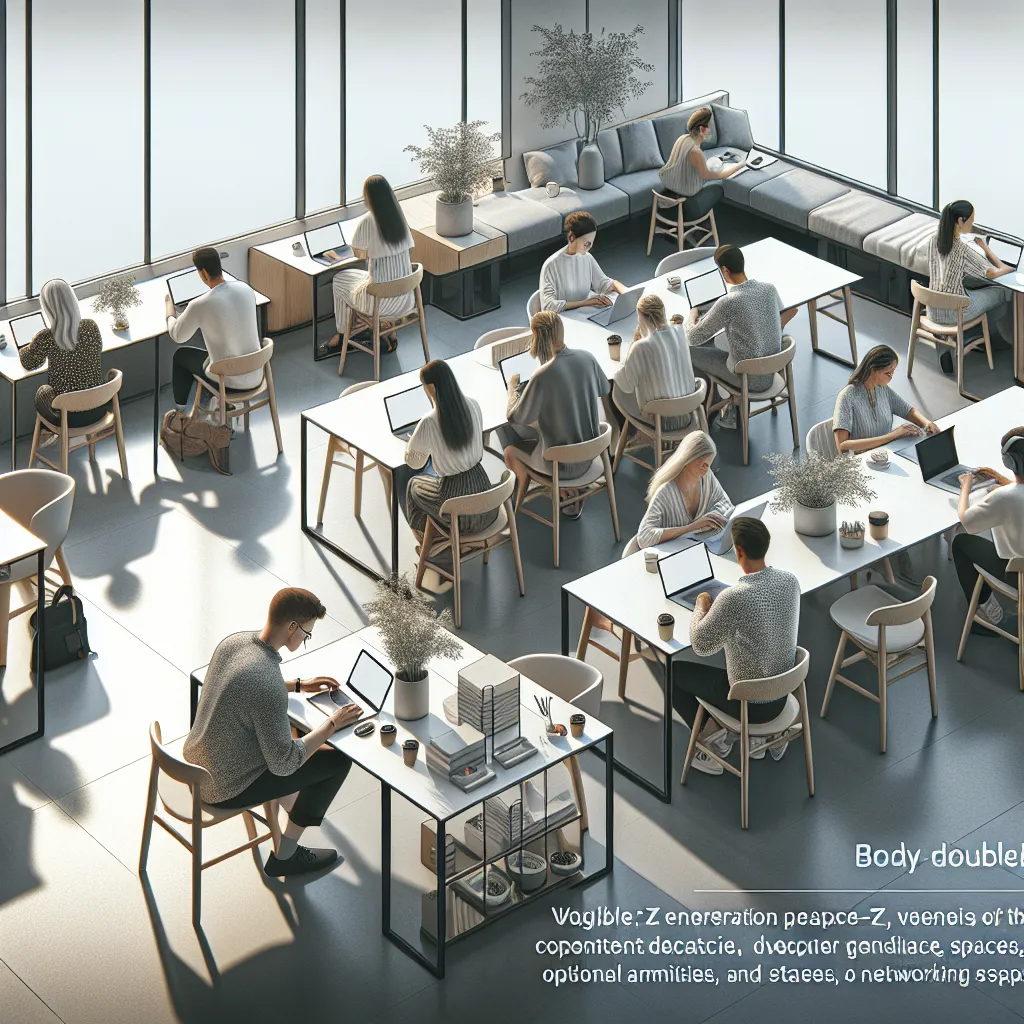
Description
No additional description provided.
The Pitch
In today’s digital age, many Generation Z remote workers face challenges with motivation, distraction, and feelings of isolation. Even though they enjoy unprecedented flexibility compared to previous generations, maintaining productivity and a sense of community while working remotely has proven difficult. One emerging solution among this demographic is “body doubling,” which involves working silently alongside others to enhance accountability and focus. Currently, these interactions mainly occur through platforms like TikTok livestreams and Discord servers, which lack the formal infrastructure to support sustained productivity.
---
**Problem**
The lack of structured, physical environments tailored for remote, Gen Z workers compounds the challenge of balancing independence with the need for community. Traditional co-working spaces and offices are typically more formal, often not resonating with Gen Z’s desire for flexibility, autonomy, and casual networking opportunities. As a result, Gen Z workers often find themselves without an appropriate space where they can work efficiently while feeling socially supported.
---
**Solution**
The solution is to introduce local micro co-working pods specifically designed for Gen Z workers. These pods are essentially mini co-working spaces that offer pay-by-the-hour body doubling slots. They are quiet, minimalist spaces created for those who seek accountability and focus without the distractions of traditional office environments. This setup provides a structured yet flexible environment where Gen Z individuals can plug in and work alongside peers, fostering a sense of community and enhancing productivity.
---
**Product Details**
- **Design**: Focused on minimalism, these pods provide essential workstations with comfortable seating and adequate lighting. Soundproofing ensures a silent work environment.
- **Services**: Users can book spaces by the hour. Optional services include access to coffee, networking opportunities, and scheduled short social breaks to maintain a balance between work and relaxation.
- **Technology**: A dedicated app will facilitate easy booking, track usage, and provide community features such as networking events or group work sessions.
- **Locations**: Strategically placed in urban neighborhoods, close to residential areas but away from major business districts to provide accessibility without hustle.
---
**Tools for MVP Launch**
- **Booking Platform**: Develop a simple mobile app using low-code platforms like Bubble or Adalo to allow users to book time slots easily.
- **Space Configuration**: Utilize modular furniture and soundproofing materials to create flexible, focused spaces. Local furniture suppliers could be partnered with for rapid setup.
- **Community Engagement**: Leverage social media channels for initial outreach and community building, ensuring a strong digital presence.
- **Technology Integration**: Implement IoT devices for managing space utilization and user preferences to optimize the pod environment.
---
**Go-To-Market Strategy**
1. **Target Audience Identification**: Focus on urban areas with high concentrations of Gen Z remote workers.
2. **Partnerships**: Collaborate with local coffee shops and independent cafes to integrate services and provide discounts to pod users.
3. **Marketing**: Utilize influencers on TikTok and Instagram who already promote productivity hacks and remote work tips to reach potential users organically.
4. **Pilot Programs**: Launch initial pods in select neighborhoods to gather feedback and refine the product offering based on real-world usage.
---
**Business Model**
- **Revenue Streams**: Hourly rental fees, subscription plans offering regular usage discounts, partnerships with local food and beverage providers for bundled services.
- **Cost Structure**: Initial investment in space rental, interior setup, and technology. Ongoing costs include maintenance, utilities, and staff for management and assistance.
- **Scalability Consideration**: Begin with a few pods and gradually expand based on demand, potentially adopting a franchise model to facilitate rapid scaling.
In conclusion, micro co-working pods present a novel way to address the unique productivity needs of Gen Z remote workers, balancing independence with the benefits of community presence. These pods have the potential to redefine how the future workforce manages work-life balance in the remote era.