GameGen: Game Creation with AI-Powered Custom Builds
Description
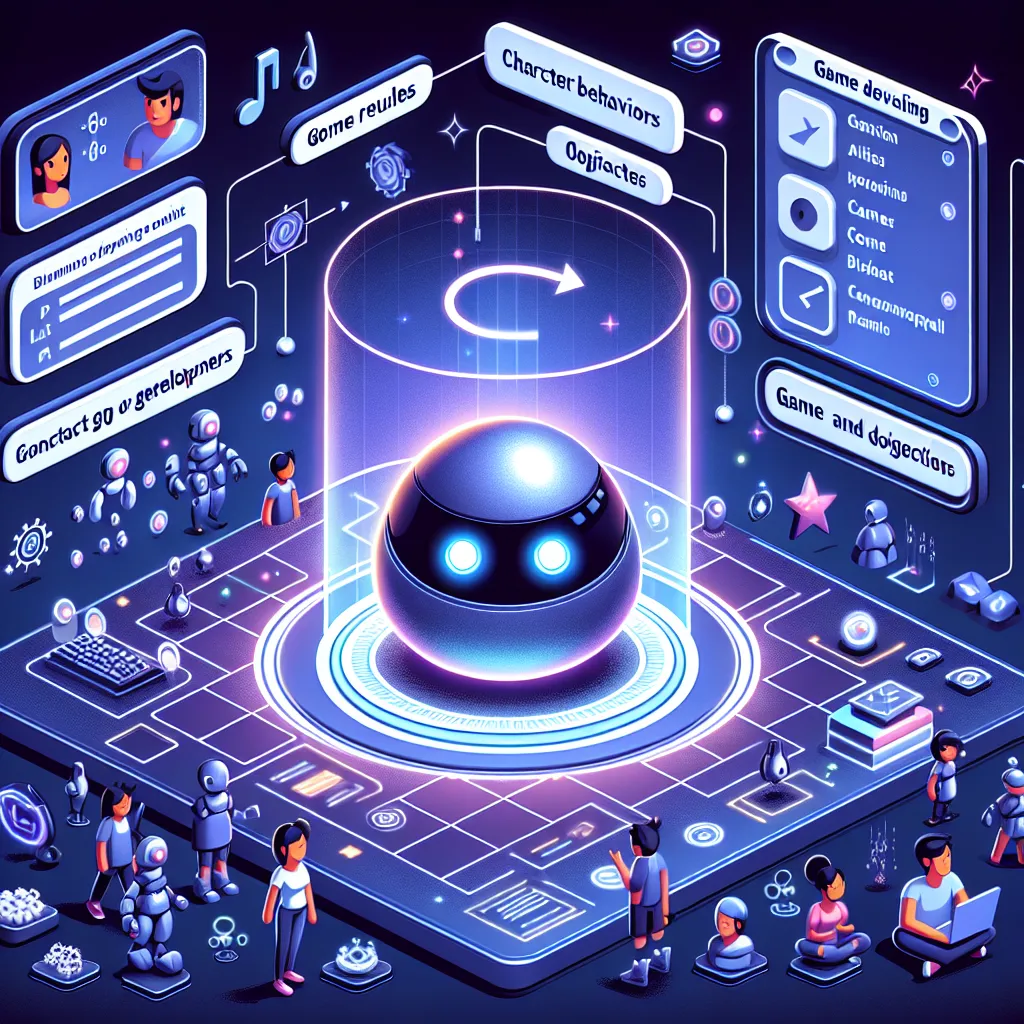
A platform where anyone can create custom games with simple prompts. Users input their game rules and ideas into an AI-powered bot, which then generates a fully playable game. This tool makes game development accessible to everyone, from enthusiasts to professional developers, by automating complex coding and design tasks. Users can specify genres, character behaviors, and game objectives, and the AI handles the rest, producing personalized gaming experiences. This innovation could transform the gaming industry, democratizing game creation and leading to a surge of unique, user-generated content.
The Pitch
In the current gaming industry, crafting custom games requires a substantial knowledge of programming, design, and game development systems, which can be a significant barrier for many enthusiasts and professionals alike, limiting creativity and diversity in the games available in the marketplace.
Solution Overview: Our solution is an intuitive, AI-powered platform that allows users to create custom games just by inputting simple prompts. By specifying game rules, genres, character behaviors, and objectives, users can leverage our advanced AI to automatically generate a fully playable and personalized video game. This platform handles all the complexities of coding and design, effectively breaking down the technical barriers that restrict creative game development.
Target Audience: Our primary users are gaming enthusiasts without formal programming knowledge, indie game developers looking for streamlined production tools, and educational institutions that wish to incorporate easy and interactive game design into their curricula. Additionally, professional game developers can use this tool for rapid prototyping and testing of game concepts.
Value Proposition: This platform liberates creativity, making game development accessible to a broader audience and enabling users to create games that are limited only by imagination, not technical ability. It significantly reduces the time and cost associated with traditional game development, while allowing rapid iteration and experimentation with game concepts.
Market Analysis: The global game market continues to grow, exceeding $150 billion in revenue annually, with user-generated content platforms like Roblox and Minecraft demonstrating robust engagement and profitability. However, these platforms still require users to learn specific programming languages or use pre-defined assets. Our platform removes these hurdles entirely, providing a revolutionary leap in accessibility and user-freedom, thereby tapping into a potentially underserved segment of creative individuals eager to enter the gaming space.
Implementation Plan: The development will proceed in three phases: 1. Development of AI and Platform: Building the AI infrastructure capable of interpreting user inputs and crafting games, alongside a user-friendly interface. 2. Beta Testing: Rolling out the platform to select users in stages, collecting feedback, and making necessary adjustments. 3. Public Launch and Scaling: Launching the platform publicly, followed by marketing campaigns targeting schools, indie developers, and gaming communities.
Monetization Strategy: The platform will operate on a freemium model: - Basic Version: Free access with limited features, suitable for beginners and casual users. - Premium Version: Monthly subscription offering advanced features like enhanced AI capabilities, support for more complex games, and additional customization options. - Marketplace: Users can sell their games or game templates on our marketplace, with a percentage commission taken on sales.
Impact Assessment: This platform is poised to democratize game development dramatically. It can potentially: - Fuel innovation in game design, leading to a broader range of game types and themes that have never been explored. - Lower the entry barrier into the gaming industry, fostering inclusivity and diversity among game developers and characters. - Enhance STEM learning by integrating into educational programs, allowing students to learn programming and logical thinking in a fun, engaging way.
By redefining how games are created and who can create them, this tool not only opens up the gaming industry to a wave of new creators but also catalyzes a shift towards a more inclusive and creatively diverse gaming culture.