Futures Market for AI Inference Compute
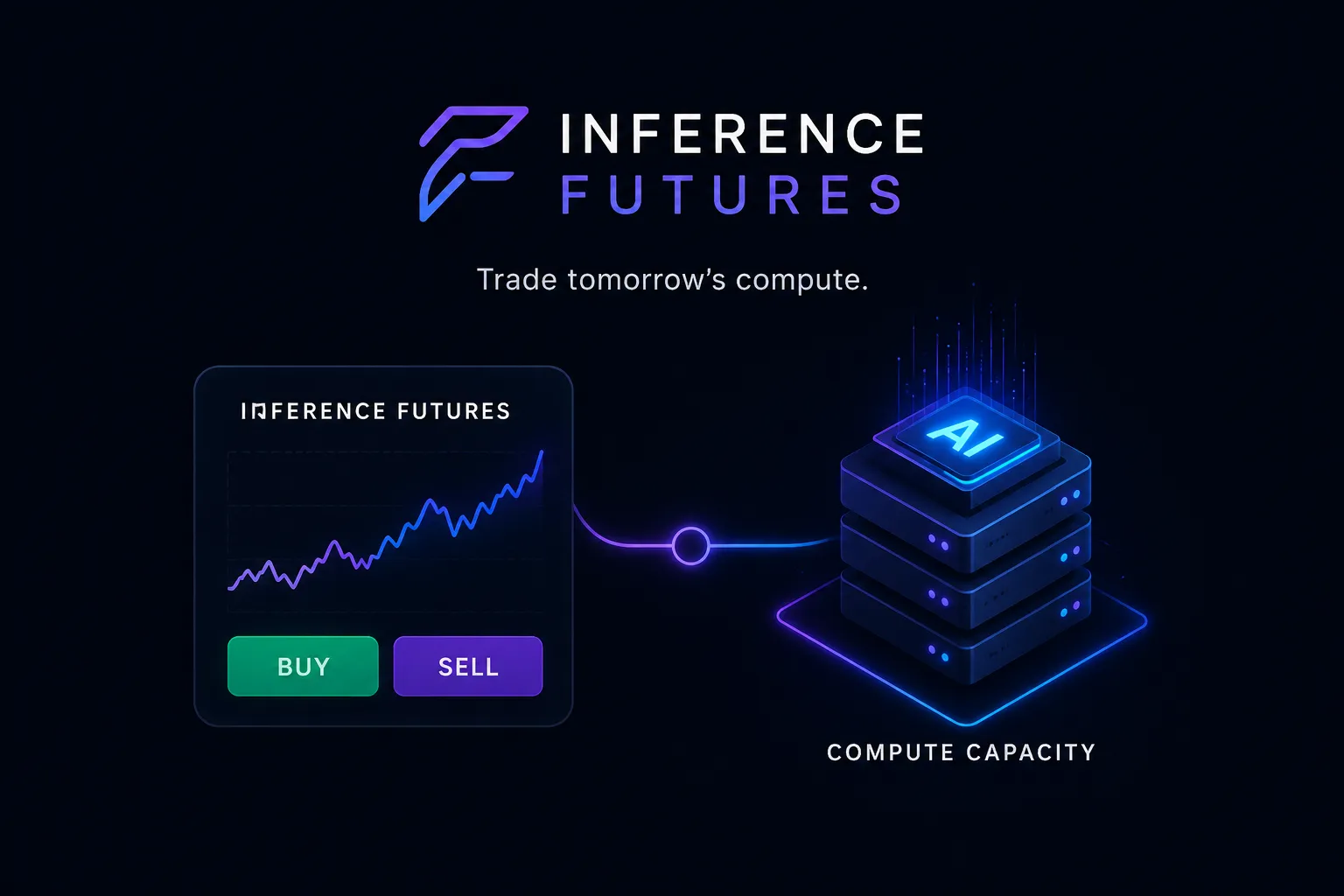
Today companies buy cloud capacity on demand. If inference becomes one of the world’s largest operating expenses, businesses will want to lock in prices years in advance. This startup creates the financial market for AI compute, allowing companies to buy, sell, and hedge future inference capacity much like electricity, bandwidth, or oil. The opportunity appears once inference costs become material enough to affect corporate earnings. An autonomous trucking company could guarantee five years of inference pricing before deploying 100,000 vehicles.
Description
No additional description provided.
The Pitch
If AI inference becomes embedded in daily operations, compute stops looking like a technical resource and starts looking like an input cost. The important shift is not that companies will use more GPUs; it is that their margins may become exposed to a volatile commodity they do not control. A business that spends 2% of revenue on inference can tolerate spot-market chaos. A business that spends 20% of gross profit on inference cannot. At that point, predictable compute pricing becomes less like procurement and more like financial risk management.
The most interesting part is that AI compute has the ingredients of a real commodity market, but with stranger constraints. A unit of inference is not perfectly uniform, because latency, geography, model architecture, chip type, and reliability all matter. That complexity is usually seen as a problem. It may actually be the opportunity. Markets form where buyers and sellers need a common language for imperfectly interchangeable goods. The company that defines the contract standards for future inference capacity could become the place where the market itself becomes legible.
This would also change the balance of power between AI users and infrastructure owners. Today, large cloud providers benefit from customers discovering their future needs only when demand arrives. A forward market lets buyers reveal long-term demand earlier and lets suppliers finance capacity against committed future usage. That matters because compute infrastructure is capital intensive, slow to build, and often mispriced until it is scarce. A market for future capacity would not merely trade existing compute; it would help decide what compute gets built.
The compelling business is not just brokerage. It is the accumulation of pricing intelligence in a market where everyone else is guessing. If inference becomes a line item that boards discuss, the most valuable dataset will be the forward curve of machine intelligence: what it costs to perform cognition in six months, two years, or five years. That curve would influence budgets, product decisions, model choices, and infrastructure investment.
The deeper thesis is that once intelligence becomes industrialized, it inherits the financial machinery of every other industrial input. Companies do not run airlines without fuel hedges or factories without power contracts. If AI becomes operational infrastructure rather than software novelty, the absence of a compute derivatives market will look temporary, not natural.