Futarchy: Markets Over Votes for Better Decisions
Voting is a terrible way to decide complex futures. It measures preference, not correctness. Futarchy exists because groups want better outcomes, not louder opinions. This system lets organizations propose policies, then lets markets decide which one is most likely to work. You don’t vote for what you like — you stake on what you believe will succeed. This exists because coordination has scaled, but decision quality hasn’t.
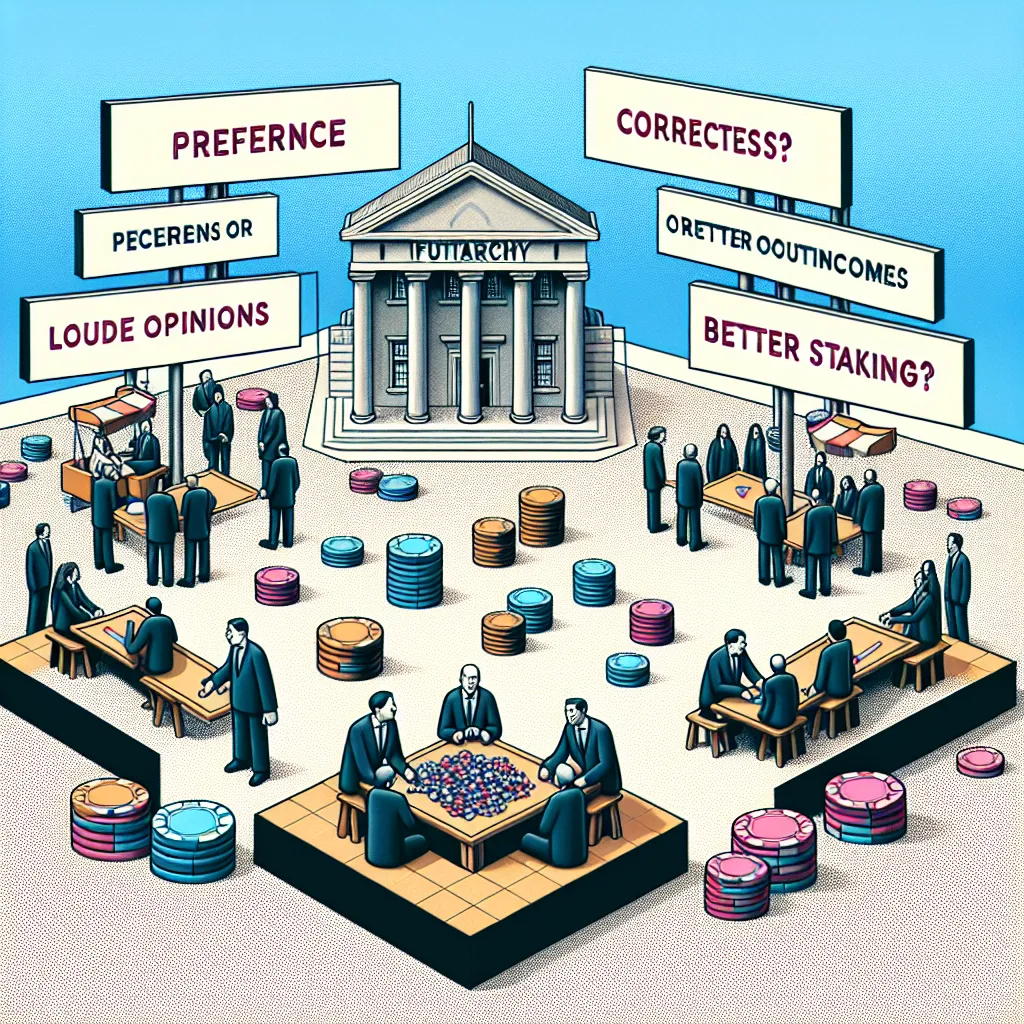
Description
No additional description provided.
The Pitch
In contemporary society, decision-making processes within organizations and larger systems often rely on traditional voting mechanisms. These mechanisms prioritize majority preference over informed correctness, leading to suboptimal outcomes. As organizations and societies grow increasingly complex, the challenges inherent in making decisions that maximize success and benefit escalate. The quest for improved decision processes has led to exploring innovative models that align incentives with desired outcomes, prompting the development of a futarchy-based approach.
Problem: Traditional voting systems pose significant limitations, especially in the face of intricate decisions that require more than personal preference. These systems fail to account for the nuances of different outcomes and tend to amplify popular opinion rather than informed decision-making. This often results in decisions that are misaligned with long-term organizational objectives and fail to optimize overall welfare.
Solution: Futarchy offers a groundbreaking alternative by integrating prediction markets with decision-making processes. Unlike traditional voting, futarchy empowers stakeholders to stake predictions on policy outcomes rather than simply expressing preferences. This model incentivizes market participants to leverage their knowledge and information to predict the success of proposed policies, leading organizations toward decisions based on anticipated effectiveness rather than popularity.
Product Details: The platform allows organizations to propose policies addressing specific issues or goals. Instead of voting, stakeholders engage in prediction markets, staking on the likelihood of success for each policy. The policy predicted to achieve the highest success is adopted. Features include:
1. Policy Proposal Interface: Allows participants to outline and detail proposed policies. 2. Prediction Market System: Facilitates a market where users stake predictions on policy outcomes. 3. Real-Time Analytics: Provides insights into market trends and participant predictions to guide decision-making. 4. Feedback Loop: Continuously assesses the success of implemented policies to fine-tune market predictions and strategies.
Tools for MVP Launch: 1. Ethereum blockchain for secure and transparent prediction markets. 2. Smart contract implementation to automate market operations and reward distributions. 3. A user-friendly web interface developed with React.js for seamless interaction. 4. Machine learning algorithms to analyze data patterns and improve market prediction accuracy.
Go-To-Market Strategy: 1. Target early adopters in forward-thinking organizations and tech-savvy industries. 2. Conduct pilot projects to showcase the platform's efficacy in real-world scenarios. 3. Develop strategic partnerships with influential industry leaders to promote credibility. 4. Leverage educational content and webinars to demystify futarchy and its benefits.
Business Model: 1. Subscription-Based Model: Charge organizations a recurring fee for platform access and premium features. 2. Transaction Fees: Implement fees on market transactions to generate revenue while fostering engagement. 3. Consulting Services: Offer expert guidance and support for optimal platform utilization and policy proposal development. 4. Data Licensing: Monetize anonymized market data to research institutions and organizations interested in decision science.
Conclusion: Our futarchy-based decision-making platform presents a transformative approach to organizational decision processes. By harnessing the power of market predictions, it aligns incentives with desired outcomes, promising more effective and informed decisions. This system addresses the shortcomings of traditional voting and positions organizations to thrive in complexity by basing decisions on what is most likely to succeed.