Friendly Honk System: Redefining Car Communication
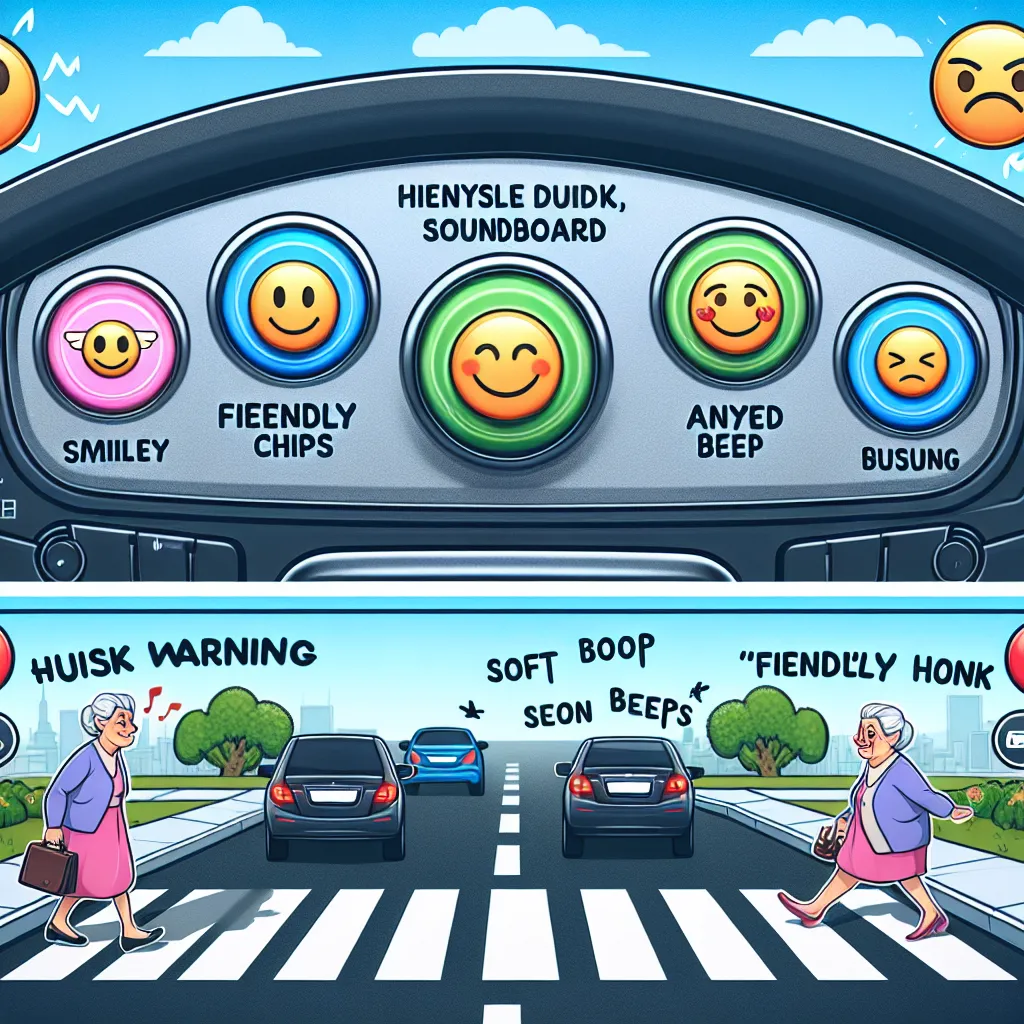
Car horns are binary weapons — either silent or signaling full-blown rage. Yet most honks aren’t meant to scold, they’re meant to gently nudge: “Heads up,” “Light’s green,” or “Hey friend!” Without a better option, drivers are stuck choosing between being rude or staying silent and hoping the pedestrian sees them. A dashboard soundboard fixes that by introducing “friendly honks” — pleasant chirps, soft beeps, maybe even a cartoonish boop to say hello without triggering road-rage instincts. Each is tied to expressive icons — smiley face for friendly, annoyed emoji for a quick warning — removing the social ambiguity currently baked into honking. Better signaling means fewer misunderstandings, fewer flinches, and a little more humanity on the road. It’s a small UI update for cars, but a giant leap for not accidentally scaring grandma in the crosswalk.
Description
No additional description provided.
The Pitch
In the hustle and bustle of daily driving, communication between vehicles and pedestrians has been reduced to a series of binary interactions, typically characterized by the use of a car horn. The problem lies in the inadequacy of current car horns to convey nuanced messages. When a driver honks, it's often interpreted as aggressive or impatient, even when the intention is simply to alert or gently remind someone of their presence or an event like a green light.
**Problem Statement:**
Car horns lack the ability to convey different levels of urgency or emotion. This often leads to misunderstandings and escalates situations that could be resolved more civilly. The current system of honking is inherently flawed because it provides only one blunt mode of communication that can trigger defensive or angry responses, escalating road rage and contributing to the stress of driving.
**Solution:**
Introducing the Friendly Honk System, a user interface update for car dashboards that allows drivers to choose from a range of friendly honks. This system provides a variety of sounds, such as pleasant chirps, soft beeps, or cartoonish boops, to communicate simple non-aggressive messages. Each sound is paired with expressive icons — a smiley face for a friendly honk, an annoyed emoji for a simple warning, and so forth — helping to reduce ambiguity and ensuring messages are received with the intended tone.
**Product Details:**
- **Soundboard Interface:** A small panel integrated into the dashboard with clearly labeled buttons. - **Sound Options:** A selection of three to five sounds with different emotional tones. - **Expressive Icons:** Accompanying visual cues on the dashboard display to reinforce the auditory message. - **Customization Options:** Users can download additional sounds and assign them to buttons as desired.
**Tools for MVP Launch:**
- **Prototype Development:** Use prototyping tools such as Figma for design and Arduinos for soundboard function testing. - **User Testing Platform:** Applications like UserTesting to gather feedback from real drivers. - **Audio Software:** Audacity for creating and editing custom sound profiles.
**Go-To-Market Strategy:**
- **Market Research:** Conduct surveys to identify the sounds preferred by drivers and any additional features they might need. - **Partnerships:** Collaborate with car manufacturers and aftermarket accessory companies to integrate or offer as a recommended add-on. - **Launch Campaign:** Use social media and targeted online advertising to create awareness, emphasizing safety and improved driver communication.
**Business Model:**
- **Initial Sales:** Offer the system as a standalone product for aftermarket installation. - **Subscription Model:** Provide a premium service for downloading additional sounds and interface customizations. - **Partnership Revenue:** Generate income through collaborations with car manufacturers and accessory brands. - **Data Insights:** Offer anonymized data insights to automotive companies about usage patterns for improving vehicle interfaces and communication tools further.
By adopting the Friendly Honk System, drivers will no longer be faced with the harsh binary choice of honking or staying silent. Instead, they can engage in more nuanced road communication that reduces misunderstandings, promotes safety, and injects a touch of humanity into daily commutes.