Friend-Matched Dating App
Your married friends are constantly telling you they know the perfect person for you. Make them prove it. Alley Oop is a dating app where people in relationships create profiles for their single friends instead of singles creating profiles for themselves. Your friends describe you, choose your photos, and browse the single friends of people they actually know. When two matchmakers think their friends would work together, they make the introduction. Dating apps turned dating into shopping through strangers. This turns it back into the thing that worked before dating apps existed: someone you trust saying, “I know someone you should meet.”
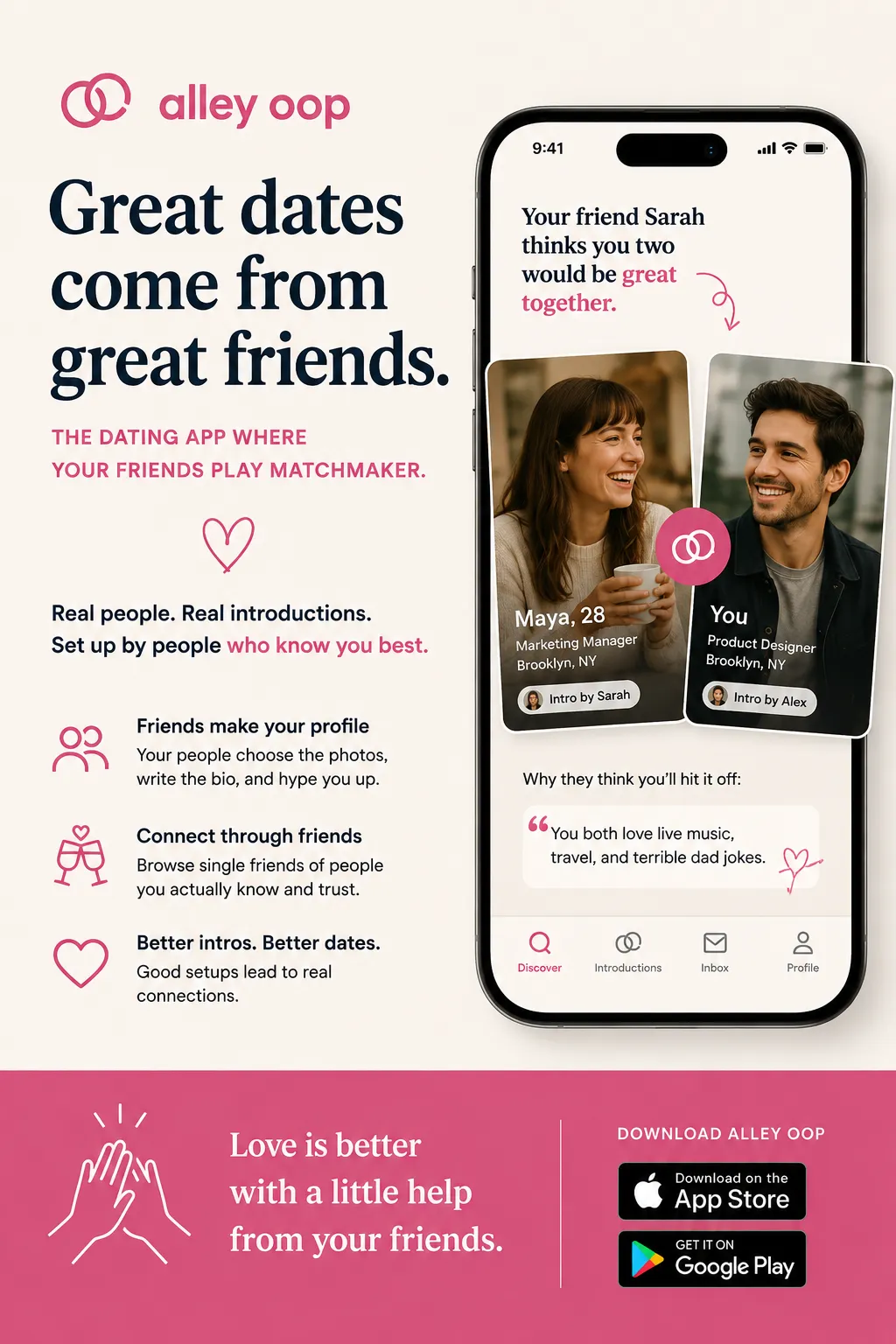
Description
No additional description provided.
The Pitch
Most dating products ask the most emotionally exhausted person in the system—the single person—to perform themselves, filter strangers, interpret weak signals, and absorb rejection. This idea recruits the people with the most surplus energy for the task: coupled friends who are entertained by matchmaking, socially invested in the outcome, and often more optimistic about someone’s prospects than the person themselves.
It also fixes a subtle trust problem that dating apps have never solved well. A self-written profile is both advertisement and confession, which makes every claim feel slightly suspect. A profile written by a friend has a different texture: it can say the awkwardly complimentary things people cannot say about themselves, and it carries reputational risk for the person saying them. “He is genuinely kind” means more when it comes from someone who will have to answer for the introduction later.
The marketplace could be unusually high-quality because the supply is socially filtered before it ever appears. In conventional apps, anyone can enter the pool, and the product must spend enormous effort managing noise, bad behavior, and misrepresentation. Here, every participant is vouched into the system by someone with a real-world relationship. That does not guarantee compatibility, but it raises the floor. The key asset is not a better algorithm; it is the web of small social obligations that makes people behave less like anonymous users.
There is also a powerful distribution loop hidden inside the behavior. A single person may be reluctant to join yet another dating app, but a friend saying “I made you a profile” is not an ad; it is a social event. The product spreads through pairs and friend groups, not isolated individuals. Each act of participation naturally points at someone else: a friend to represent, another matchmaker to coordinate with, a couple to invite, a new single person to add.
The deeper business insight is that modern dating apps monetized infinite choice, but many people are tired of infinite choice. This company would be compelling because it sells a narrower, warmer, more accountable version of abundance. It does not need to make dating feel efficient. It needs to make dating feel human again, and that is a surprisingly differentiated position in a category that has spent years optimizing away the social context that made introductions meaningful.