FlowOS: Your Personal Conversational Operating System
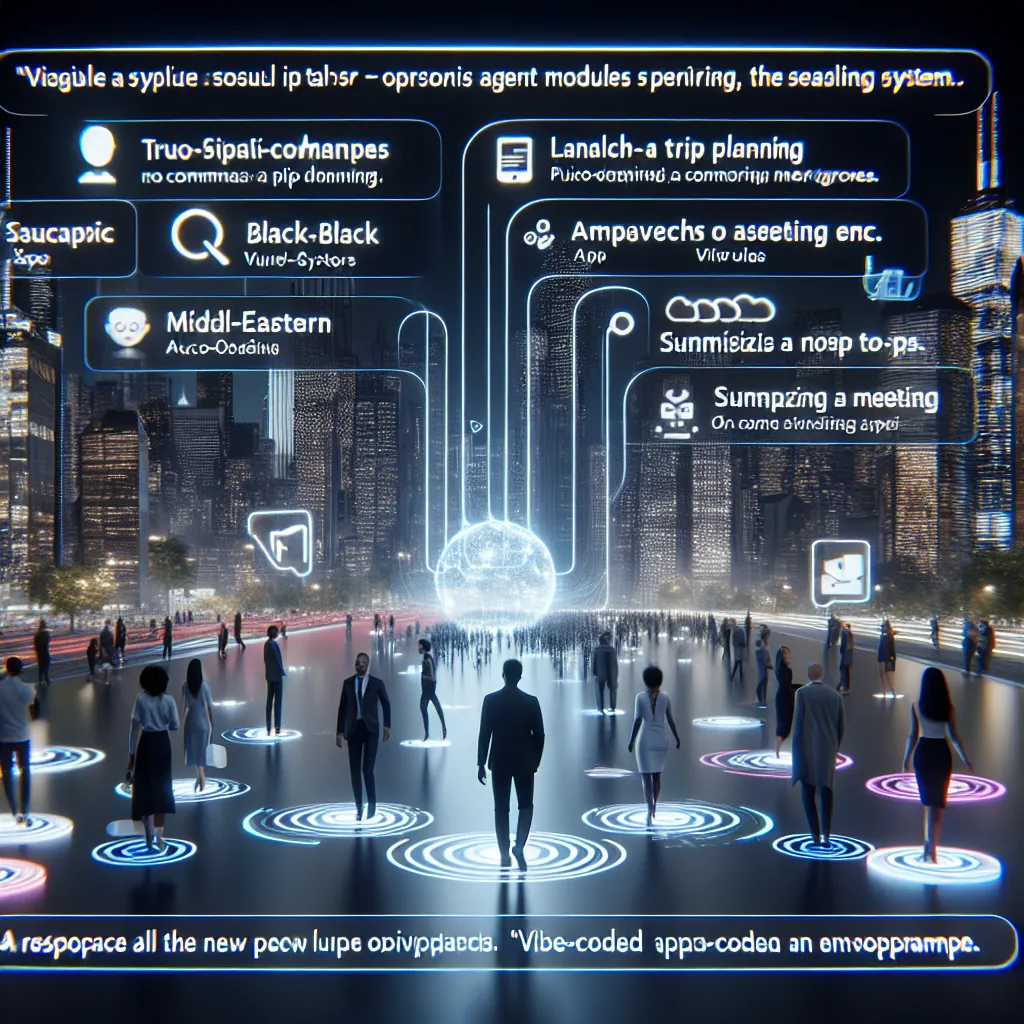
Vibe coding will create a world where every person has a personal operating system — FlowOS is that. Instead of apps, you chat your way through life: “Plan my trip,” “Launch my store,” “Summarize my investor call.” Each command spins up a micro-agent and vanishes when done. No folders. No tabs. Just flow. Built entirely through vibe-coded logic blocks, FlowOS could become the spiritual successor to iOS for the agent era — an interface where creation feels like conversation. The business model? Plug-in marketplace for agent modules built by creators, turning vibe coders into a new class of app developers.
Description
No additional description provided.
The Pitch
In an era where technology is omnipresent, the demand for a more intuitive and seamless interaction with digital environments is growing rapidly. Users are overwhelmed by the constant interaction with multiple applications, scattered data sources, and fragmented workflows. The vision behind FlowOS is to create a world where every person has a personal operating system, facilitating seamless interaction through natural conversation.
FlowOS is the culmination of years of understanding the evolving relationship between humans and technology. As digital interfaces have grown increasingly complex, the need for a more human-like interaction method has become clear. FlowOS aims to simplify how users engage with technology by offering a personal assistant-like platform, reminiscent of what iOS achieved for smartphones, but adapted to meet the needs of the agent era.
Section 2: Identifying the Problem
The modern digital experience is plagued by inefficiencies. Users constantly switch between apps, become bogged down by notifications, and waste significant amounts of time organizing digital information. Traditional operating systems are not designed to approach human-computer interaction naturally and fluidly. The compartmentalization of tasks into separate apps necessitates inefficient workflows and continued mental context switching.
Section 3: The Solution
FlowOS introduces a groundbreaking approach by utilizing vibe-coded logic blocks that allow users to chat their way through tasks. With commands like Plan my trip, Launch my store, or Summarize my investor call, users engage in a fluid interaction where each command spawns a micro-agent that manages the task at hand, with these agents vanishing upon task completion. This results in an unprecedented streamlining of digital workflows, removing the need for folders, tabs, or traditional application interfaces.
Section 4: Product Details and Tools
FlowOS's core is built on a framework of vibe-coded logic blocks, a paradigm shift in how users create and manage digital experiences. Key components include:
- A conversational interface that processes and executes user commands. - A library of customizable micro-agents, designed to perform specific tasks — from scheduling to communication to data processing. - A robust natural language processing engine to ensure intuitive interaction. - A marketplace for agent modules, enabling creators to develop and monetize new functionalities for FlowOS.
To facilitate the launch of an MVP, leverage tools such as:
- Prototyping tools (e.g., Figma, Sketch) to iterate on the FlowOS interface. - Natural language processing platforms (e.g., Google's Dialogflow) to accelerate conversational capability development. - Microservices architecture tools (e.g., AWS Lambda) to efficiently deploy micro-agents.
Section 5: Go-to-Market Strategy
To bring FlowOS to market, consider a phased approach:
- Initial Release: Begin with an invite-only beta launch targeting digital professionals who can offer valuable feedback and evangelize the platform. - Partnerships: Collaborate with educational and productivity software companies to integrate FlowOS into existing workflows, highlighting its efficiency improvements. - Community Building: Cultivate a community of vibe coders who can create and sell new agent modules through the FlowOS marketplace.
Section 6: Business Model
FlowOS's business model will focus on a plug-in marketplace for agent modules. This approach not only generates revenue but also encourages a vibrant community of creators who become an integral part of FlowOS’s ecosystem. Additional revenue streams could include premium subscriptions for enhanced features or partner integrations, alongside enterprise licensing for organizational deployment.
In conclusion, FlowOS represents a fundamental shift in personal computing through the innovative use of vibe coding and conversational interaction. By addressing the inefficiencies of traditional operating systems, it has the potential to redefine how individuals and businesses interact with digital environments and streamline their workflows.
---