FlowChain: Unified Workflow for Chat App Integration
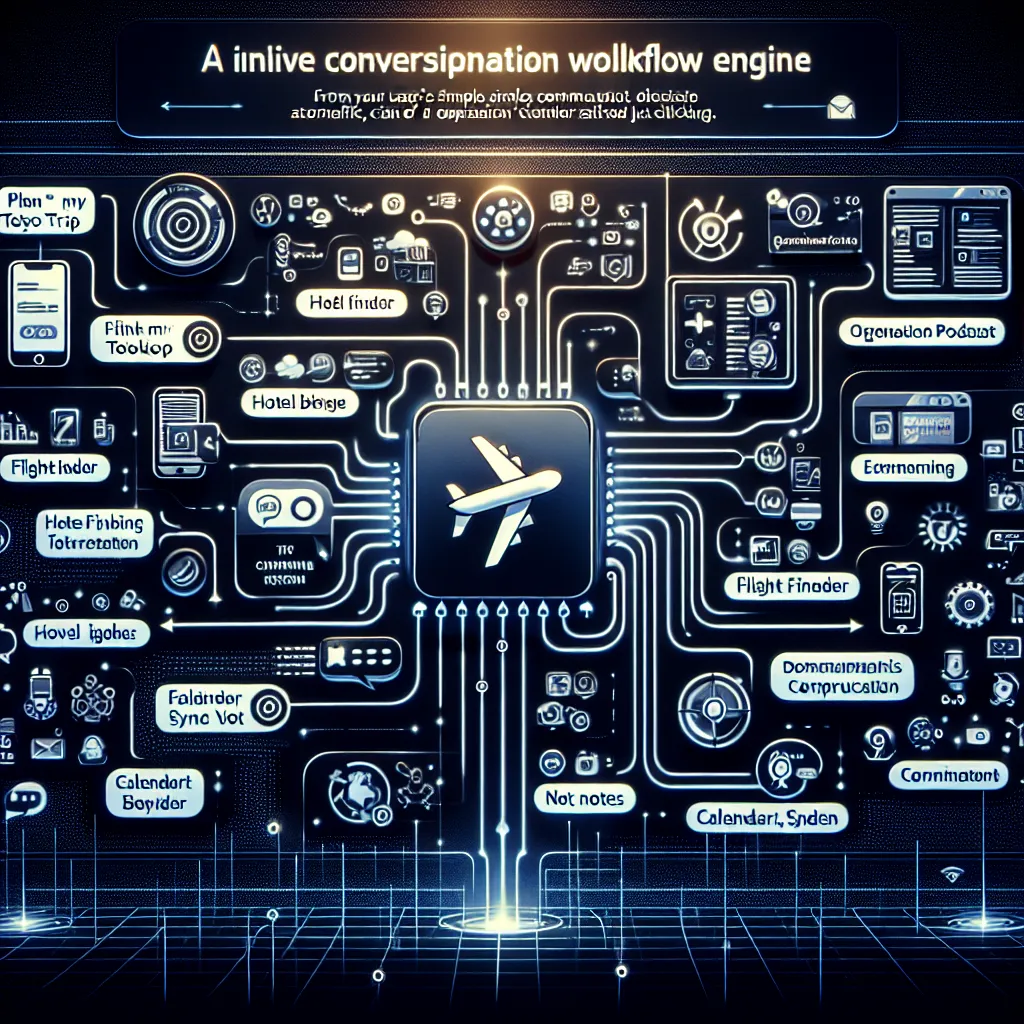
Users don’t want ten different chat apps — they want one that handles their workflow. The problem: ChatGPT apps today act like silos. FlowChain stitches them together. It’s a conversational workflow engine that connects multiple in-chat apps into a seamless chain. “Plan my Tokyo trip” could trigger FlightFinder → HotelGenie → ItineraryBuilder → CalendarSync, automatically passing data and confirmations between each. It’s Zapier for the chat era, designed for AI agents that talk instead of clicking. As more apps launch, orchestration becomes the bottleneck. Example: you say “Organize my podcast,” and FlowChain chains Otter for transcript, Notion for notes, and Descript for clips — all in one flo
Description
No additional description provided.
The Pitch
In today's saturated market, users are overwhelmed by the plethora of chat applications available, each serving a unique function. While these apps individually serve their purposes, the lack of integration creates a fragmented experience for users who seek cohesive workflow management. FlowChain emerges as a solution to this problem by uniting disparate chat applications into a seamless conversational workflow engine. The product enhances productivity by automating and connecting various in-chat applications, effectively becoming the Zapier of the chat era, fine-tuned for AI agents.
Backstory and Problem Statement
As digital transformation intensifies, AI-driven chat applications have become an integral part of daily workflows, facilitating tasks ranging from scheduling meetings to managing complex projects. Despite the benefits of these specialized apps, they often function in isolation, resulting in inefficiencies and user frustration due to constant context-switching. Users crave an all-encompassing solution that aligns with their need for streamlined workflows without having to juggle multiple platforms.
The Solution
FlowChain addresses this gap by bridging these standalone applications, creating a unified, conversational interface. This solution leverages the power of AI to orchestrate workflows across multiple chat applications. With FlowChain, a simple command like Plan my Tokyo trip can seamlessly trigger a series of integrated actions: finding flights, booking accommodations, generating itineraries, and syncing schedules. The tool is designed for the modern user who values efficiency and wants to harness AI’s potential to its fullest, without the friction.
Product Details
FlowChain works as a middleware platform, or a conversational microservices orchestrator, that manages interactions between diverse chat applications. It employs AI to understand natural language commands and translates them into actions across connected apps. Key features include:
1. **Integration Platform**: Connects with popular chat and workflow apps, such as Slack, Microsoft Teams, Trello, Asana, and more.
2. **Natural Language Processing**: Uses advanced NLP algorithms to interpret user queries and execute relevant tasks.
3. **Automated Workflow Chaining**: Automatically triggers a sequence of tasks across different apps, passing necessary data and confirmations seamlessly.
4. **Customizable Workflows**: Allows users to create and modify their workflow sequences, tailoring the system to their specific needs.
5. **Data Security and Compliance**: Ensures all interactions and data transfers are secure and comply with industry standards.
Tools for MVP Launch
1. **Backend Development**: Use cloud-based platforms like AWS or Google Cloud for robust infrastructure.
2. **Chatbot Frameworks**: Employ tools like Google's Dialogflow or Microsoft's Bot Framework for developing the conversational AI backbone.
3. **Integration Services**: Leverage APIs from Zapier or Integromat to facilitate app integrations quickly.
4. **Frontend Development**: Use frameworks like React or Angular for developing an intuitive user interface.
5. **Data Management**: Implement databases like MongoDB or Firebase for efficient data handling.
Go-To-Market Strategy
1. **Target Audience**: Focus on tech-savvy professionals, remote workers, and businesses seeking to optimize their operational efficiencies.
2. **Partnerships**: Collaborate with leading chat app providers to ensure smooth integrations and promote FlowChain within their ecosystems.
3. **Pilot Programs**: Launch pilot programs with select users to gather feedback and refine the product before a full-scale launch.
4. **Content Marketing**: Develop case studies, white papers, and blog posts highlighting productivity gains and real-world applications.
5. **Customer Support**: Establish robust support channels for onboarding and continuous guidance to enhance user adoption.
Business Model
FlowChain would operate on a subscription-based model, offering tiered plans to cater to different user segments:
1. **Freemium Tier**: Basic access to core features and limited app integrations, perfect for individual users or small teams.
2. **Professional Tier**: Expanded integrations and advanced workflow customization suited for SMBs.
3. **Enterprise Tier**: Premium features including dedicated support, advanced security, and compliance features, designed for large organizations.
Conclusion
FlowChain is poised to transform the way users interact with chat applications by providing a unified, automated, and efficient workflow management system. By leveraging AI and strategic integrations, it aims to eliminate the silos between chat apps, thus enhancing productivity and redefining user experience in the digital space.