Fandom Attribution and Revenue Sharing Platform
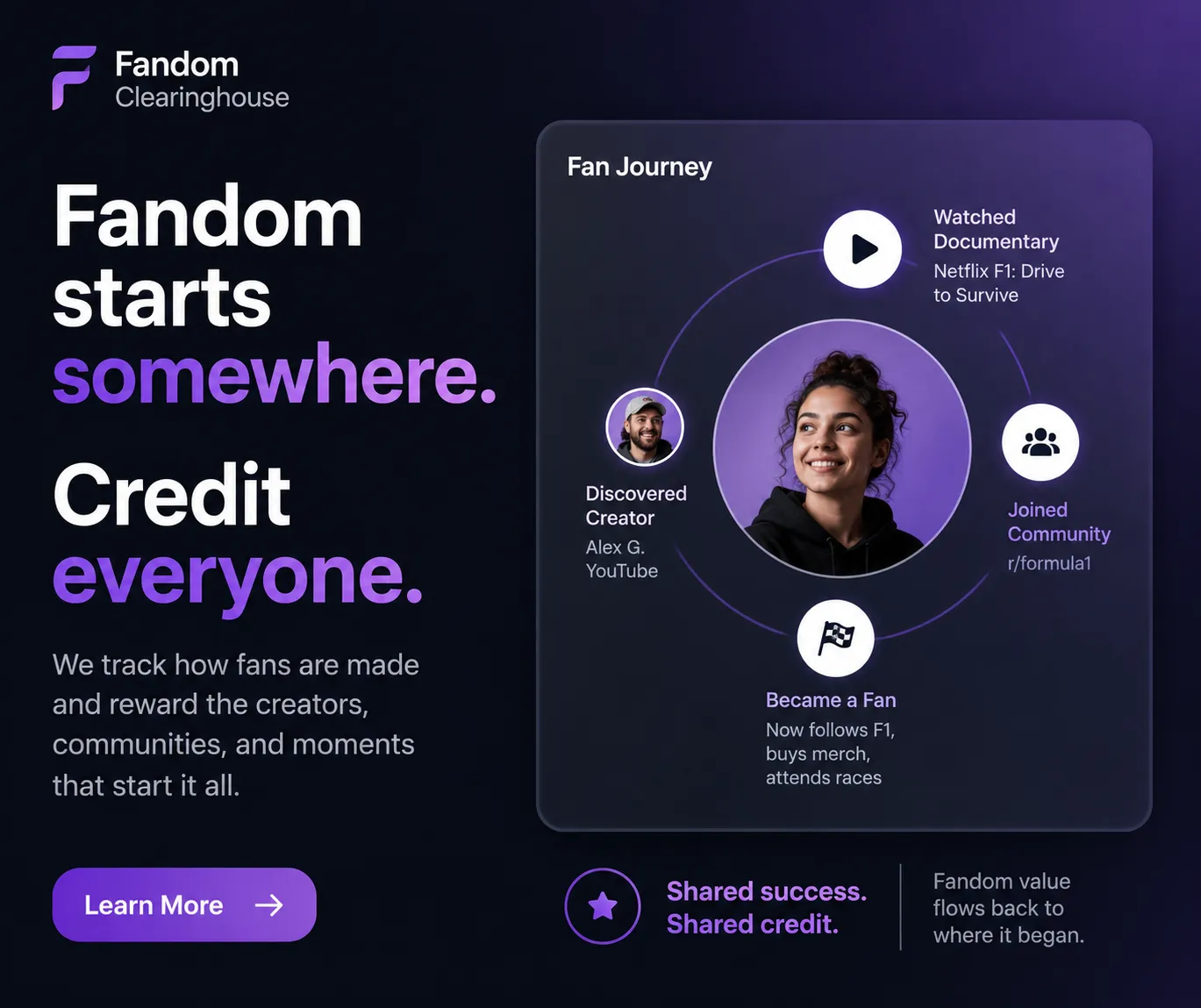
Sports increasingly creates fans outside the entities that ultimately monetize them. Someone sees an athlete in a Netflix documentary, follows a creator covering them, starts watching highlights, buys a jersey, then eventually becomes a paying fan of the team or league. Today, almost all of that originating value disappears. Fandom Clearinghouse would create attribution infrastructure for fandom itself, tracking the verified moments, people and communities that cause someone to become a fan and distributing a portion of downstream economics back to them. Affiliate marketing pays for the sale. This would pay for creating the customer years before the sale happened.
Description
No additional description provided.
The Pitch
Fandom behaves less like a transaction and more like a conversion path with a long memory, but the economics still treat it as if the stadium, broadcaster, or ticketing page created the demand alone. In sports, the most valuable act is often not the final purchase. It is the moment someone decides “this is my player,” “this is my club,” or “this story belongs to me.” Whoever causes that moment has created durable economic value, because sports fans are unusually recurring customers: they buy media, tickets, merchandise, games, betting products, travel, and identity goods over many years.
This would matter because sports has become culturally fragmented while its monetization remains institutionally centralized. A club may own the official relationship, but the emotional relationship is increasingly formed elsewhere: on YouTube, TikTok, Discord, podcasts, documentaries, fantasy leagues, athlete channels, local supporter groups, and niche commentators. These are not just marketing surfaces; they are parallel fan factories. The business works if it can make visible what leagues and teams already suspect but cannot quantify: that the people expanding the audience are often outside the payroll.
The non-obvious opportunity is that attribution would not need to be perfect to be valuable. Existing media economics already tolerate probabilistic credit when the alternative is blindness. If a clearinghouse could credibly show that certain creators, communities, or moments over-index in producing high-intent fans, it would create a new market signal. Rights holders could stop guessing which cultural intermediaries actually grow demand, and intermediaries could be rewarded for long-term fan formation rather than short-term impressions.
It also creates a healthier bargain between official sports properties and the unofficial cultures that make them relevant. Today, teams and leagues often treat fan creators as either free promotion or brand risk. But the best of them are doing something more economically important than promotion: they are translating the sport into belonging. A system that compensates that translation could pull the informal fan economy closer to the formal one without flattening it into corporate content.
The reason this could become a real business is that sports economics are uniquely able to fund it. The lifetime value of a committed fan is high, the emotional conversion is traceable through behavior, and the entities that benefit are large enough to pay for better demand creation. If fandom is the scarce asset, then the people who create it are not merely influencers. They are upstream distributors of future revenue.