Fan Acquisition Royalty Platform
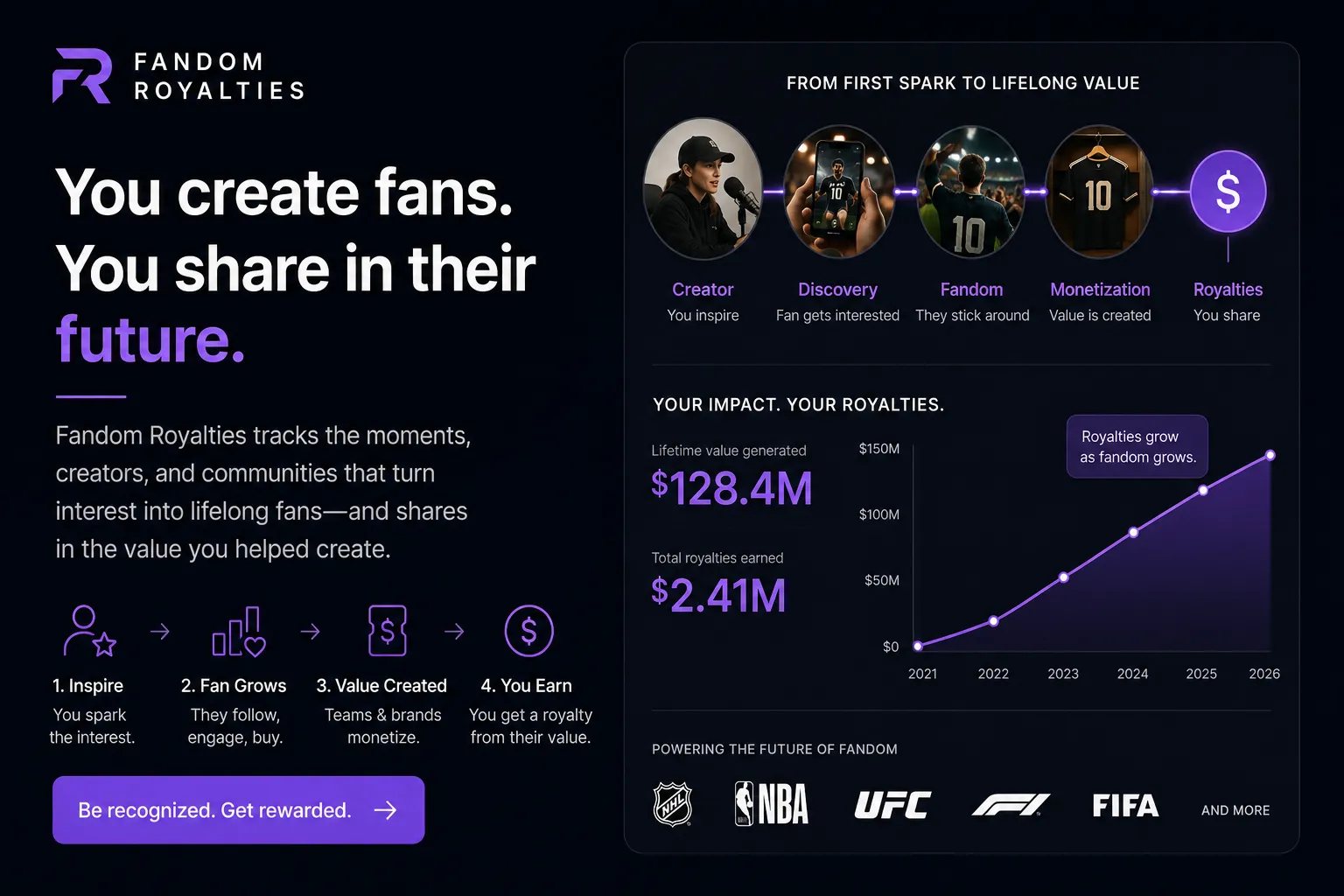
Instead of another Fan Passport, create Fandom Royalties. Every new fan has an acquisition history: the athlete who attracted them, creator who explained the sport, documentary that created interest, community that pulled them in and eventually the team that monetized them. Fandom Royalties would let leagues allocate a tiny percentage of incremental fan revenue into a royalty pool distributed across verified contributors to that fan's creation. Unlike marketing attribution, the chain could persist for years. A creator who causes 50,000 people to become Formula 1 fans could continue participating economically as those fans buy tickets, subscriptions and merchandise later.
Description
No additional description provided.
The Pitch
Sports have quietly become creator-led businesses while still paying as if fandom begins at the turnstile. A teenager may become an F1 fan because of a Netflix episode, learn the grid from a YouTuber, join a Discord, follow a driver’s TikTok, and only months later buy a race ticket or streaming package. The economic credit, however, is usually captured by whoever owns the final transaction. That mismatch leaves the most important demand creators treated as disposable marketing vendors instead of durable participants in the value they helped create.
The non-obvious insight is that fandom is not a purchase decision; it is an identity conversion. Once someone becomes “an Arsenal fan” or “a WNBA person,” the future spending curve can last decades and spill across media, merchandise, travel, betting, games, and live events. A small royalty attached to fan formation could be worth more than a large one-time sponsorship, because the underlying asset is not an impression but a change in allegiance. The company would exist to recognize that a fan’s origin story has economic value long after the campaign report is forgotten.
It also changes incentives in a healthier direction. Today, creators are rewarded for reach, controversy, and short-term engagement because those are the metrics buyers can see. If contributors share in downstream fan value, the best business is not to manufacture attention but to create informed, committed, high-quality fans. The explainer who makes cricket legible to Americans, the community organizer who makes women’s soccer feel social, or the athlete who brings new viewers into track suddenly has a reason to keep educating rather than chasing the next unrelated brand deal.
The strongest version of this business becomes a new accounting layer for culture. Leagues already know that some fans arrive warmer, spend more, and stay longer, but they lack a trusted way to compensate the outside forces producing that warmth. Fandom Royalties would make fan creation legible without reducing it to last-click advertising. If it worked, it would reveal that many sports properties are surrounded by unpaid distribution partners who are not asking for charity; they are asking to be treated like the upstream suppliers they already are.