FailFeed: A Social Network for Public Iteration
Social media glorifies wins, but the real lessons come from the flops — and fast builders are failing more often, in public, with nowhere to really unpack it. FailFeed is a raw, builder-first social app where makers post their micro-failures: bad launches, broken GPT agents, dead side projects, or half-baked startup ideas. Every post is tagged by reason (e.g. bad timing, didn’t resonate, tech too early), and the platform uses LLMs to surface patterns, auto-generate postmortems, and suggest pivots. Why now? In the “make things” era, fast feedback loops beat polished portfolios — and Gen Z is already embracing vulnerability and authenticity online. A 17-year-old posts their failed Chrome extension idea, gets 100 comments with reframe suggestions, and turns it into a new tool that actually lands.
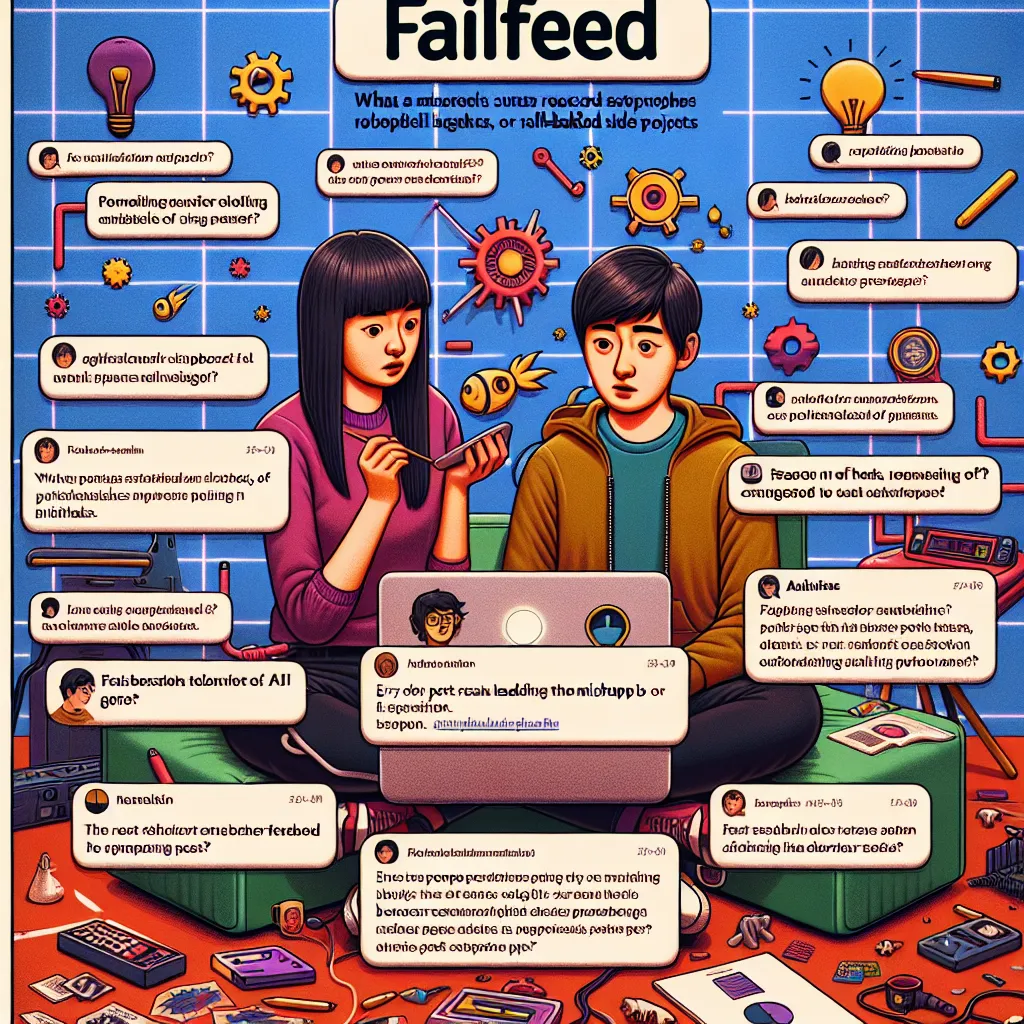
Description
No additional description provided.
The Pitch
In a world dominated by social media, success stories are widely celebrated, often overshadowing the invaluable lessons embedded within failures. The current digital landscape offers limited platforms for builders to openly share their setbacks and learn from them. Enter FailFeed—a revolutionary, builder-first social platform dedicated to transforming failures into stepping stones toward success. By fostering a community where micro-failures are shared, examined, and repurposed, FailFeed aims to capitalize on the raw, untold tales of trial and error often swept aside.
**Backstory**
The inspiration for FailFeed stems from the need for a space where creators, entrepreneurs, and innovators can embrace vulnerability. While platforms like Twitter, Instagram, and LinkedIn highlight polished success stories, they leave little room for dialogue around the more common experience of failure. Recognizing the value of these overlooked narratives, FailFeed was conceived to champion an environment where fast builders and creatives can openly share their missteps and lessons learned.
**Problem**
Despite the rapid increase in startup culture and individual entrepreneurial ventures, few spaces provide a supportive avenue for discussing failures without judgment. Builders are left without a dedicated platform to analyze unsuccessful projects, share insights, and glean constructive feedback. The lack of this open dialogue inhibits collective growth and innovation, leaving many to privately navigate the learning curves inherent to creation.
**Solution**
FailFeed proposes a community-driven approach to learning from failure. By allowing users to post their setbacks and categorize them based on reasons for failure (e.g., poor timing, lack of market need, technological limitations), the platform becomes a rich repository of collective wisdom. An integrated Large Language Model (LLM) will analyze submitted failures to identify patterns and offer auto-generated postmortems, transforming individual experiences into comprehensive learning opportunities.
**Product Details**
FailFeed will feature:
1. **Failure Posts**: Users can share brief accounts of their failed projects or ideas, tagging them with reasons for failure.
2. **Pattern Recognition**: Using advanced LLM capabilities, FailFeed will recognize trends across posts, surfacing common issues and insights.
3. **Postmortem Reports**: Automatically generated analyses will provide users with detailed breakdowns and potential pivot suggestions for their failed projects.
4. **Community Engagement**: A comment and feedback system designed to foster constructive discussion and collaboration.
5. **Success Stories**: Highlighting eventual successes that emerged from initial setbacks, reinforcing the iterative nature of innovation.
**Tools for Launching an MVP**
To efficiently launch the Minimum Viable Product (MVP) of FailFeed, consider employing:
- **No-Code Platforms**: Tools like Bubble or Adalo for rapid application development. - **LLM Integration**: APIs from OpenAI or similar providers to facilitate the natural language processing needs. - **User Engagement Software**: Apply analytics and user feedback tools such as Amplitude or Mixpanel for iterative improvement. - **Cloud Services**: Utilize scalable solutions like AWS or Google Cloud for reliable hosting and data storage.
**Go-To-Market Strategy (GTM)**
1. **Community Building**: Initiate conversations and build interest through online forums, Reddit, and niche social media groups focused on startups and entrepreneurship.
2. **Influencer Partnership**: Collaborate with influencers and thought leaders in the entrepreneurial space to drive awareness.
3. **Launch Campaign**: Use targeted advertising on platforms like Instagram, TikTok, and LinkedIn to reach early adopters with a penchant for innovation.
4. **Pilot Programs**: Implement small-scale launches in targeted geographic or industry segments to refine the product and gather testimonials.
**Business Model**
FailFeed's monetization strategy could include:
- **Freemium Model**: Offer basic features for free with premium subscriptions for enhanced analytics, detailed trend reports, and advanced networking opportunities.
- **Advertising**: Providing a platform for businesses and services catered to creators and startups can drive revenue through targeted advertisements.
- **Partnerships**: Collaborate with educational institutions and entrepreneurship programs to position FailFeed as an ancillary learning tool.
---
FailFeed endeavors to cultivate a culture of candor and collaboration, where sharing failure is as celebrated as sharing success. By reframing setbacks as stepping stones, FailFeed provides an invaluable resource for the next generation of builders and creators.