Expanding Perception: Synthetic Sense OS Revolution
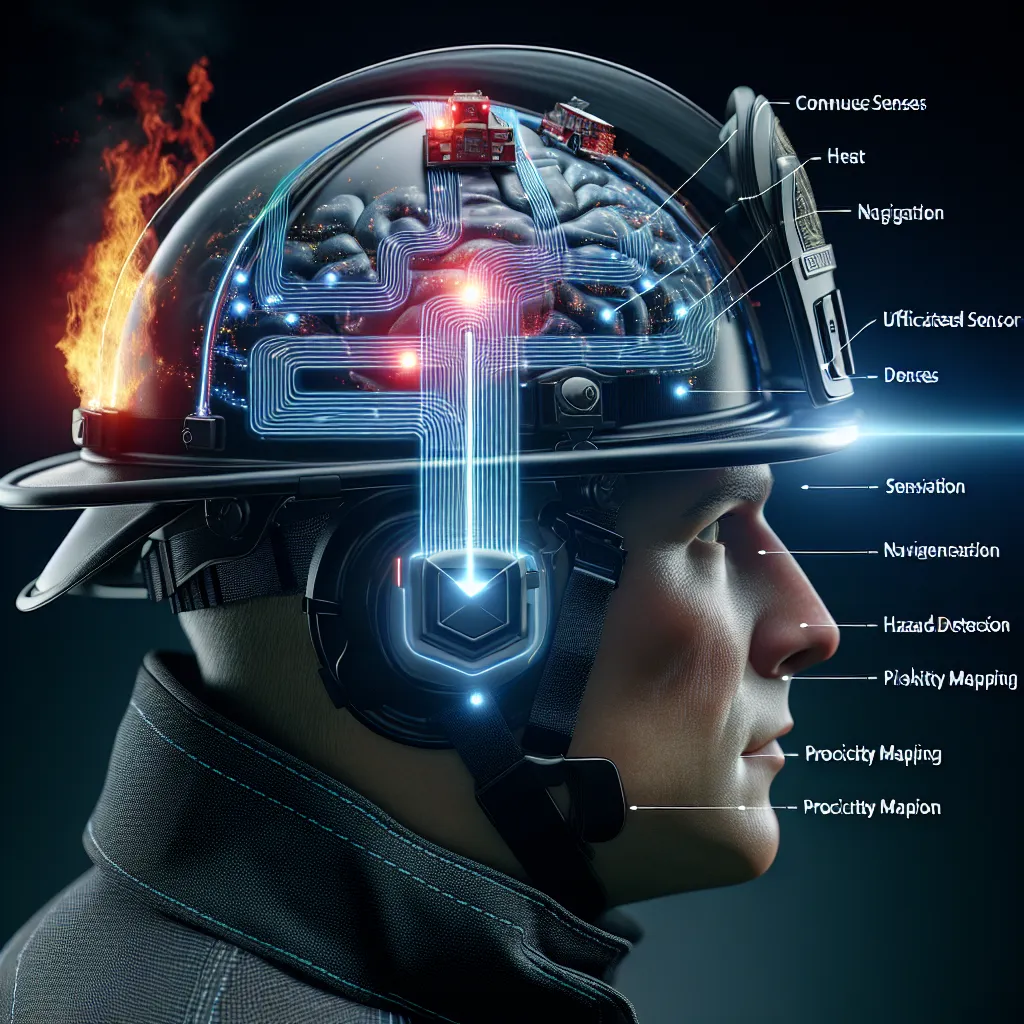
Human perception is still trapped inside our five biological senses, even though sensors can detect far more — thermal gradients, air quality, magnetic direction, subtle vibrations. A light-based brain interface makes it possible to encode these signals directly into cortical patterns the brain can learn to interpret. Synthetic Sense OS becomes the operating system for new “digital senses”: navigation awareness, hazard detection, proximity mapping, or even a low-res form of vision for the visually impaired. Why now? Northwestern’s wireless optical neural interface just proved that the brain can meaningfully learn artificial inputs delivered via patterned light, without electrodes. Example: firefighters wearing a helmet with thermal sensors receive a learned cortical signal telling them which direction heat is intensifying, long before it’s visible — a sixth sense for danger
Description
No additional description provided.
The Pitch
Human perception has traditionally been limited to our five biological senses. However, with advances in sensor technology, we can now detect a much broader range of environmental data, including thermal gradients, air quality, magnetic direction, and subtle vibrations. The challenge lies in effectively conveying this information to the human brain. Recent breakthroughs in wireless optical neural interfaces have opened the door to encoding these signals directly into cortical patterns that the brain can learn to interpret as new digital senses. This concept document explores the creation of Synthetic Sense OS, which acts as an operating system for these new sensory inputs.
Backstory
For centuries, humans have been confined to interpreting the world through their basic senses: sight, sound, smell, touch, and taste. However, the environment offers myriad data points that are beyond human detection but can be captured by sensors. Scientists and technologists have long dreamed of augmenting human senses to perceive this hidden information. Northwestern University's recent success in using wireless optical neural interfaces to deliver artificial inputs to the brain marks a significant step forward in this vision, demonstrating that the brain can meaningfully interpret these inputs.
The Problem
Despite advances in sensor technology, the human brain's capacity to understand digital or non-biological data has been a bottleneck. Traditional methods of interfacing with the brain, such as electrodes, are invasive and impractical for widespread adoption. There is a pressing need for a non-invasive, intuitive way to expand human perception, allowing people to interact with their environment in fundamentally new ways.
The Solution
Synthetic Sense OS leverages light-based brain interfaces to encode sensor data into patterns that the brain can learn and interpret. By offering a seamless way to incorporate these digital senses, the OS empowers users to access a new layer of environmental awareness. Whether for navigation, hazard detection, or enhanced spatial mapping, this technology presents unprecedented opportunities across various fields.
Product Details
- **Core Technology**: Built on Northwestern's wireless optical neural interface, the Synthetic Sense OS translates sensor data into cortical patterns using patterned light, removing the need for invasive electrodes.
- **Features**: The OS can integrate with a range of sensors to provide new types of sensory input. For example, a thermal sensor built into a firefighter’s helmet can give a warning through learned cortical signals when heat intensity increases, offering a sixth sense for danger.
- **Applications**: While initially targeting sectors like emergency services, construction, and healthcare, the technology can extend to consumer markets, offering navigation aid for visually impaired users or enhancing situational awareness for athletes.
Tools for Easy MVP Launch
1. **Development Frameworks**: Use open-source neural network libraries to prototype cortical pattern recognition algorithms.
2. **Hardware Platforms**: Partner with sensor and wearable hardware manufacturers to rapidly iterate on integration.
3. **Testing Kits**: Develop SDKs (Software Development Kits) for developers to create custom sensor interfaces within the Synthetic Sense OS.
GTM Strategy
- **Pilot Programs**: Initiate pilot programs in industries such as firefighting and construction to gather data, refine the OS, and demonstrate tangible benefits.
- **Strategic Partnerships**: Collaborate with leading sensor manufacturers and institutions focused on neural research to enhance credibility and drive development.
- **Community Building**: Foster a community of developers and early adopters to co-create applications and promote the technology's versatility.
Business Model
- **Subscription Model**: Offer the Synthetic Sense OS on a subscription basis to companies, with tiered pricing based on the number of sensors and user licenses.
- **Integration Partnerships**: Generate revenue through partnerships with hardware manufacturers and developers who wish to integrate and distribute the OS within their solutions.
- **Enterprise Solutions**: Provide customized solutions for industries with unique sensory needs, offering consulting and integration services.
By providing a scalable platform for the adoption of digital senses, Synthetic Sense OS has the potential to fundamentally transform human interaction with the world, breaking free from the limits of biological perception.