Evolving Products: Designed to Grow with You
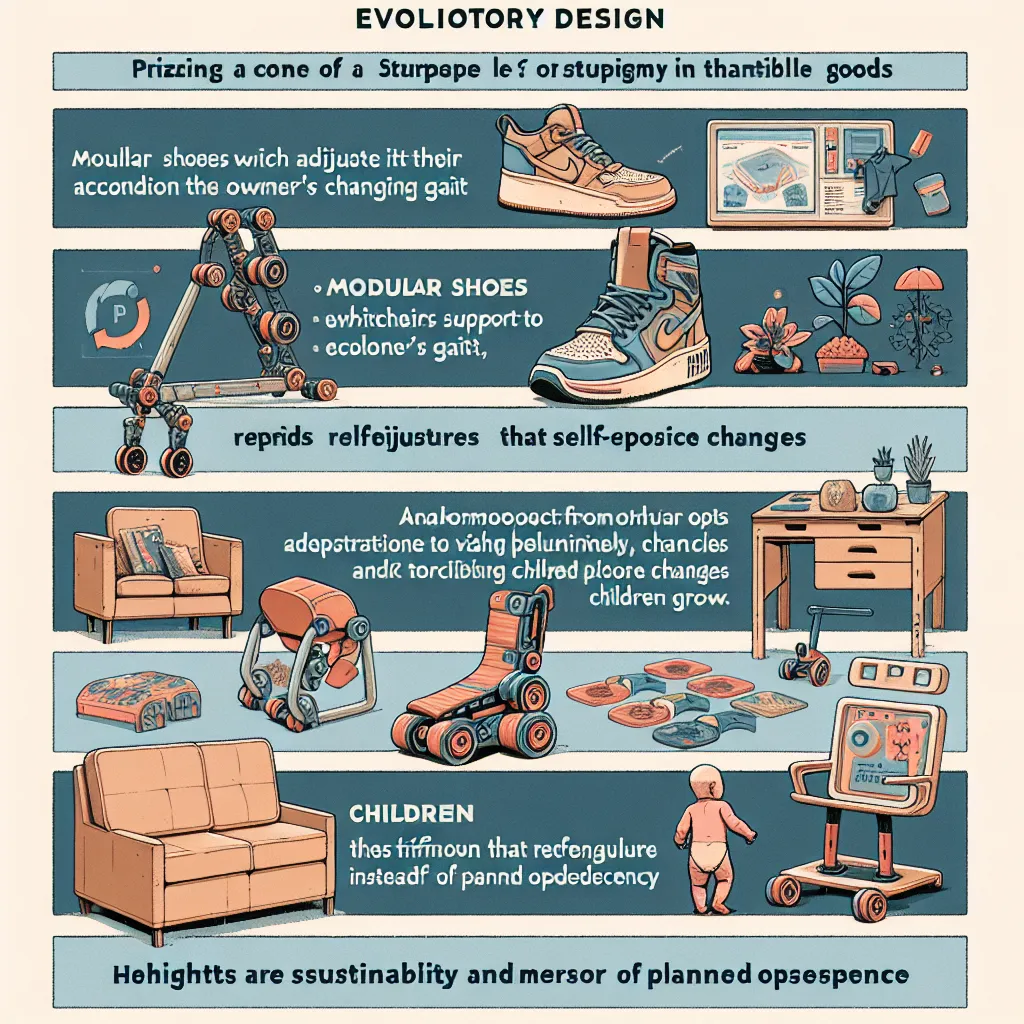
Most physical products are frozen at the moment of purchase, while people’s needs change constantly. This startup builds physical goods designed to evolve over time — modular shoes that change support as your gait shifts, furniture that mechanically adapts to posture changes, or children’s objects that reconfigure as kids grow without being replaced. Each product ships with future physical upgrades instead of planned obsolescence. The breakthrough isn’t smart tech or subscriptions; it’s designing permanence into objects in a disposable economy. As consumers grow tired of replacing things every 18 months and physical craftsmanship regains value, products that visibly age with their owners become emotional assets, not commodities.
Description
No additional description provided.
The Pitch
In today's fast-paced and ever-changing world, there is a growing demand for products that can adapt to the evolving needs of consumers. Traditional physical products are often static, leaving them obsolete as users' requirements shift. This concept introduces an innovative approach to product design, focusing on longevity and adaptability, aiming to address the root causes of waste and inefficiency in the consumer market.
**Background and Problem Statement**
The modern consumer landscape is characterized by a constant cycle of buying and discarding products. Frequent advancements in technology and shifts in consumer preferences have led to a culture of planned obsolescence. This approach not only contributes to mounting waste but also places ongoing financial pressure on consumers. The need for sustainable, adaptable products is more urgent than ever, as people become increasingly conscious of their environmental impact and economic choices.
**Solution Overview**
The proposed solution is to create physical goods that are designed to evolve over time. This concept includes modular shoes that can adjust support as needed, furniture that adapts to changes in posture, and children's products that can reconfigure as they grow. Instead of being replaced, these products can be upgraded with new components provided at purchase. By embedding adaptability into the core design, these products offer a sustainable alternative to the disposable norm.
**Product Details**
1. **Modular Shoes**: These shoes come with interchangeable components that allow users to modify support levels based on their changing gait or preferences. The design emphasizes durability and comfort, with each pair offering a customizable fit.
2. **Adaptive Furniture**: This category includes items such as chairs and desks that mechanically adjust to different ergonomic needs, accommodating various postures and body types. These products are suitable for both home and office use.
3. **Evolving Children's Products**: Items in this category are specifically designed to grow with the child. Examples include toys or furniture that can be reconfigured to suit different stages of development, reducing the need for constant replacement.
**Tools for Launching an MVP**
To bring this concept to market, consider using the following tools and strategies:
1. **Prototyping Tools**: Utilize 3D modeling software like AutoCAD or SolidWorks to design and iterate prototypes. Rapid prototyping tools like 3D printers can be used to create tangible models for testing.
2. **Market Research Platforms**: Tools like SurveyMonkey or Qualtrics can help gather consumer feedback and assess demand for the products.
3. **E-commerce Platforms**: Platforms such as Shopify or WooCommerce can facilitate a direct-to-consumer sales model, enabling easy online purchases and feedback loops.
**Go-to-Market Strategy**
The go-to-market strategy should focus on targeting environmentally conscious consumers and those seeking cost-effective, long-term product solutions. Key components of this strategy include:
1. **Storytelling and Branding**: Develop a brand narrative that highlights sustainability, adaptability, and emotional connection with products that age with their owners.
2. **Community Engagement**: Leverage social media to build a community around the brand. Encourage user-generated content showcasing how they personalize and adapt their products.
3. **Strategic Partnerships**: Collaborate with organizations focused on sustainability to bolster brand credibility and access larger audiences.
**Business Model**
The business model hinges on direct sales combined with a future upgrade model. Products are initially sold with a basic set of configurations, with optional upgrade kits available at a reduced cost. This encourages long-term customer relationships and repeat engagement without the need for complete replacement.
By shifting the paradigm from disposable to enduring, this innovative approach addresses the growing consumer desire for sustainable, adaptive solutions in the physical product market.