Evaporative Harvester Paint
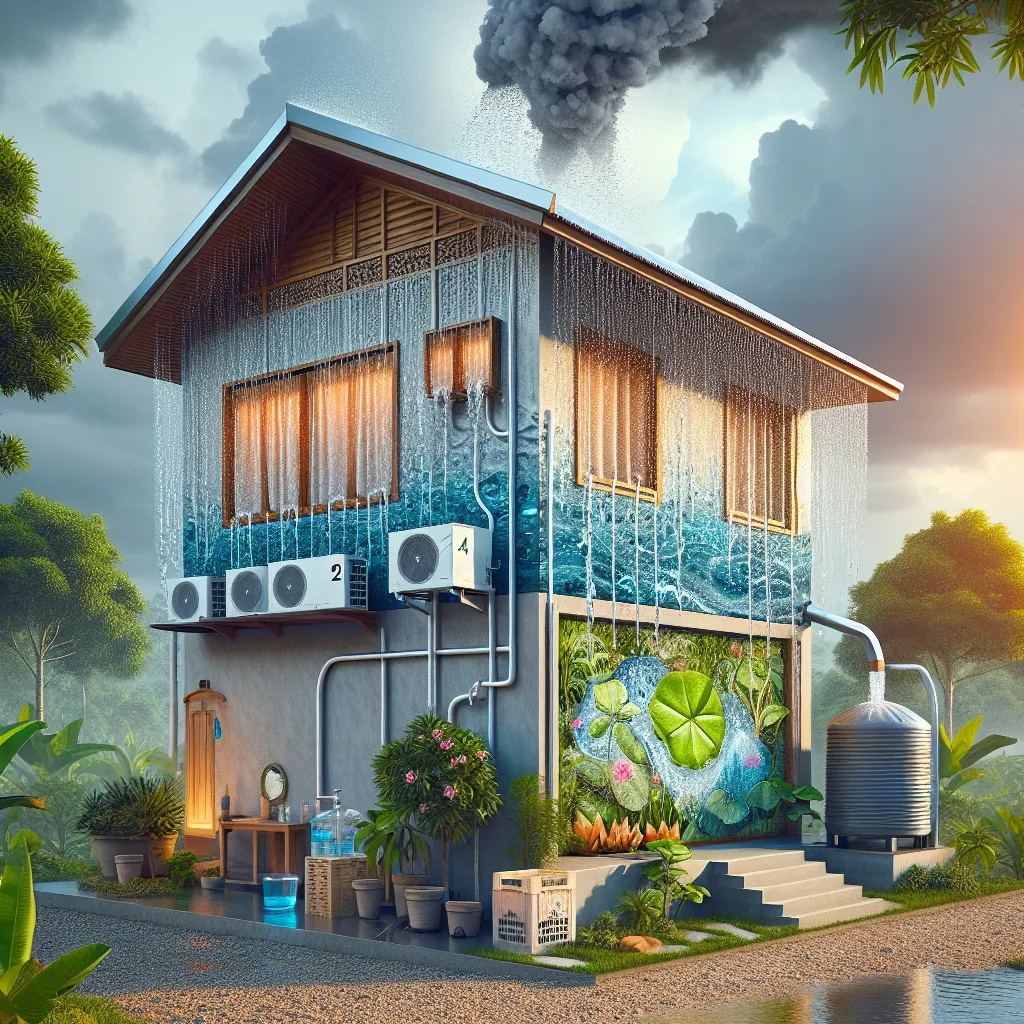
In many humid regions, buildings suffer from extreme heat while also lacking affordable access to clean water. Traditional passive cooling paints only reduce heat, missing an opportunity to harness the surrounding environment. This startup would offer an evaporative cooling paint that also harvests moisture from the air as it “sweats,” capturing condensation and funneling it into storage tanks for non-potable uses like landscaping, toilets, or emergency supply. Advances in cement-based cooling materials and porous hydrogels make this technically feasible today. With climate change accelerating water scarcity and energy use, a dual-purpose building material offers compound value. Imagine deploying this in homes across Southeast Asia or disaster-relief shelters—reducing A/C reliance while generating liters of water per day. No major company currently combines cooling and water capture into a single commercial product, making this a new category in sustainable infrastructure.
Description
No additional description provided.
The Pitch
In regions with high humidity and persistent heat, buildings often face dual challenges: managing excessive temperatures and accessing clean, affordable water. While traditional passive cooling solutions like reflective paints can reduce heat to some extent, they miss a valuable opportunity to engage with the environment in a multifunctional way. This concept introduces a pioneering product: an evaporative cooling paint that not only cools buildings but also captures and stores moisture from the air.
Recent advances in materials science, particularly in cement-based cooling compounds and porous hydrogels, now allow for the development of a paint that “sweats.” As the temperature rises, the paint facilitates the condensation of humidity in the air, commonly in the form of droplets. These droplets can then be collected and channeled into storage tanks. The captured water could be used for a variety of non-potable applications like irrigation, flushing toilets, or even as a backup water supply during emergencies.
Given the exacerbation of water scarcity issues due to climate change and the increasing global demand for energy-efficient solutions, this innovative material could provide significant value to buildings, particularly in humid and hot climates such as Southeast Asia. This product holds particular promise for residential use, commercial buildings, and disaster-relief structures by simultaneously alleviating the need for air conditioning while producing a supplementary water source, generating several liters of water per square meter of paint per day.
Currently, no major enterprise has integrated cooling and water capture into a single commercial product, signaling an opportunity to create a new category within sustainable infrastructure. By combining these functions, the product not only reduces environmental impact but also offers a cost-effective solution for consumers facing high energy and water bills.
To bring this product to market as a Minimum Viable Product (MVP), the initial focus should be on developing a scalable prototype and conducting trials in a controlled environment. Leveraging tools like computer-aided design software for modeling and simulation could streamline the development process. Moreover, sourcing materials from reliable suppliers experienced in sustainable products could help in producing the prototype more efficiently.
For the Go-To-Market (GTM) strategy, targeting areas with high humidity and inadequate water infrastructure would be key. After successful small-scale trials, partnerships with local construction companies, NGOs focused on sustainable development, and government agencies could facilitate broader distribution and application. Digital marketing campaigns highlighting the dual functionality of the product, alongside testimonials from pilot projects, could enhance consumer interest and trust.
The business model might initially focus on direct sales to property developers and construction firms, with longer-term potential in licensing technology to paint manufacturers globally. Subscription-based models for maintenance and quality assurance services could also create additional revenue streams.
Overall, this multifunctional evaporative cooling paint represents a compelling blend of innovation and practicality. By addressing critical societal needs with a single solution, it has the potential to pave the way for a new standard in building materials, meeting both current and future challenges head-on.