Escrow Marketplace for Future Consumer Purchases
Reverse marketplaces already let sellers compete for buyers, so move the market earlier. Demand Escrow lets consumers commit money to purchases they haven't made yet. Your agent might place $900 into conditional escrow for "replace refrigerator within 12 months if repair cost exceeds $400." Manufacturers can compete for thousands of verified future purchase commitments without knowing individual identities. Consumers receive better pricing for exposing credible future demand, while manufacturers get something far more valuable than intent data: demand backed by money.
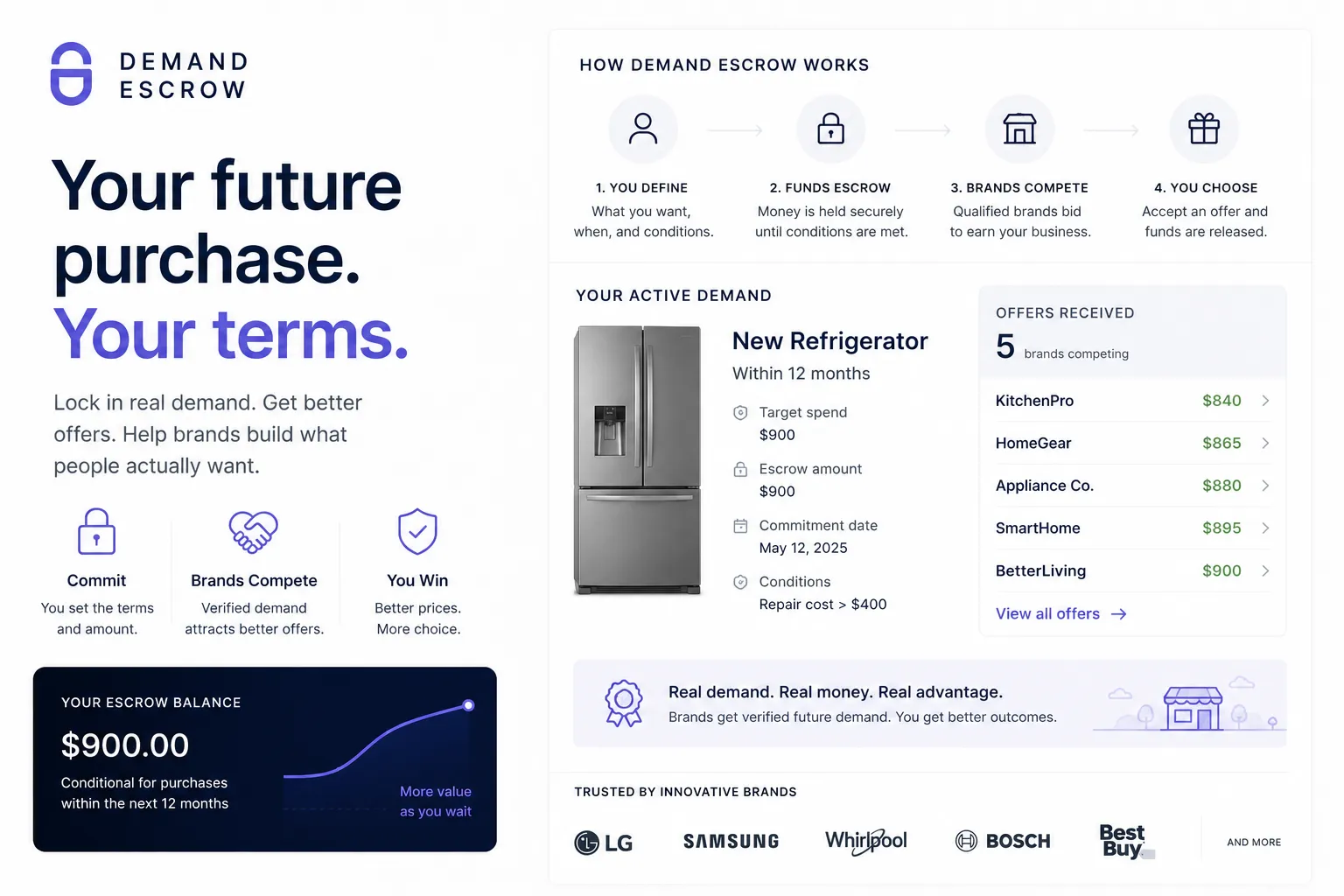
Description
No additional description provided.
The Pitch
A business like this would be compelling because most commerce is organized around the moment of purchase, even though many purchasing decisions become predictable much earlier. A broken appliance, expiring lease, aging laptop, upcoming move, or growing child all create demand before a buyer starts shopping. The valuable thing is not merely knowing that someone might buy, but knowing that money has already been set aside under clear conditions. That turns vague consumer interest into a financial primitive.
The deepest insight is that escrow changes the honesty of the signal. Surveys, ad clicks, wishlists, and browsing histories are cheap to fake and easy to misread. Money placed behind a condition is different: it reveals both seriousness and timing without requiring the consumer to surrender identity or negotiate directly. In a world drowning in behavioral data, this would create a rarer asset: aggregated, anonymized demand that is economically binding.
It also reverses the usual power imbalance in consumer markets. Today, each buyer appears alone, at the worst possible moment, with limited leverage and imperfect information. But thousands of future buyers with similar conditional needs become a market makers can plan around. The consumer is no longer asking for a discount after entering the store; the consumer has already helped create a pool of demand large enough for suppliers to fight over.
For manufacturers and large sellers, the attraction is not just cheaper customer acquisition. It is visibility into real future demand before production, inventory, and channel decisions are locked in. A company that sees committed demand forming six or twelve months ahead can shape offers, allocate supply, and reduce guesswork. The market becomes less about persuading strangers after products exist and more about matching production to demand that has already proven itself.
The most interesting version of this company would not feel like a shopping app. It would feel like a personal balance sheet for future consumption: money waiting intelligently for the right trigger. That is a strange but powerful shift. Many purchases are not impulsive desires; they are liabilities in disguise. Turning those liabilities into pooled, negotiable demand could make ordinary consumers legible to markets without making them exposed as individuals.