Ephemeral Software: On-Demand, Task-Specific Solutions
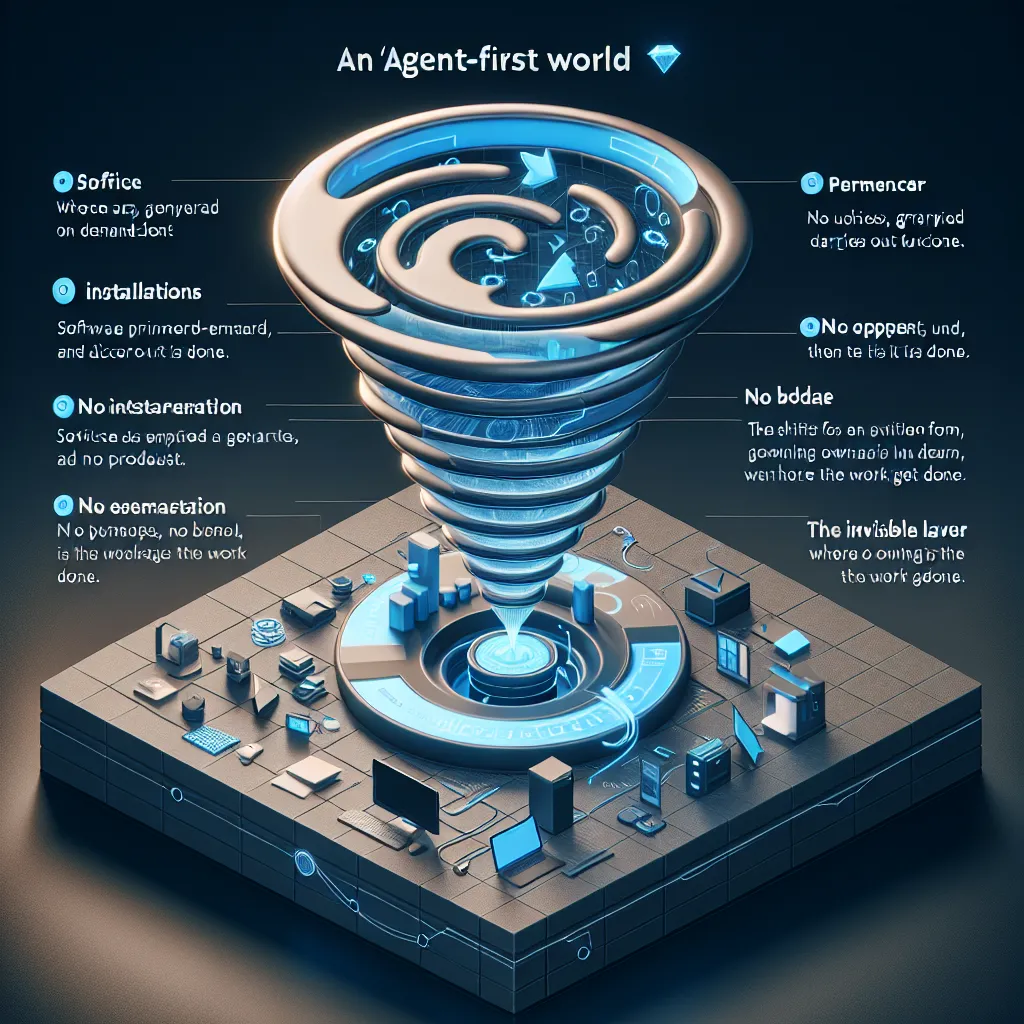
If needs are temporary, software shouldn’t be permanent. Most apps exist because distribution used to be hard, not because the functionality needed to live forever. In an agent-first world, software becomes ephemeral — generated on demand, customized to the moment, and discarded when the task is done. A live app generator spins up just enough interface and logic to solve a specific problem, then disappears. No installs, no updates, no bloat. This reframes software as a runtime service, not a product. The value shifts from owning users to owning execution — the invisible layer where work actually gets done.
Description
No additional description provided.
The Pitch
In today's fast-paced digital landscape, the longevity of software often outlives the needs it was built to address. This discrepancy leads to inefficiencies, unnecessary updates, and clutter. Enter the concept of ephemeral software — software that exists temporarily, tailored to the user's immediate needs, and then disappears once its purpose is fulfilled. This approach revolutionizes how we think about software, shifting the focus from owning applications to owning the execution and efficiency of tasks.
**Backstory**
Historically, software distribution was a challenging process, resulting in applications designed to have lasting presence on devices. This model led to inflexible solutions that required constant updates and maintenance, regardless of the user's changing needs. The advancement of technology and increased internet connectivity allow for a new paradigm: applications generated on demand, customized to individual scenarios, and discarded once their utility is complete.
**Problem**
The traditional approach to software development and distribution is plagued by several issues: - Applications often have excessive features, leading to bloated software. - Users are required to go through cumbersome installation and update processes. - Permanent software can consume significant storage and resources. - Static software cannot adapt quickly to changed or shortened user needs.
**Solution**
The solution is a live app generator that creates temporary software tailored to immediate user requirements. This ephemeral software is: - Spun up instantly in response to a specific task. - Efficient and focused, containing only the features necessary for the task at hand. - Discarded after use, leaving no residual bloat or need for updates. - Accessible anywhere, with no installations required, thus saving device resources.
**Product Details**
The concept involves building a platform that: 1. Utilizes intelligent algorithms to understand user needs and generate relevant applications. 2. Offers an intuitive user interface for seamless interaction. 3. Integrates with cloud services to provide quick access and scalability. 4. Ensures security, as data is neither stored permanently nor associated with a single application. 5. Leverages APIs to connect with various data sources and functionality providers.
**Tools for MVP Launch**
To create a Minimum Viable Product (MVP) of this platform: - Use cloud computing platforms like AWS or Google Cloud for infrastructure. - Implement machine learning algorithms to predict and generate user-specific applications. - Develop a responsive web-based interface using frameworks such as React or Angular. - Utilize serverless architecture to enable quick deployment and scalability. - Employ security measures like OAuth for authentication and data security.
**Go-to-Market Strategy**
1. **Target Audience Identification**: Focus initially on tech-savvy individuals and small businesses open to innovation. 2. **Value Proposition Communication**: Highlight the agility, cost-efficiency, and resource savings of temporary software. 3. **Pilot Program**: Launch a pilot with select users for feedback and refinement. 4. **Partnerships**: Collaborate with tech companies focused on productivity tools to integrate and enhance functionality. 5. **Digital Marketing**: Invest in content marketing and social media campaigns to generate awareness and excitement around the concept.
**Business Model**
The business model for ephemeral software would transition from traditional licensing to usage-based pricing: - Charge per application-generated instance or based on usage time. - Offer subscription services for enterprises needing custom integrations. - Provide tiered pricing for different levels of service and access.
In summary, ephemeral software reshapes the landscape by providing users with on-demand applications tailored to specific needs, reducing waste, and focusing on execution efficiency. Adopting this approach aligns software solutions with the dynamism of real-world needs, offering both flexibility and innovation in one package.
---