Enhancing Robot Safety with Neuromorphic Skin
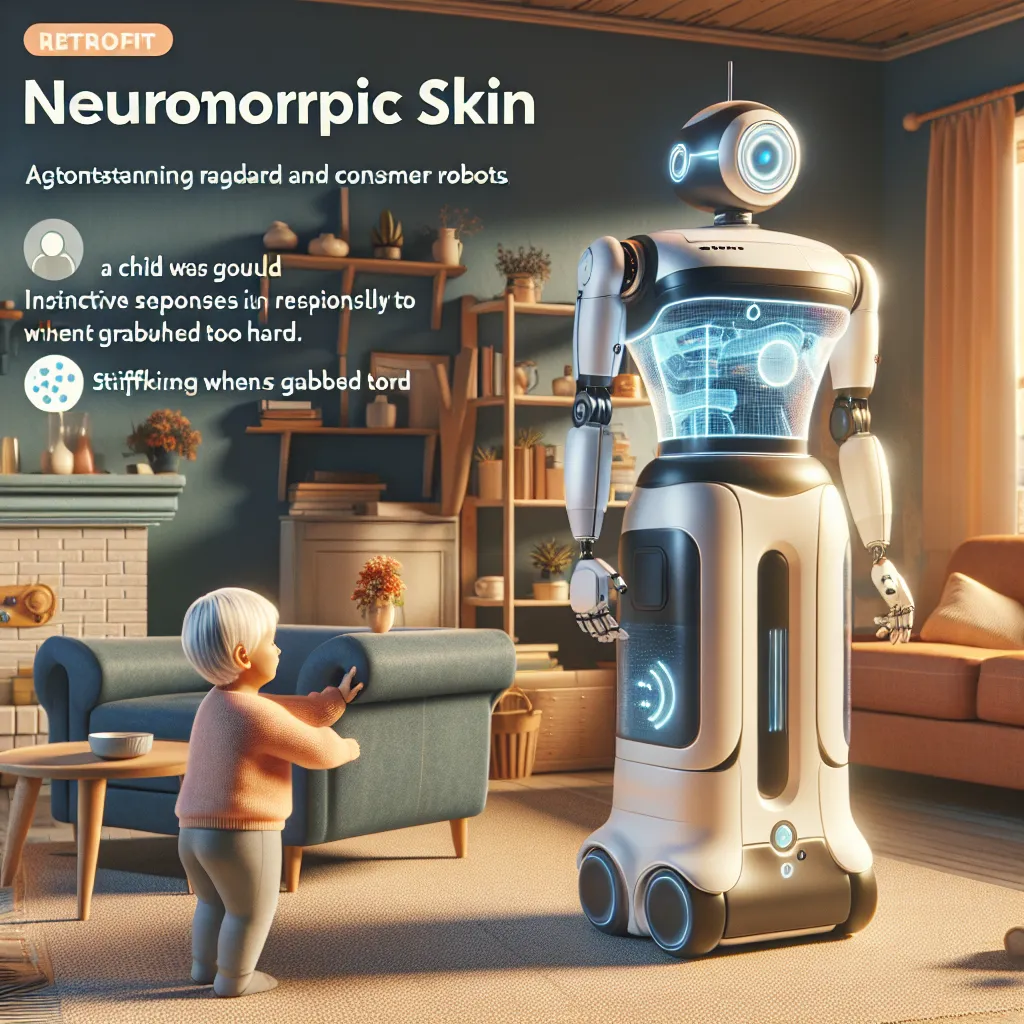
Companion robots are supposed to feel safe and intuitive, yet most still react to touch like forklifts with faces. The missing layer is tactile intelligence — the ability to feel intent, not just collision. Neuromorphic skin allows robots to process touch reflexively, the way animals do, without cloud latency or brute-force compute. This startup would sell retrofit neuromorphic skin kits for consumer and elder-care robots, giving them instinctive responses to hugs, shoves, or accidental contact. Why now: social robots are entering homes, but safety and trust lag behind. Example: a home robot that stiffens when grabbed too hard and relaxes when gently guided by a child.
Description
No additional description provided.
The Pitch
In the emerging landscape of companion robots, safety and intuitive interaction remain critical challenges. While robots are increasingly found in homes, especially for consumer and elder-care purposes, they often lack the nuanced ability to respond appropriately to human touch. Current touch responses in robots are primitive, reducing user trust and interaction quality.
The Backstory: Companion robots have advanced significantly in their conversational and mobility capabilities, but their tactile interactions remain rudimentary. Traditionally, robots react to physical contact with basic detection systems—more akin to rudimentary bump sensors on forklifts than the sensitive, adaptive response systems found in biological organisms. This limitation not only hinders user experience but also poses potential safety risks, especially in sensitive environments such as elder care.
The Problem: There is a clear gap in the tactile sensitivity of today's companion robots. They struggle to differentiate between a gentle guiding touch and a potentially harmful grip. This lack of tactile intelligence means robots cannot adequately assure safety nor provide the intuitive interactions that foster trust and comfort in users. For robots designed to assist or interact closely with humans, especially vulnerable populations, this shortfall is a significant barrier to widespread adoption.
The Solution: To address the tactile sensing gap, this venture proposes the development of retrofit kits comprising neuromorphic skin technology. Neuromorphic skin is designed to mimic the natural reflexes and adaptability of animal touch responses. By allowing robots to process tactile information locally, without relying on cloud-based processing or extensive computational resources, these kits provide an agile and refined touch response.
Product Details: - **Neuromorphic Skin Kits:** These kits consist of a sophisticated tactile sensor array and integrated processing capabilities, enabling robots to recognize and appropriately respond to various touch interactions. - **Compatibility:** Designed to be easily retrofitted onto existing consumer and elder-care robots, ensuring a broad application without necessitating complete hardware overhauls. - **Adaptive Algorithms:** Equipped with machine learning models to distinguish between different types of contact, promoting a natural interaction environment.
Tools for MVP Launch: - **Prototyping Platforms:** Use platforms like Arduino or Raspberry Pi for initial sensor integration and testing. - **Machine Learning Frameworks:** Implement algorithms using frameworks such as TensorFlow Lite for real-time, edge-based decision making. - **Open Source Robotics Software:** Utilize ROS (Robot Operating System) to streamline the integration process with existing robotic architectures.
GTM (Go-To-Market) Strategy: - **Channel Partnerships:** Collaborate with manufacturers of companion and elder-care robots to distribute retrofit kits. - **Pilot Programs:** Implement pilot programs in elder care facilities and households to gather user feedback, which will inform further development and marketing strategies. - **Educational Campaigns:** Launch campaigns to educate potential customers on the benefits of enhanced safety and interaction quality, potentially featuring testimonials from pilot program participants.
Business Model: - **Direct Sales and Subscriptions:** Sell kits directly to consumers and care institutions, with potential subscription services for ongoing software updates and technical support. - **Licensing Agreements:** Establish licensing arrangements with robot manufacturers, integrating neuromorphic skin technology directly into next-generation models. - **Service Contracts:** Offer installation and customization services to ensure optimal performance and user satisfaction.
By enhancing robots with neuromorphic skin, this startup aims to bridge the significant gap between current robotic capabilities and user expectations for safety and intuitive interaction, paving the way for more trustful human-robot relationships in domestic and care settings.