Enhancing Retail Insights with Ambient Sensor Technology
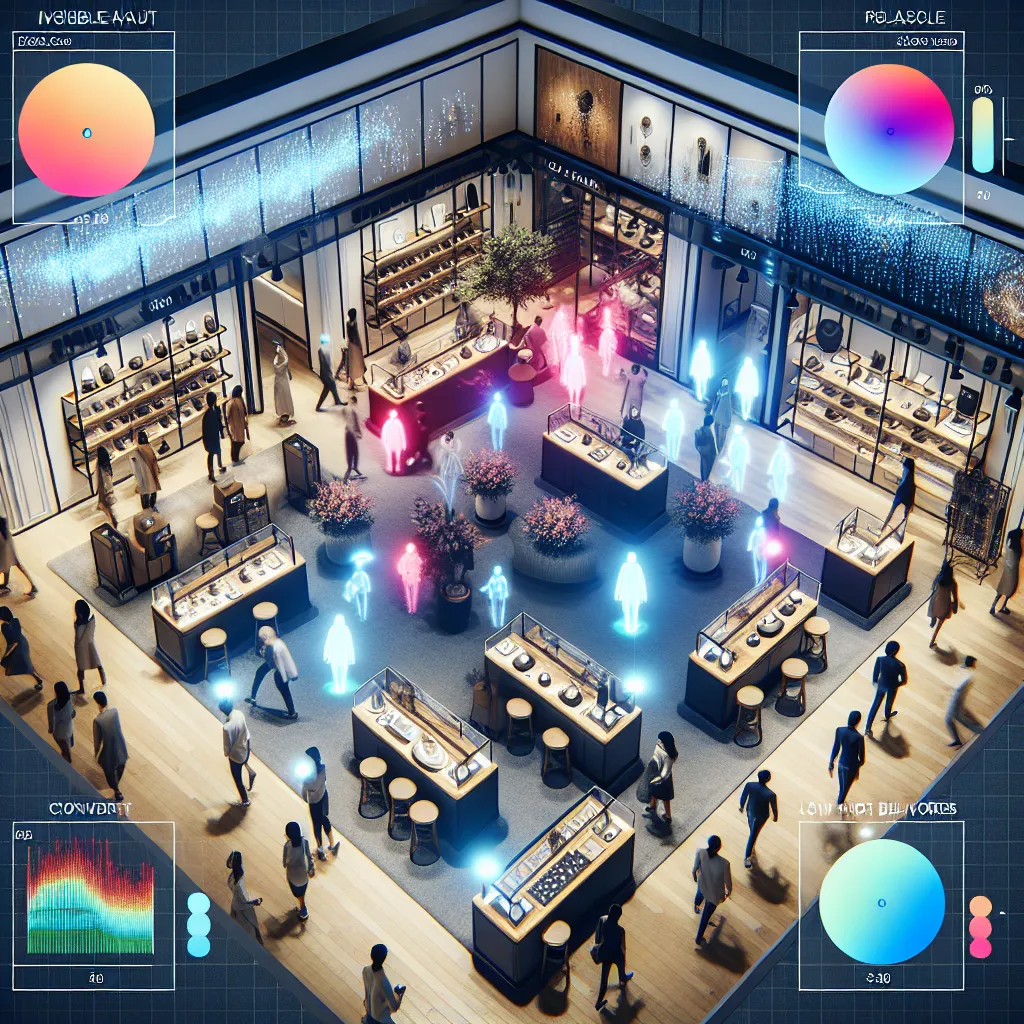
Brick-and-mortar retailers have little visibility into in-store behavior beyond basic camera footage or point-of-sale data. There’s no scalable, privacy-safe way to understand how people move, pause, or browse. The Invisible Retail Behavior OS uses ultra-low-cost ambient sensors—like motion, Bluetooth, and backscatter tags—to create real-time heatmaps of shopper behavior without capturing identity. Retailers receive insights like “dwell time,” “dead zones,” and “conversion corridors,” enabling dynamic store layout changes. Rooted in Gartner’s Ambient Invisible Intelligence trend, this approach focuses on passive sensors embedded into the environment. A boutique could discover that its high-end jewelry section gets visits but no conversions—triggering layout, lighting, or signage changes that double engagement.
Description
No additional description provided.
The Pitch
In recent years, brick-and-mortar retailers have struggled to compete with the data-rich environments of online retailers. While e-commerce platforms can easily track user behavior, providing insights into customer preferences and habits, physical stores are limited in their ability to understand in-store behavior. Typically, these insights are constrained to what can be gathered through basic tools like camera footage or point-of-sale systems. This limitation hinders a deep understanding of how customers interact with store environments, which is crucial for optimizing layouts and improving sales.
#### The Problem
Current methods for understanding in-store behavior are not scalable, often invasive, and provide limited actionable insights. Traditional camera surveillance captures footage that requires manual analysis and raises privacy concerns, while point-of-sale data only records the outcome of shopping behaviors, not the behaviors themselves. Retailers need a comprehensive, privacy-safe solution to understand shopper movement and interactions within the store to make data-driven decisions.
#### The Solution
Introducing the Invisible Retail Behavior Operating System. This innovative solution leverages ultra-low-cost ambient sensors, including motion detectors, Bluetooth beacons, and backscatter tags, to generate a real-time, anonymous view of shopper behavior through heatmaps. These sensors are designed to seamlessly blend into the store environment, capturing key metrics like dwell time, dead zones, and conversion corridors without compromising customer privacy by avoiding the capture of personal identity.
#### Product Details
1. **Ambient Sensor Network**: Deploy a network of unobtrusive sensors throughout the store environment that passively gathers movement data.
2. **Real-Time Heatmaps**: Generate real-time visuals that depict customer flow, hotspots, and under-utilized areas within the store.
3. **Behavior Insights Dashboard**: Use an intuitive dashboard that provides actionable insights into customer behavior trends such as average time spent in various sections, visitor frequency, and popular pathways.
4. **Privacy-Safe Design**: Ensure customer identities are protected, with sensors focusing solely on behavioral patterns rather than personal data.
5. **Store Optimization Recommendations**: Based on the insights gathered, the system suggests data-driven changes to store layouts, signage, lighting, and product placements to enhance customer engagement and maximize conversions.
#### Tools for MVP Launch
To build a Minimum Viable Product, consider leveraging the following tools:
- **IoT Platforms**: Use platforms like Arduino or Raspberry Pi to prototype sensor integrations. - **Cloud Services**: Utilize AWS IoT or Google Cloud IoT for data storage and analysis. - **Data Visualization**: Employ tools like Tableau or Power BI for creating intuitive dashboards and heatmaps. - **Privacy Technology**: Ensure compliance with data privacy laws using GDPR-compliant systems and anonymization techniques.
#### Go-To-Market Strategy
1. **Target Customer Segments**: Focus initially on boutique and mid-sized retailers who can rapidly implement and benefit from store optimization.
2. **Partnerships**: Collaborate with retail solution providers and IoT hardware suppliers to grow and integrate offerings.
3. **Pilot Programs**: Launch pilot programs with select retailers to gather feedback, refine the product, and generate case studies demonstrating tangible ROI.
4. **Marketing Campaigns**: Use a mix of digital marketing, trade shows, and retail tech conferences to raise awareness and showcase product capabilities.
5. **Education and Training**: Offer workshops and webinars to demonstrate the benefits and practical applications of ambient intelligence in retail.
#### Business Model
Adopt a subscription-based business model with tiered plans based on the size of the retail space and the depth of analytics provided. Offer an initial free trial period for new users to encourage adoption. Additionally, consider offering consulting services to help retailers interpret data insights and implement recommended changes, adding a personalized touch to the product offering.