Enhanced Rubisco Kits Boost Crop Productivity
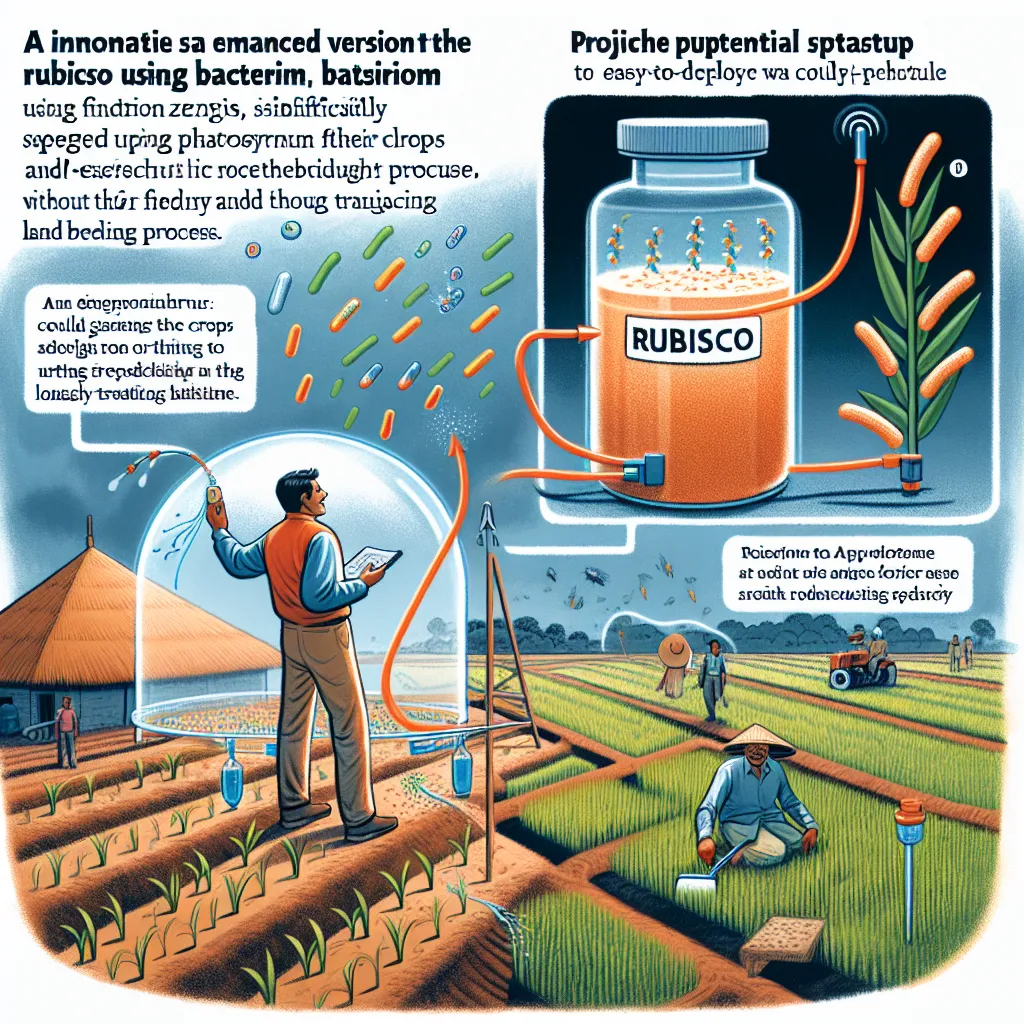
Farmers rely on crops that use an old, inefficient enzyme called Rubisco to turn sunlight and carbon dioxide into growth. This enzyme hasn’t changed much in millions of years and wastes energy, limiting how much food we can grow. Scientists at MIT just made a better version of Rubisco using bacteria—making photosynthesis faster and more efficient. A startup could create easy-to-use kits that let farmers or breeders add this upgraded enzyme into their crops without waiting years for traditional breeding. With climate change and food demand rising, improving crop productivity without more land is urgent. For example, a rice breeder in India could apply the enzyme to boost yield during a drought season.
Description
No additional description provided.
The Pitch
Agriculture is the backbone of global food security, yet it struggles with inefficiencies that limit food production. One of the core challenges is the reliance on an enzyme called Rubisco, integral to the process of photosynthesis, which has remained largely unchanged for millions of years. This enzyme is inherently inefficient, wasting energy and thereby constraining crop yields. This inefficiency is particularly problematic in the face of climate change and a growing global population, which collectively demand higher food output from the same or even reduced arable land.
**Innovative Solution**
Recent scientific advancements at MIT have resulted in the creation of a more efficient version of Rubisco using engineered bacteria. This breakthrough has the potential to revolutionize photosynthesis, making it faster and more efficient. By harnessing this enhanced enzyme, crops can achieve higher productivity with the same amount of resources. In practical terms, this means that a crop like rice can produce greater yields even under adverse conditions, such as drought.
**Product Concept**
The vision is to develop and commercialize a user-friendly enzyme enhancement kit for farmers and plant breeders. This kit would allow them to incorporate the upgraded Rubisco enzyme into their crops directly, bypassing the extensive timelines required for traditional breeding methods. The kit would contain the necessary materials and instructions for application, making it accessible to users regardless of their technical expertise.
**Tools and Technologies for MVP Development**
1. **Biological Research and Development**: Partner with leading biotechnologists to refine the enzyme enhancement process. 2. **Prototyping Kits**: Develop easy-to-use kits, supported by thorough testing with diverse crops. 3. **Digital Platform**: Create a digital portal for education, guidance, and community interaction, where users can gain insights and share feedback.
**Go-to-Market Strategy**
1. **Targeted Outreach**: Begin with regions heavily affected by climate challenges, such as India or sub-Saharan Africa, focusing on staple crops like rice and maize. 2. **Partnerships with Agricultural Organizations**: Collaborate with local agricultural agencies and non-profits to promote awareness and credibility. 3. **Pilot Programs**: Initiate pilot projects in collaboration with progressive farming communities to generate data and testimonials. 4. **Education and Training Programs**: Implement training workshops and digital seminars to educate potential users on the enzyme application process and benefits.
**Business Model**
1. **Direct Sales to Farmers and Breeders**: Offer the kits at a competitive price, tiered based on farm size. 2. **Subscription Service**: Provide regular updates with the latest scientific enhancements and agronomic support. 3. **Government Partnerships**: Work closely with governments to integrate the technology into national agricultural strategies, securing large-scale contracts. 4. **Data-driven Services**: Offer premium analytics services that provide insights into crop performance and optimization using the enzyme technology.
**Conclusion**
The deployment of an enhanced Rubisco enzyme kit presents an unprecedented opportunity to address global agricultural productivity challenges. By leveraging cutting-edge scientific developments and fostering strategic partnerships, this solution has the potential to make a significant impact on food security and sustainability worldwide.