Enhanced Carbon Capture with Engineered Microbes
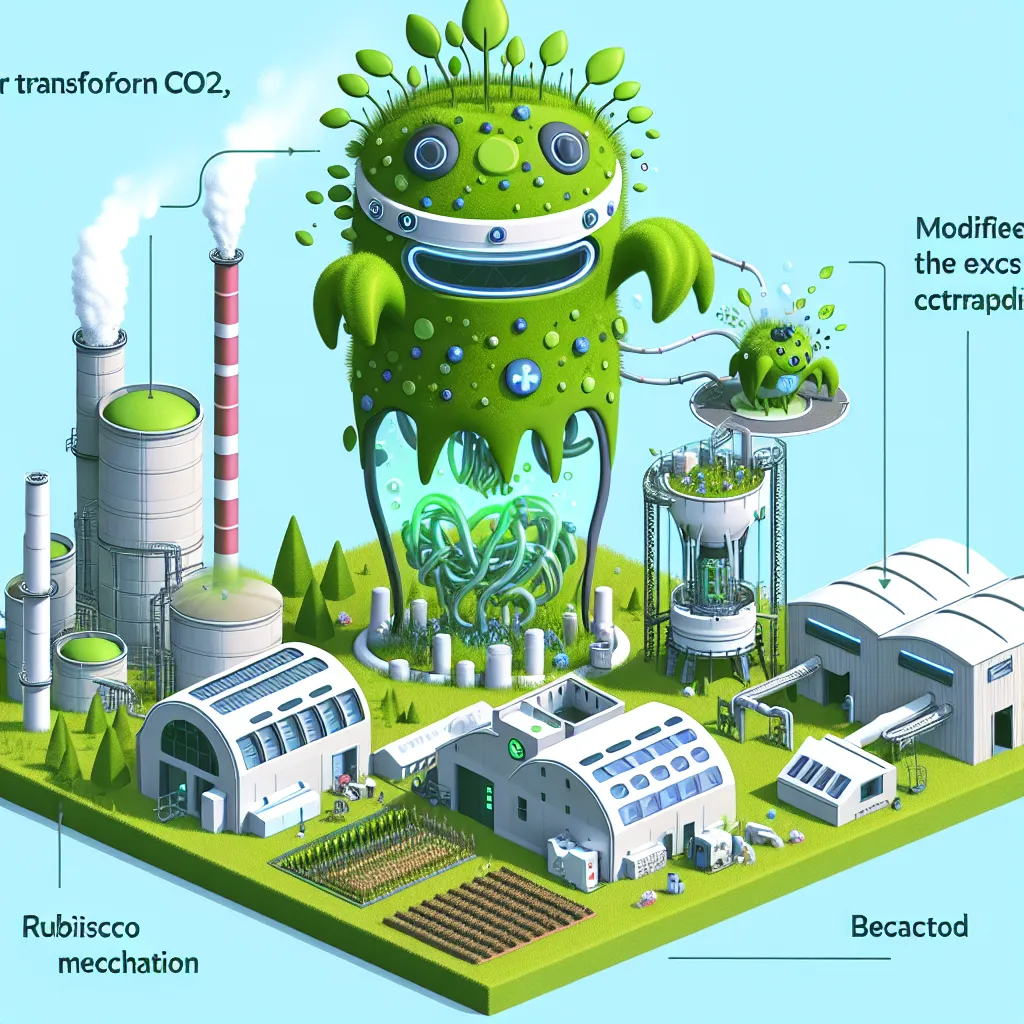
Factories and farms produce too much carbon dioxide (CO₂), which warms the planet. Some companies try to capture that CO₂, but it’s slow and expensive. MIT’s new version of Rubisco captures CO₂ faster. A startup could engineer tiny organisms, like algae or bacteria, to use this better Rubisco and turn CO₂ into useful things—like protein for animal feed or ingredients for eco-friendly plastic. This makes carbon capture both greener and more profitable. For instance, a brewery could install a small reactor that feeds its CO₂ to these supercharged microbes to create animal feed.
Description
No additional description provided.
The Pitch
The increasing levels of carbon dioxide emissions from industrial and agricultural activities continue to be a significant contributor to global warming. Traditional methods for carbon capture and storage are often costly and inefficient, presenting a clear opportunity for innovation in this field. A groundbreaking development from MIT presents an improved version of the enzyme Rubisco, which offers a promising approach to capture CO₂ more efficiently. The potential application of this new Rubisco variant in genetically engineered microorganisms, such as algae or bacteria, could revolutionize the carbon capture process. By converting CO₂ into valuable outputs like protein for animal feed or biodegradable plastics, this technology holds the promise of making carbon capture not only more sustainable but also economically viable.
Background:
Industries and agricultural sectors are major producers of carbon dioxide emissions, exacerbating climate change. Despite the urgent need to mitigate these emissions, existing carbon capture methodologies are hindered by high costs and low efficiency. MIT's advancements in Rubisco, an enzyme fundamental to the photosynthetic process, have led to a version that captures CO₂ significantly faster than its natural counterpart. This innovation opens new pathways for designing microbes capable of converting captured CO₂ into useful products, turning a waste product into valuable resources.
Problem:
The current challenge lies in the inefficiency and high cost associated with carbon capture technologies. Additionally, many existing methods do not offer a direct pathway to monetize the captured CO₂, rendering them less attractive to businesses. As a result, there is a pressing need for solutions that not only capture CO₂ more effectively but also provide a tangible return on investment through valuable byproducts.
Solution:
A startup could leverage MIT's advanced Rubisco to engineer organisms, such as algae or bacteria, that efficiently utilize CO₂. These microorganisms can then be programmed to transform the captured carbon into marketable products like protein for animal feed or components for eco-friendly plastics. This biologically integrated approach not only enhances the sustainability of carbon capture but also generates revenue by turning emissions into commodities.
Product Details:
1. Engineered Microorganisms: Development of algae or bacteria strains incorporating the enhanced Rubisco, optimized for high-efficiency carbon capture.
2. Conversion Pathways: Establishment of metabolic pathways within these organisms to produce specific high-demand products, such as animal feed proteins or bioplastic precursors.
3. Modular Reactor Systems: Design of scalable reactors that can be customized for integration within various industries, such as breweries or farms, to capture and process CO₂ on-site.
Tools for MVP Launch:
1. Genetic Engineering Platforms: Utilize tools like CRISPR and synthetic biology kits to engineer microorganisms with the desired traits.
2. Bioreactor Prototyping: Develop small-scale, low-cost bioreactors to test and refine the systems in controlled environments.
3. Partnership with Research Institutes: Collaborate with academic institutions and biotech firms to enhance R&D capabilities and access specialized knowledge.
Go-to-Market (GTM) Strategy:
1. Target Niche Markets: Focus initially on industries with substantial CO₂ emissions and an interest in sustainability, such as breweries and agricultural operations.
2. Pilot Programs: Launch pilot programs with selected partners to demonstrate the efficacy and economic benefits of the system, using case studies for marketing.
3. Regulatory Engagement: Work with regulatory bodies to ensure compliance and facilitate smoother market entry.
4. Awareness Campaigns: Educate potential customers about the environmental and economic advantages of the solution through workshops, webinars, and industry events.
Business Model:
1. Revenue Streams:
- Sale of custom-designed bioreactor systems. - Licensing fees for proprietary microorganism strains. - Subscription services for ongoing support and updates.
2. Cost Structure:
- Research and development for continued innovation. - Production and distribution of bioreactor systems. - Customer support and maintenance services.
3. Key Partnerships:
- Collaborations with researchers for organism development. - Industry partners for pilot testing and market feedback. - Government and NGOs for grant funding and endorsements.
By harnessing this cutting-edge technology, the startup not only addresses pressing environmental issues but also opens up new avenues for sustainable business practices, presenting a win-win scenario for both the planet and economic stakeholders.