Enhance Creativity with Innovative Sleep NapPod
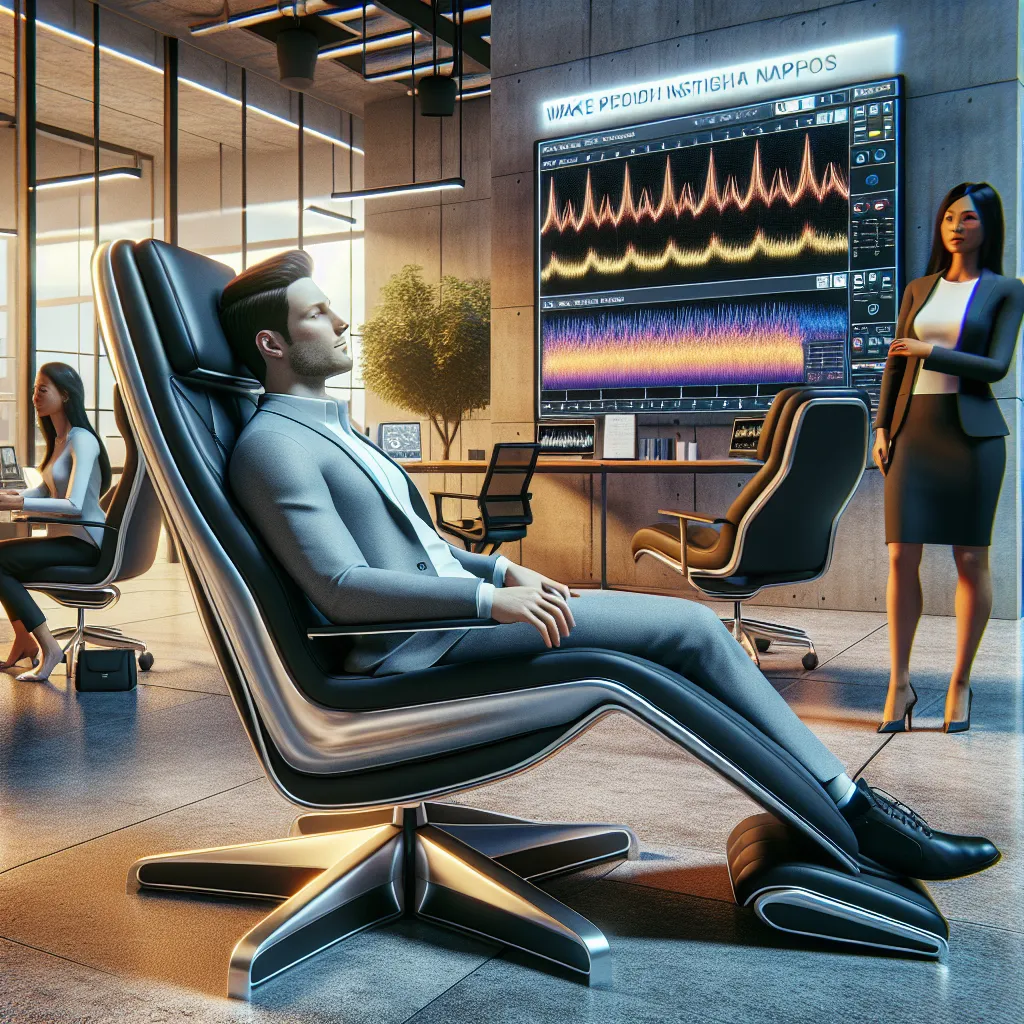
People often feel mentally stuck when trying to solve hard problems—whether in design, writing, or engineering. While many try brute force or brainstorms, research now shows that entering a specific stage of sleep (N2) can dramatically increase the chance of creative insight, jumping from 55% to 85% in just a 20-minute nap. The Insight NapPod is a sleek chair with built-in EEG sensors and a guided nap flow that detects when a user reaches N2 and gently wakes them afterward, optimizing the chance for an “aha” moment. Companies could install these in offices, co-working spaces, or innovation hubs. A product manager at a startup stuck on a UX issue could nap in the pod and wake up with a breakthrough idea, supported by neuroscience. According to researchers, the steeper the EEG’s spectral slope, the higher the likelihood of creative insight—so the chair tracks this in real-time and nudges people to nap smarter, not longer.
Description
No additional description provided.
The Pitch
In today’s fast-paced work environments, creative blocks are a common hurdle. Whether you’re a designer, writer, engineer, or involved in any form of creative work, feeling mentally stuck can be frustrating and often halts productivity. Traditional methods to rekindle creativity, such as brainstorming sessions or merely pushing through, can be inefficient and exhausting.
Recent studies highlight an intriguing alternative: engaging in a particular stage of sleep known as N2 can significantly enhance the chances of experiencing creative breakthroughs. This stage of sleep is typically reached during a brief nap and has been linked to heightened cognitive insights. Research suggests that in just a 20-minute nap, individuals can increase their likelihood of achieving creative insight from 55% to 85% simply by reaching N2.
Enter the Insight NapPod, a revolutionary solution designed to harness the power of this specific sleep stage to unlock creativity. The NapPod is a state-of-the-art chair equipped with integrated EEG sensors that monitor the user's brain activity. During a nap, the system identifies when the user reaches the N2 stage and gently awakens them, thus maximizing the potential for a creative “aha” moment. The real-time tracking of the brain's EEG spectral slope further aids in optimizing nap efficiency, encouraging smarter naps rather than longer ones.
Imagine workplace settings such as corporate offices, co-working spaces, or innovation labs having these pods as a resource. Employees and innovators could use the pods to tackle challenging problems with renewed perspectives. Take, for example, a product manager at a startup who is struggling to resolve a UX issue; a short nap in the Insight NapPod might prompt a breakthrough idea supported by neuroscience.
Building Insight NapPod as a Minimum Viable Product (MVP) involves several key steps and tools:
1. **Design and Prototyping**: Use tools like Sketch or AutoCAD to design the furniture and plan for the integration of EEG sensors. A prototype might initially focus on basic sensing and waking functions to test core functionality.
2. **EEG Technology**: Implement EEG sensors that track the brain's electrical activity in real-time. Working with experts in neurotechnology might be necessary to ensure the accuracy and reliability of these sensors.
3. **Software Development**: Develop an application that processes the EEG data and tracks the user's sleep stage. Platforms like MATLAB can be utilized for signal processing, while Python can help in developing the algorithm for sleep detection.
4. **User Experience**: Create a soothing and intuitive user interface that guides the user through the nap process. Tools like Figma can be employed to design the interface, keeping user comfort as a priority.
5. **Testing and Iteration**: Conduct usability testing in collaboration with early adopters to gather feedback and refine the product.
Regarding the Go-To-Market (GTM) strategy, initial efforts could focus on partnerships with progressive companies known for investing in employee wellness and productivity. Demonstrating the science-backed benefits through pilot programs would be crucial. Collaborating with influencers in the productivity and wellness space can also help in creating buzz around the product.
As for the business model, leasing the pods to businesses on a subscription basis can provide a steady revenue stream. Additionally, providing data insights to companies on their team's nap habits and creativity levels (while ensuring privacy and compliance) could become an added value service.
In summary, Insight NapPod stands at the confluence of neuroscience and workplace productivity, promising a groundbreaking way to fuel creativity and innovation. By addressing a common professional pain point in a novel manner, this product has the potential to transform the way businesses and creative individuals approach problem-solving.