Energy-Smart AI Job Scheduling Platform
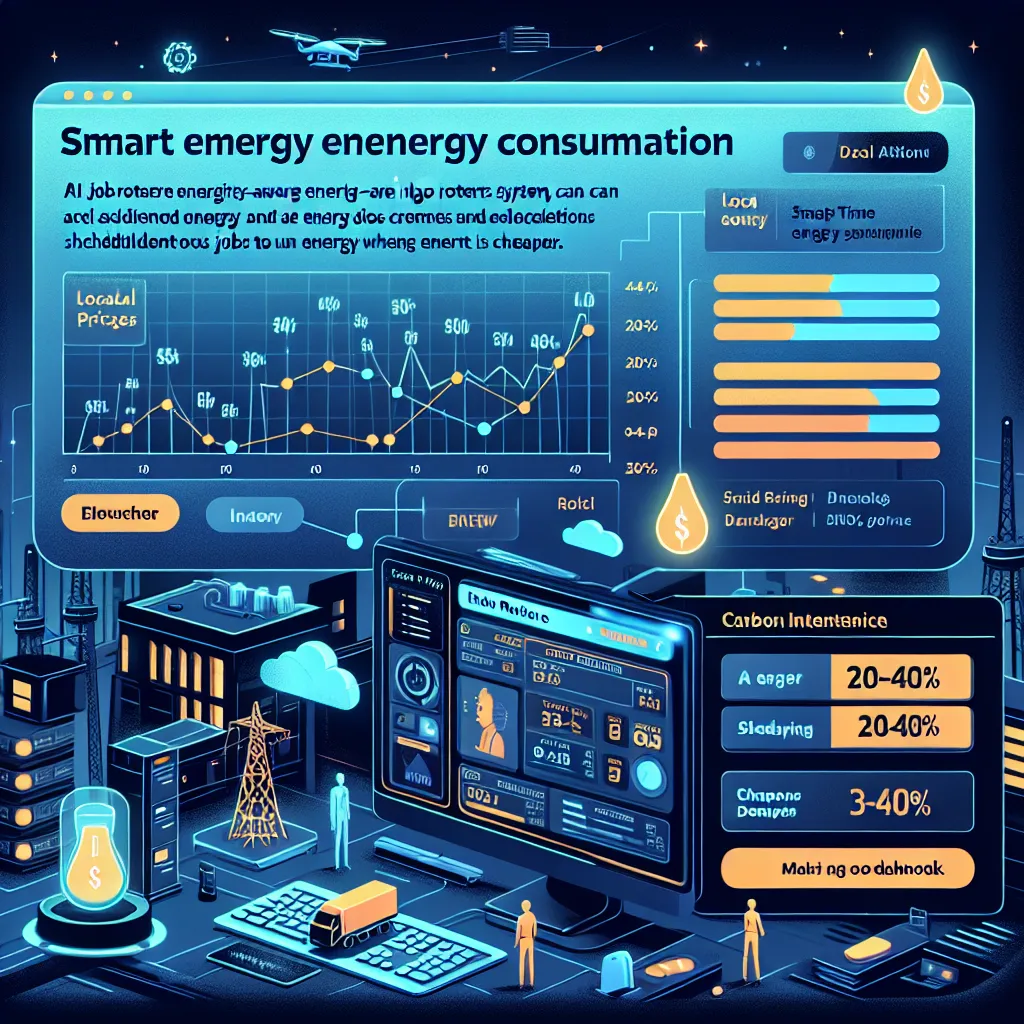
As energy prices become volatile and solar creates predictable windows of near-free power, companies still run AI jobs, renders, training runs, and automations at fixed times, overpaying without realizing it. An energy-aware AI job router would sit between task creation and execution, automatically delaying, accelerating, or relocating compute based on real-time local energy prices and carbon intensity. This becomes possible now because cloud workloads are modular, energy pricing data is increasingly available, and AI jobs are flexible in timing. A startup could offer this as a simple API or dashboard that saves companies 20–40% on compute by running non-urgent jobs when power is cheapest, charging a percentage of the savings or a SaaS fee.
Description
No additional description provided.
The Pitch
The rapid increase in energy prices and the advent of solar energy have ushered in an era where energy costs fluctuate significantly based on time and location. Despite this, many companies continue to schedule AI jobs, renders, training runs, and automations at fixed intervals. This practice often leads to overspending on energy without businesses realizing the potential savings. The concept of an energy-aware AI job router is a timely solution to this problem, leveraging modern technology and data insights to optimize energy usage for computational tasks.
Problem: Companies are often locked into fixed schedules for running computational tasks, ignoring the potential to save costs by timing these operations to coincide with periods of cheap energy. With AI jobs and other computational processes being flexible in their execution timing, there is a significant missed opportunity for reducing operational expenses. This issue is compounded by the increasing availability of detailed energy pricing and carbon intensity data, which many businesses are not fully utilizing.
Solution: The energy-aware AI job router aims to bridge this gap by serving as an intermediary between task creation and execution. By analyzing real-time local energy prices and carbon intensity, the system can intelligently decide when and where to carry out these tasks. This strategic scheduling not only saves costs by tapping into cheaper energy windows but also contributes to reducing carbon footprints by opting for greener energy options.
Product Details: The core product will be an easily integrated API and user-friendly dashboard. The API allows seamless incorporation into existing workflows, enabling automated decision-making for task scheduling based on real-time energy data. The dashboard provides insight into energy usage, potential savings, and carbon footprint reductions. Key features include:
- Real-time energy pricing and carbon intensity data integration - Intelligent scheduling algorithms that consider urgency and energy costs - Historical data analysis for optimizing long-term scheduling strategies - Custom alerts and reports on energy savings and environmental impact
Tools for MVP: To bring this concept to life, the following tools and platforms will be instrumental in developing a Minimum Viable Product (MVP):
- Cloud Platforms: AWS, Google Cloud, or Azure for scalable infrastructure - APIs for real-time energy data: Opower or Enel X APIs - Machine Learning Frameworks: TensorFlow or PyTorch for developing predictive algorithms - Frontend Libraries: React or Vue.js for building an intuitive dashboard
Go-to-Market (GTM) Strategy: The initial target market comprises medium to large enterprises with heavy computational needs, such as tech companies, financial services, and research institutions. The GTM strategy will include:
- Direct sales outreach to potential high-value clients - Partnership with cloud service providers for joint marketing efforts - Content marketing focusing on case studies and thought leadership in sustainable computing - Early adopter program offering incentives for initial users to provide feedback and testimonials
Business Model: The primary revenue model will focus on a subscription-based SaaS approach, providing different tiers based on company size and usage levels. An alternative pricing model could involve charging a percentage of the savings realized through the system's optimizations. This performance-based approach not only aligns with client interests but also demonstrates the tangible value of the product.
Conclusion: The energy-aware AI job router presents an innovative and timely solution to a prevalent issue faced by companies globally. By aligning computational workloads with optimal energy pricing and availability, businesses can significantly reduce costs and lower their environmental impact. This solution leverages modern technology, making it a compelling offering in the era of smart and sustainable business operations.