Empowering Students with AI Prompt Literacy
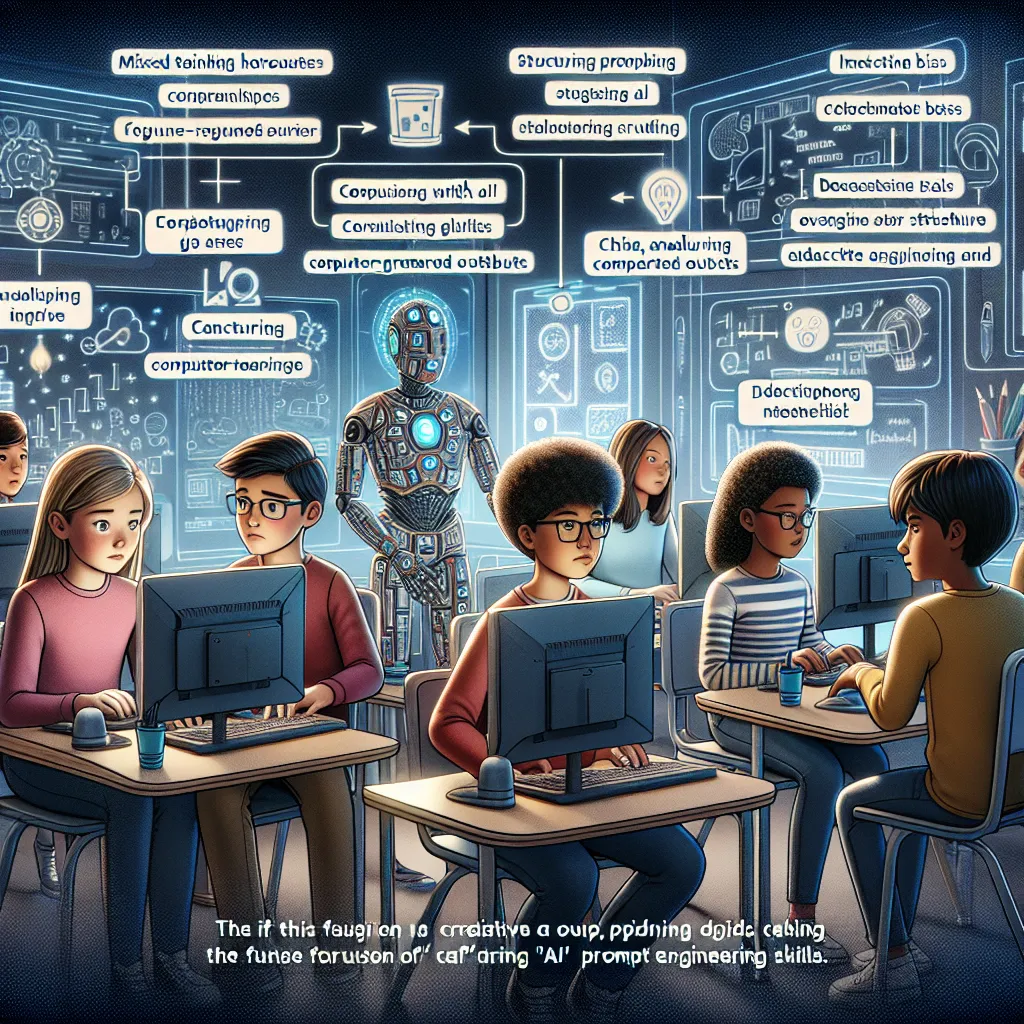
A generation of kids is growing up learning through AI—thinking in prompts, tools, and real-time feedback loops. But traditional education systems aren’t preparing them to harness this power effectively. A “Prompt Literacy Curriculum” solves this by teaching students how to think critically with AI: how to structure prompts, evaluate outputs, detect bias, and iterate creatively. With AI as their co-pilot, this becomes the new digital fluency. For example, a 12-year-old learns to prompt an agent to write a story, then analyze its structure, rewrite it, and improve it—developing both creativity and prompt engineering skills in a classroom setting.
Description
No additional description provided.
The Pitch
In recent years, the integration of artificial intelligence into everyday life has fundamentally changed the way people approach problem-solving and learning. A new generation of young learners is increasingly engaging with AI tools, discovering how to work alongside these systems to achieve enhanced outcomes. However, the traditional education system has not kept pace with this technological evolution, leaving a crucial gap in preparing students to effectively harness the potential of AI.
The core problem lies in the disconnect between how students are traditionally taught and the kind of digital fluency needed in today's AI-driven world. Students are adept at using technology for entertainment and communication, but they often lack the skills to critically engage with AI, understand its outputs, and utilize these tools to their full advantage. This gap creates a pressing need for an educational framework that equips students with AI-related skills such as prompt structuring, output evaluation, bias detection, and creative iteration.
To address this issue, the Prompt Literacy Curriculum emerges as a comprehensive educational solution. This curriculum is designed to transform digital fluency for students by integrating AI into the learning process, making AI their co-pilot in educational tasks. The curriculum teaches students how to critically interact with AI, offering them the skills to formulate effective prompts, interpret AI-generated outputs, identify potential biases, and creatively refine outputs.
The curriculum can be integrated into existing educational settings or offered as a standalone program. It encourages students, such as a 12-year-old learning how to collaboratively write a story with an AI, to prompt the AI for an initial draft, analyze the structure of the narrative, and iteratively improve upon it. By doing so, they not only learn about storytelling but also enhance their creativity and proficiency in prompt engineering.
To facilitate the launch of this curriculum as a Minimum Viable Product (MVP), educational platforms and tools can be employed. Educators might use platforms such as Google Classroom or Moodle to create interactive and engaging lessons that incorporate AI-driven activities. Collaboration with AI technology companies could provide access to user-friendly AI tools and resources that students can use during their lessons. Partnerships with educational content creators could also ensure the curriculum is aligned with educational standards and best practices.
The go-to-market (GTM) strategy should focus on collaborations with schools, educational policy makers, and technology firms. Pilot programs could be launched in select schools to demonstrate the impact and effectiveness of the curriculum, gathering data and feedback for further iterations. Stakeholder engagement, including teachers, parents, and students, will be essential to refine the curriculum and ensure its practicality in diverse learning environments.
The business model for the Prompt Literacy Curriculum might involve a subscription-based service for schools, providing access to lesson plans, AI tools, and ongoing support. Additionally, the curriculum could be offered in a tiered model that allows for basic free access with premium features available at a cost, making it accessible to a wider range of educational institutions.
In summary, the Prompt Literacy Curriculum aims to bridge the gap between traditional education and the digital fluency required in the modern world. By equipping students with the skills to leverage AI effectively, the curriculum not only prepares them for future academic and professional endeavors but also establishes a new standard for critical and creative thinking in an AI-enhanced landscape.