Empowering Machines with Autonomous Stablecoin Payments
Machines today are passive tools — they don’t hold money, can’t pay for their own needs, and require centralized owners to manage revenue and costs. But with programmable stablecoins, that changes. For the first time, devices like drones, vending kiosks, or EV chargers can have their own wallets, receive revenue directly, and autonomously pay for services like electricity, data, or repairs. Fiat systems can’t do this — they lack programmable value flow and instant micro-payments. Stablecoins make it possible to turn machines into economic agents. A drone delivery unit could collect fees in USDC, auto-distribute earnings to its manufacturer, software provider, and charging station, and even request maintenance when funds dip below a threshold. This creates self-sustaining machine businesses — no intermediaries, no billing delays, no humans required. It’s a foundational shift toward autonomous commerce, made possible only because stablecoins give machines access to the financial system.
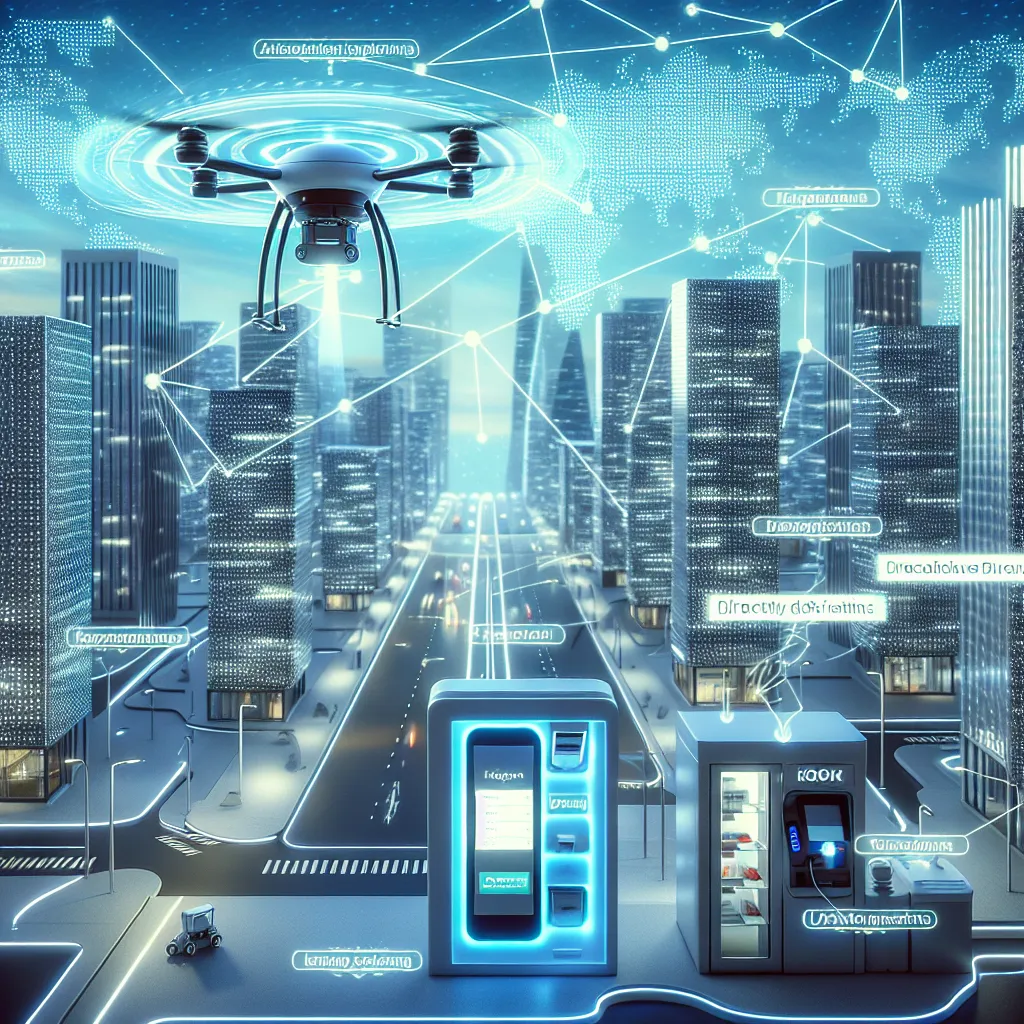
Description
No additional description provided.
The Pitch
The concept of machines as independent economic entities is transforming rapidly with recent advancements in financial technology. Traditionally, machines have been passive entities, relying on human operators and centralized systems for economic transactions. However, the advent of programmable stablecoins has spearheaded a new era where machines can manage their own financial activities, thereby negating the need for human intermediaries. This document delves into the evolution, challenges, and solutions that programmable stablecoins bring to the table, laying out a blueprint for building such applications with a clear business model.
### The Backstory
Today's machines serve primarily as passive tools. Whether it's drones, vending kiosks, or electric vehicle (EV) charging stations, they all require human intervention for management and financial operations. This includes invoicing, awaiting payments, coordinating maintenance, and more. The passive nature of these machines is a bottleneck in achieving true automation and operational efficiency, resulting in increased overheads and delayed financial settlements. The introduction of programmable stablecoins, however, presents an opportunity to realign the role of machines as active participants in the economy.
### The Problem
The lack of financial autonomy in machines stems from the technological constraints of traditional fiat systems:
- Machines cannot hold or manage funds independently. - Financial transactions require human approval and processing. - Micro-payments and instant settlements are not feasible, leading to delays. - Centralized control systems introduce a single point of failure and hinder scalability.
### The Solution
Programmable stablecoins offer a revolutionary solution by enabling machines to hold and transact digital currencies autonomously. These stablecoins, with their value pegged to fiat currencies like the US dollar, ensure minimal price volatility, making them an ideal medium for machine-to-machine (M2M) transactions.
- Machines can have their own digital wallets. - Real-time transactions and micro-payments become possible with minimal fees. - Decentralized management ensures robust security and eliminates single points of failure. - Automated financial operations, such as pay for service usage and request maintenance, become feasible.
### Product Details
Imagine a delivery drone operating as an independent economic agent:
- **Wallet Integration:** Each drone is equipped with a digital wallet capable of receiving payments in stablecoins like USDC. - **Revenue Distribution:** Automatically allocate revenue to the drone's manufacturer, its software provider, and associated charging stations. - **Autonomous Maintenance Requests:** Monitor wallet balance and request maintenance services when funds reach a defined threshold. - **No Human Interference:** Operate without the need for human billing management or control.
### Tools for MVP Launch
To build a Minimum Viable Product (MVP) for this concept, the following tools and technologies could be utilized:
- **Blockchain Platform:** Ethereum or other DApp-friendly platforms for smart contract deployment. - **Wallet Services:** Integration with stablecoin wallets such as USDC or USDT. - **IoT Platforms:** AWS IoT or Azure IoT Central for device management and data collection. - **Payment Gateways:** Tools like Chainlink for real-time stablecoin value updates and transactions. - **Development Frameworks:** Use of frameworks like Truffle or Hardhat for smart contract development.
### Go-to-Market Strategy
Deploying the proposed solution involves a strategic approach:
1. **Market Research:** Identify industries with high machine dependency like logistics, retail automation, and energy distribution. 2. **Partnerships:** Collaborate with key industry players for pilot projects and endorsements. 3. **Prototyping:** Develop prototypes for real-world applications and gather user feedback. 4. **Regulatory Compliance:** Ensure adherence to regulatory requirements for digital currency transactions. 5. **Promotion:** Leverage online platforms and tech expos to draw attention and excitement around autonomous machine operations.
### Business Model
- **Transaction Fees:** A small fee per transaction facilitated through the M2M capabilities. - **Subscription Services:** Offer tiered subscription plans for premium support, enhanced features, and real-time analytics. - **Data Monetization:** Providing data insights from machine transactions as a service.
In conclusion, turning machines into autonomous economic agents not only alleviates the pain points in current centralized systems but also opens the door for unprecedented efficiency in various industries. With programmable stablecoins, the vision of machines participating in the digital economy is now a pragmatic reality.