Empowering Communities: Neighborhood DAO for Local Projects
Local governments are bureaucratic and disconnected. Communities want faster, transparent ways to fund small improvements—like fixing a park bench or starting a local festival. A Neighborhood DAO lets members pool funds, vote, and distribute micro-grants for public goods with full transparency. Why now? DAOs, quadratic voting, and on-chain identity tools are finally easy enough for everyday users, and real estate/tokenized cities are emerging. Example: A Brooklyn block forms “Bed-Stuy DAO,” where 100 members contribute $10/month to fund monthly local initiatives—like paying a muralist or buying school supplies—with on-chain votes and public treasury.
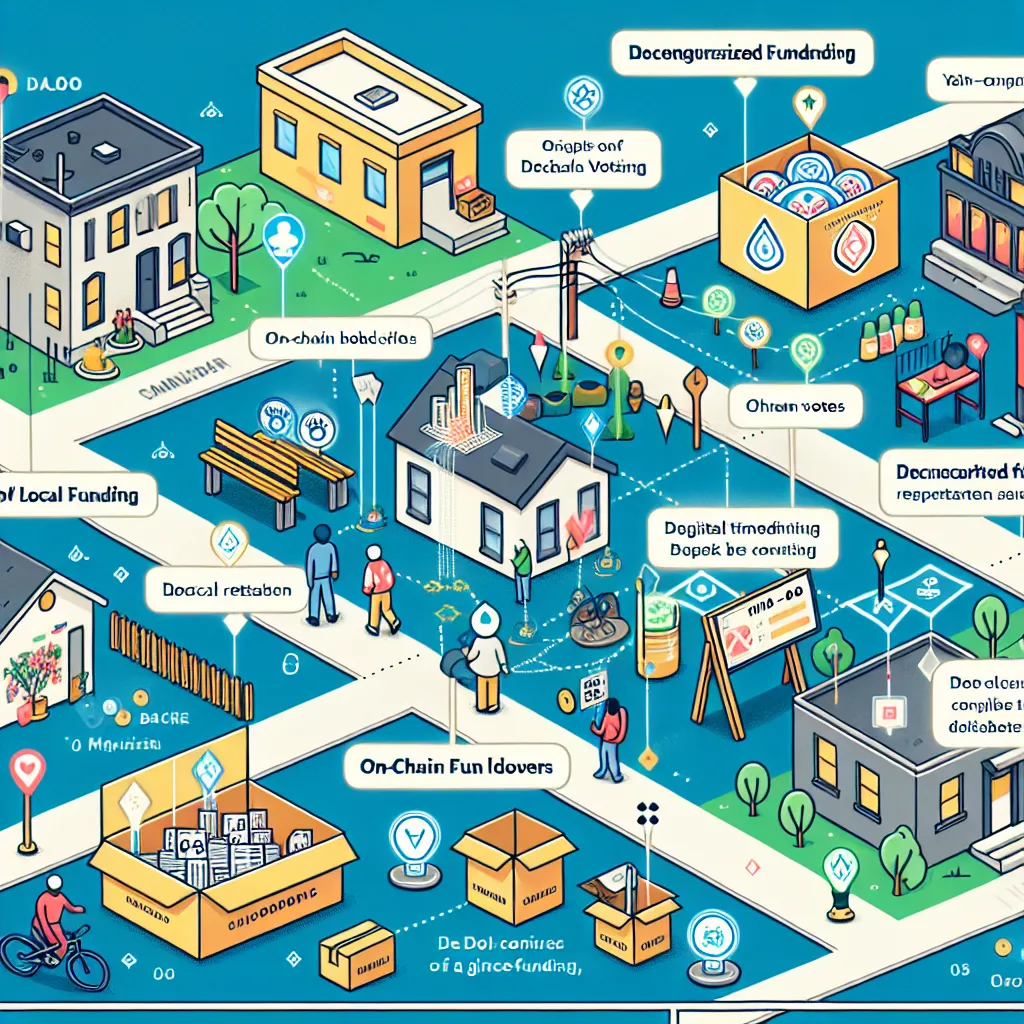
Description
No additional description provided.
The Pitch
Over recent decades, local governments have increasingly been seen as slow-moving and disconnected from the immediate needs and desires of the communities they serve. Residents often find it challenging to advocate for small-scale local improvements, such as refurbishing a park bench or organizing a neighborhood festival. These small projects, though seemingly modest, can significantly enhance quality of life and foster greater community cohesion. However, the traditional bureaucratic processes inhibit the involvement of everyday citizens who wish to initiate such changes.
To address these issues, we propose the formation of Neighborhood Decentralized Autonomous Organizations (DAOs). These are community-driven platforms that allow residents to pool resources, propose initiatives, and fund local projects efficiently and transparently. Through a Neighborhood DAO, members can contribute funds, participate in decision-making, and allocate micro-grants for community improvements, all while ensuring accountability through transparent processes.
The timing for introducing Neighborhood DAOs is ideal given the advancements in decentralized technologies. Tools such as DAOs, quadratic voting systems, and on-chain identity verification have become highly accessible for mainstream users. Additionally, the emergence of tokenized cities and community-centric real estate models is fueling interest in localized, token-based economies.
Here is how a Neighborhood DAO might function in practice: Imagine a community in Brooklyn forming the Bed-Stuy DAO. In this model, 100 residents each contribute ten dollars monthly into a collective fund. Members can propose initiatives, such as commissioning a local artist for a mural or purchasing supplies for a local school. Each proposal is subjected to an on-chain vote, allowing for fair and transparent decision-making. The DAO's public treasury records each transaction, ensuring complete transparency and traceability.
For those interested in developing this concept into a Minimum Viable Product, several tools can ease the process:
1. DAO Creation Tools: Platforms like Aragon and DAOstack provide user-friendly interfaces for creating and managing DAOs, making them accessible even to those with minimal technical expertise.
2. Voting Systems: Quadratic voting tools, available through organizations such as Gitcoin, can be integrated to ensure that the voting process reflects community preferences more accurately.
3. Identity Verification: On-chain identity solutions from providers like uPort or Civic can help verify user identities, ensuring that votes and contributions come from legitimate community members.
To bring a Neighborhood DAO to market, a strategic Go-to-Market (GTM) strategy is essential. This includes engaging with early adopters within communities passionate about local development, partnering with local influencers, and conducting workshops to educate residents about the benefits and functionalities of DAO participation.
The business model for a Neighborhood DAO can be sustained through transaction fees on grants and contributions or by implementing subscription models for additional services. Sponsorships or partnerships with local businesses can also generate revenue, further incentivizing participation by creating a shared economic community.
By leveraging the potential of decentralized technologies, Neighborhood DAOs can transform how communities engage with local governance, empowering residents to actively contribute to and benefit from communal enhancements.