Empower Individuals to Participate in Lunar Missions
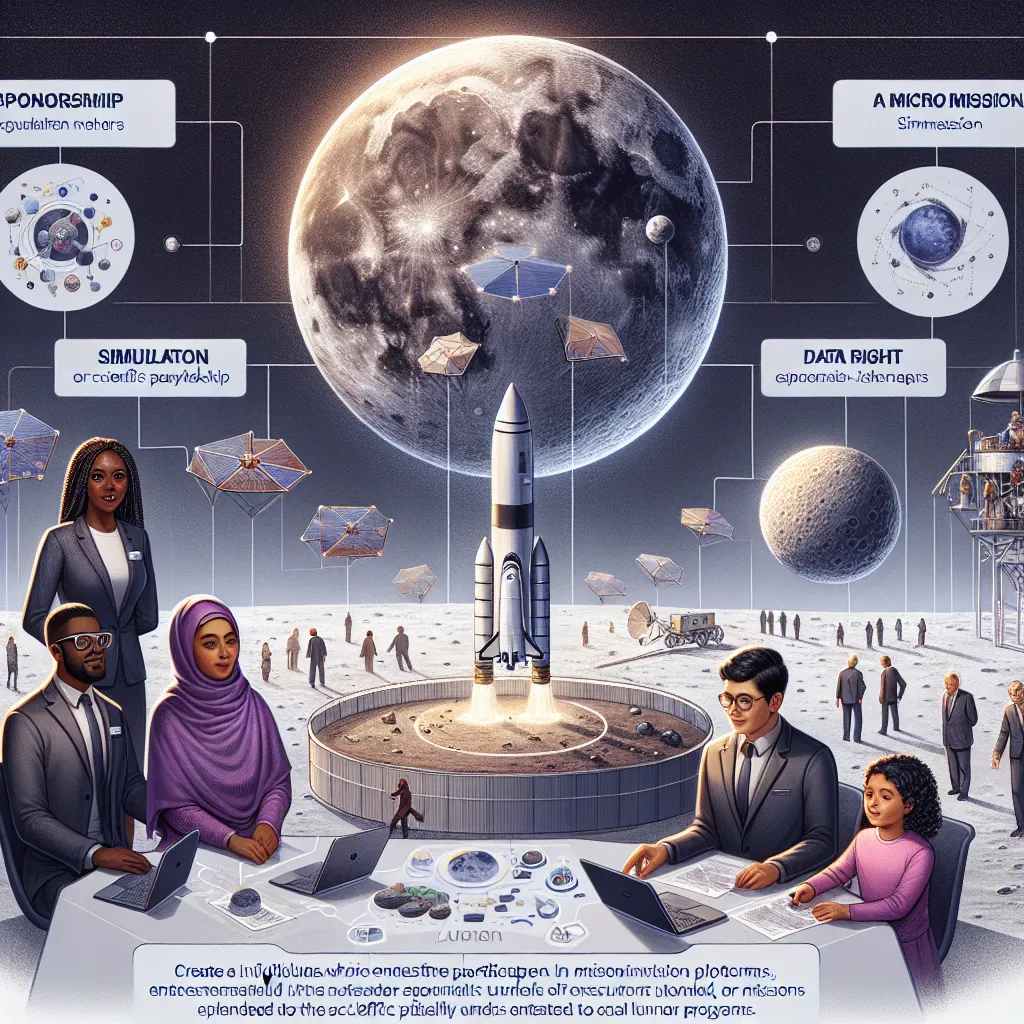
As space re-enters public imagination, most people remain spectators rather than participants. A new platform could let individuals sponsor, simulate, or “own” micro-missions tied to real lunar programs—science payloads, experiments, or data rights. This becomes timely as Artemis reframes space as a long-term presence, not a stunt. A classroom, company, or individual could fund a tiny experiment that actually flies, turning exploration into shared ownership rather than distant spectacle.
Description
No additional description provided.
The Pitch
In recent years, the concept of space exploration has captured the public's imagination once more, largely due to initiatives like NASA's Artemis program, which aims to establish a sustainable human presence on the Moon. Despite this renewed interest, the vast majority of people remain passive spectators, watching these monumental achievements unfold from afar. There is an opportunity to transition interested individuals and organizations from passive observers to active participants.
**Backstory**
Historically, space exploration has been the domain of governmental bodies and large corporations with expansive budgets. While private companies have made space more accessible, the barrier to participation remains high for most. With growing momentum in lunar exploration, particularly with planned missions to the Moon, there is an opportunity to democratize participation by creating a platform that allows individuals, classrooms, and small organizations to sponsor or own micro-missions.
**Problem**
The challenge lies in bridging the gap between those who dream of contributing to space exploration and the practical reality of actually doing so. Current models exclude a vast majority due to cost, complexity, and the scale of involvement typically required. This not only limits educational opportunities but also restricts the potential for innovation and broad-based public engagement.
**Solution**
The solution is a platform where individuals, educational institutions, and small businesses can sponsor or simulate micro-missions linked to real lunar programs. Through this platform, participants could fund small-scale science payloads, experiments, or data collection missions that would be an integral part of ongoing lunar exploration efforts. This would create a sense of shared ownership and direct engagement with space science.
**Product Details**
1. **Platform Interface**: A user-friendly digital platform where users can browse available mission slots, choose a mission that aligns with their interests, and digitally interact with their chosen mission.
2. **Mission Options**: A catalog of micro-missions varying in scope, cost, and scientific objective, allowing users of different budgets and interests to participate.
3. **Educational Packages**: Bundled materials and resources tailored for schools and universities to integrate into their curriculum.
4. **Simulation Software**: Tools and resources to simulate the mission on computer systems, providing a hands-on experience tailored to varying levels of expertise.
5. **Community Forum**: An online forum for participants to share experiences, insights, and collaborate on mission objectives.
**Tools for Launching an MVP**
1. **Digital Platform Development**: Utilize no-code/low-code options like Bubble or Webflow to develop the initial platform interface quickly.
2. **Partnerships**: Collaborate with existing space agencies and private companies to secure small payload slots on lunar missions.
3. **Simulation & VR Tools**: Employ 3D simulation tools like Unity or Unreal Engine to create a realistic mission experience.
4. **Payment Gateway**: Integrate platforms like Stripe or PayPal to handle sponsorship transactions efficiently.
5. **Educational Content**: Partner with educators to develop comprehensive educational materials that align with the platform's objectives.
**Go-to-Market Strategy**
1. **Target Audience**: Focus initial efforts on educational institutions and space enthusiast communities.
2. **Content Marketing**: Launch a series of blog posts, webinars, and case studies demonstrating the platform's potential and educational value.
3. **Partnerships with Influencers**: Collaborate with science communicators, educators, and space enthusiasts who can advocate for the platform to their audiences.
4. **Pilot Program**: Implement a pilot program in select schools or universities to showcase the platform's effectiveness and gather testimonials.
5. **Social Media Campaigns**: Utilize platforms like Twitter, LinkedIn, and Instagram to generate buzz and engage directly with potential users.
**Business Model**
- **Subscription Model**: Offer subscription tiers with different levels of access to educational content, mission participation, and community features.
- **Per-Mission Sponsorship Fees**: Charge users on a per-mission basis, with customized options based on the complexity and scope of the mission.
- **Partnership and Sponsorship Deals**: Collaborate with corporate entities to sponsor educational modules or specific missions in exchange for branding and advertising opportunities.
By transforming spectators into participants, this platform can foster a more inclusive, engaging, and educational experience that democratizes space exploration.