Eco-Tourism Management Software for Conservation Destinations
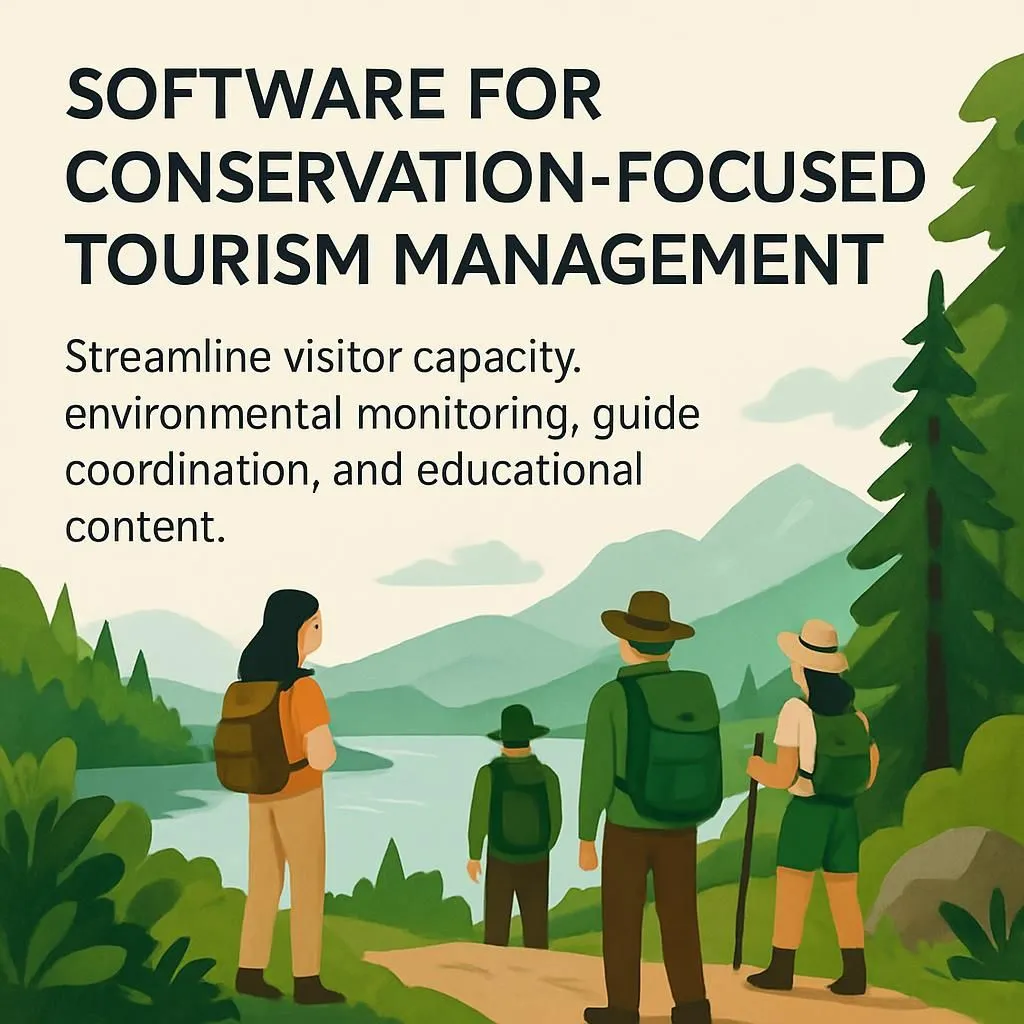
Nature-based tourism is becoming a significant economic driver for parks, festivals, conservation groups, and rural communities. However, many organizations still manage reservations, attendance limits, permits, educational programs, guides, and conservation efforts through spreadsheets and manual processes. As demand grows, poorly managed tourism can threaten the very ecosystems attracting visitors. This startup provides software specifically designed for conservation-focused destinations, allowing operators to manage visitor capacity, monitor environmental impact, coordinate guides, deliver educational content, and generate sustainable revenue. The opportunity exists because eco-tourism is growing rapidly while the infrastructure supporting it remains fragmented and outdated.
Description
No additional description provided.
The Pitch
A hotel wants more occupancy; a fragile wetland, reef, trail system, or wildlife reserve often needs the opposite at the wrong moments and more of the right visitors at the right ones. Most tourism software is built around maximizing bookings, but conservation destinations need to manage scarcity, timing, behavior, and ecological load. That difference is large enough to justify a category of its own.
The most valuable asset these destinations have is not inventory in the conventional sense, but trust: trust from visitors, landowners, regulators, donors, scientists, and local communities. A system that records who came, when, under what conditions, with which guide, and what impact was observed becomes more than an operations tool. It becomes an institutional memory for places that often depend on seasonal staff, volunteers, and grant cycles. The software could quietly turn scattered local knowledge into defensible decisions.
There is also an unusual alignment between revenue and restraint. In mass tourism, limits are usually seen as lost sales. In nature-based tourism, limits can create higher-quality experiences, stronger pricing power, and better long-term preservation. The business works if it helps operators prove that fewer, better-managed visits can be more valuable than uncontrolled growth. That is a different economic logic from ordinary ticketing, and many organizations do not yet have the tools to express it.
A strong company here would benefit from becoming the operating layer for a highly fragmented but emotionally important sector. Individual reserves, parks, sanctuaries, farms, field stations, and conservation nonprofits may be small, but they share similar constraints and often learn from one another through networks rather than procurement departments. If the product becomes associated with responsible visitation, adoption could spread through credibility rather than conventional software comparison.
The deeper opportunity is that nature destinations increasingly need to show their work. Visitors want meaningful experiences, funders want measurable outcomes, regulators want compliance, and communities want tourism that does not extract more than it contributes. A platform that connects access, education, and impact gives these organizations a way to make conservation legible without turning it into a performance. That is why the business could matter: it would not simply help places sell entry to nature, but help them decide what kind of access nature can afford.