Eco-Friendly Modular Disaster-Relief Housing Kits
Traditional post-disaster rebuilding relies on carbon-intensive concrete, slow supply chains, and materials that worsen long-term climate risk. A startup could create modular disaster-relief housing kits built from carbon-negative biomineral materials like WPI’s ESM, which cure rapidly, ship light, and actively sequester CO₂ as they harden. As climate-driven disasters increase, relief organizations need fast, sustainable structures that strengthen resilience instead of adding emissions. For example, “GreenShelter Kits” could deploy after hurricanes, assembling durable, carbon-storing micro-homes within hours, turning emergency shelter into climate mitigation.
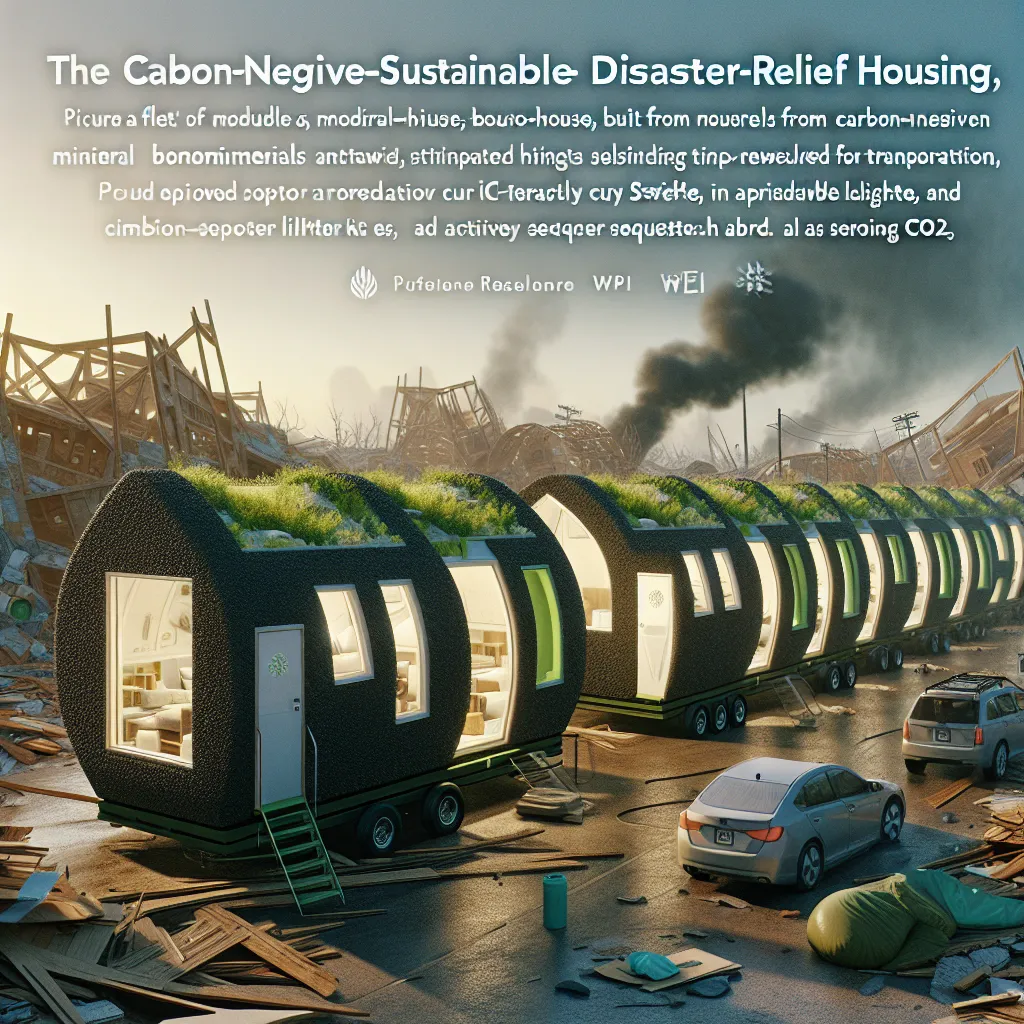
Description
No additional description provided.
The Pitch
In recent years, the frequency and intensity of natural disasters have spiked, partially due to the ongoing climate crisis. These disasters leave thousands, if not millions, of people homeless, prompting an urgent need for rapid and effective rebuilding solutions. However, traditional rebuilding methods largely rely on carbon-intensive materials like concrete, operate within sluggish supply chains, and often prioritize speed over sustainability. This approach not only fails to address the immediate need for shelter but also contributes to long-term climate risk.
**The Problem**
Natural disasters such as hurricanes, floods, earthquakes, and wildfires devastate communities, creating a severe shortage of habitable structures. Existing post-disaster solutions are often temporary and not environmentally friendly. Traditional materials contribute significantly to global emissions, while the supply chains involved in their delivery are slow and inefficient, delaying the recovery process. Relief organizations face immense pressure to provide shelter quickly, yet the structures produced often lack durability and sustainability.
**The Solution**
A revolutionary approach to resolving this issue lies in the development of modular disaster-relief housing kits made from carbon-negative biomineral composites. These innovative materials, like Worcester Polytechnic Institute's Engineered Stone Material (ESM), offer both speed and sustainability. These materials cure rapidly, are lightweight for easy transportation, and have the added benefit of actively sequestering carbon dioxide as they harden, turning construction into an opportunity for climate mitigation.
**Product Details**
Imagine a product called GreenShelter Kits, which comprises pre-fabricated modular components that can be easily transported and assembled on-site. These kits come complete with:
- Lightweight panels made from ESM that can be assembled without the need for heavy machinery. - Instruction manuals and simple tools for quick assembly by volunteers or local workers. - Basic utilities infrastructure, such as solar panels and water collection systems.
The aim is to enable the assembly of durable, climate-resilient micro-homes within hours, transitioning emergency shelter into a cornerstone of climate mitigation.
**Tools for an MVP**
To swiftly bring this concept to life, the following tools and methods can be utilized:
- 3D printing technology to prototype the modular components. - Supply chain optimization software for efficient distribution. - Collaboration platforms for effective communication with stakeholders. - Partnerships with universities and research institutions for material development.
**Go-to-Market Strategy**
To introduce GreenShelter Kits to the market, consider the following approach:
- Collaborate with international relief organizations, such as the Red Cross and UNHCR, to establish pilot projects. - Conduct trials in regions frequently affected by natural disasters. - Attend industry conferences and expos to showcase the product and its benefits. - Engage with local governments and NGOs to secure buy-ins and support. - Launch a marketing campaign that highlights the product's dual benefits of rapid relief and climate impact reduction.
**Business Model**
A subscription-based model could provide a steady stream of income. Under this model, governments and NGOs would subscribe to a continuous supply of GreenShelter Kits, ensuring they are prepared for potential disasters. Alternatively, a direct sales model can be utilized, where kits are purchased in bulk by relief agencies. Expansion of the business could include partnering with construction firms and seeking private sector investment to enhance scale and reach.
**Conclusion**
By integrating speed with sustainability, GreenShelter Kits represent an innovative solution to the challenges faced in post-disaster rebuilding. This model not only addresses the urgent need for shelter but also contributes positively to climate mitigation efforts. As the world increasingly recognizes the importance of sustainable practices in every sector, this venture holds the promise of bringing a transformative change in disaster relief and construction.