Eco-Friendly, Biodegradable Smart Wristbands for Events
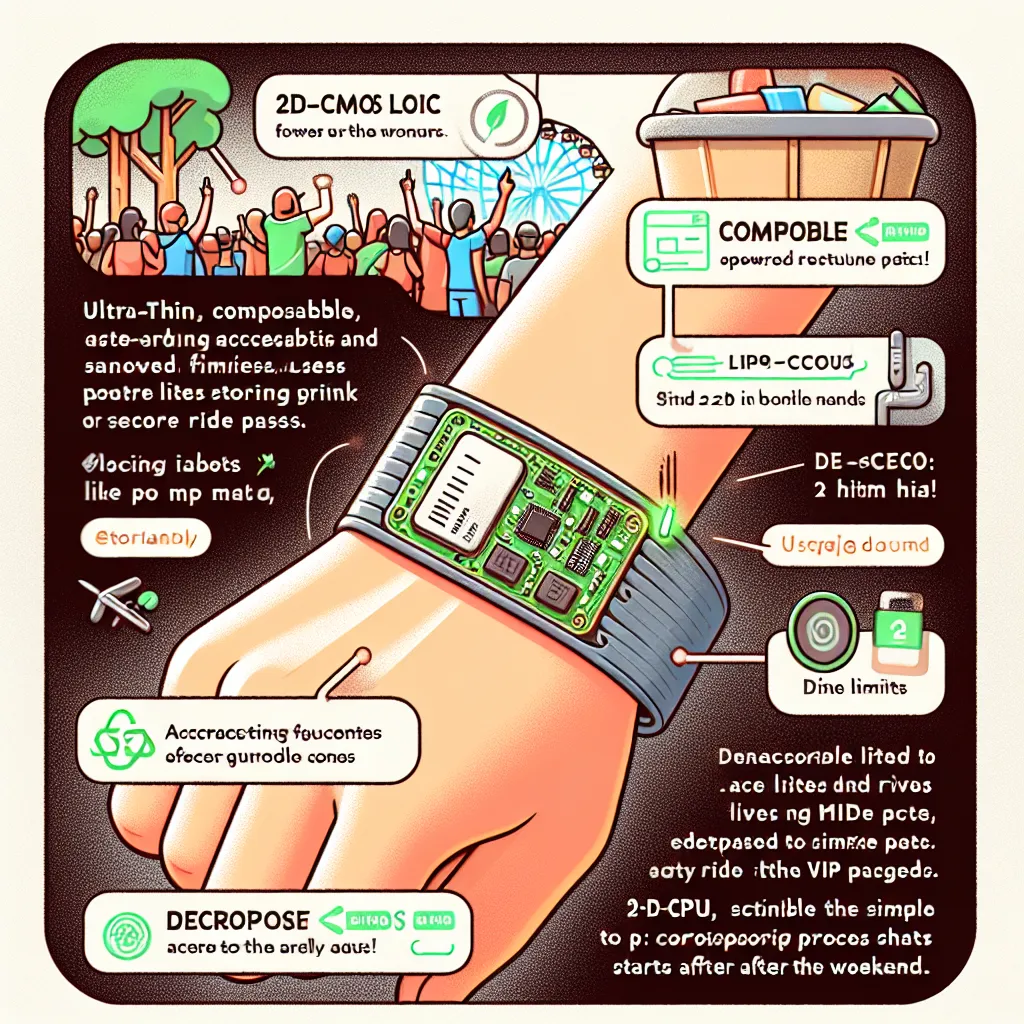
Live events and theme parks still use wristbands with barcodes or NFC chips that require expensive plastic and batteries, generating waste. A new solution could be ultra-thin, compostable wristbands powered by 2D-CMOS logic, storing access credentials and usage data (e.g. drink limit, ride passes) and deactivating after 24–48 hours. These bands could power themselves via body heat or ambient light and contain simple CPUs to process and secure entry data. Think Coachella offering a skin-thin wristband that lets you tap into VIP lounges and track your schedule — and composts by the end of the weekend.
Description
No additional description provided.
The Pitch
The events and theme park industry often relies on wristbands equipped with barcodes or NFC chips for access control and guest interactions. However, these traditional wristbands typically involve non-biodegradable materials like plastic and require batteries for their operation, which contribute to environmental waste. A forward-thinking alternative could revolutionize this space by introducing ultra-thin, compostable wristbands. These wristbands would be powered by innovative 2D-CMOS logic technology, negating the need for plastic and batteries. They would retain access credentials and usage data, such as drink limits or ride passes, and automatically deactivate after a set period, such as 24 to 48 hours. By depending on body heat or ambient light for power, these wristbands could incorporate simple CPUs to process and secure entry data, offering a sustainable, efficient solution.
### Backstory
As the events and entertainment industries grow, there is an increasing demand for sustainable solutions to minimize environmental impact. Current wristbands create significant waste due to their non-biodegradable nature. This has sparked a rise in consumer awareness and demand for eco-friendly alternatives. Organizers are now more conscious of their ecological footprint and are seeking sustainable solutions without compromising functionality and attendee experience.
### Identifying the Problem
1. **Waste Generation**: Traditional wristbands contribute to environmental waste due to their non-biodegradable materials. 2. **Cost Inefficiencies**: The use of plastic and batteries can be cost-intensive with respect to material and disposal. 3. **Limited Functionality**: Despite technological advancements, many existing solutions offer limited interactivity beyond simple access control. 4. **Short Usage Lifespan**: Used only for a short duration, these wristbands still end up in landfills, contributing to long-term environmental issues.
### Proposed Solution
Introducing ultra-thin, compostable wristbands that: - Utilize 2D-CMOS logic technology to eliminate the need for traditional components like batteries and large chips. - Are powered by renewable sources such as body heat and ambient light. - Feature simple CPUs for processing and securing data. - Automatically deactivate after a defined period like 24-48 hours, ensuring security and reducing waste. - Can be composted, reducing the environmental impact and addressing the growing demand for sustainability.
### Product Details
- **Material**: Compostable, ultra-thin materials integrated with 2D-CMOS logic technology. - **Power Sources**: Body heat and ambient light. - **Functionality**: Store and process access credentials, usage data for features like drink limits and ride accesses. - **Security**: Embedded CPUs to enhance data processing and protection. - **Lifecycle**: Biodegradable post-event, breaking down into environmentally harmless components.
### Tools for Easy Launch as an MVP
1. **Prototype Development**: Partner with material science and electronics experts to create initial prototypes leveraging current achievements in biodegradable electronics. 2. **User Testing Platforms**: Collaborate with focus groups from small to medium-scale events for real-world testing. 3. **Rapid Iteration Tools**: Use agile methodologies and feedback loops for quick refinements.
### Go-To-Market Strategy
1. **Partnerships**: Form alliances with major event organizers and theme parks to pilot the solution. 2. **Market Education**: Engage in campaigns illustrating environmental benefits and differentiating features compared to existing solutions. 3. **Initial Launch**: Target eco-conscious events and festivals as early adopters to build brand credibility and gain traction. 4. **Scalability**: Post successful pilots, expand to larger venues and other markets like concerts, sports events, etc.
### Business Model
- **Direct Sales**: Sell directly to event organizers, venues, and theme parks. - **Subscription**: Offer a subscription model for regular event organizers for continuous supply and ongoing support. - **Custom Packages**: Create customizable options based on specific functionality levels required by different events. - **Eco-Incentive Programs**: Partner with organizations for eco-certifications, offering discounts or rewards for opting for sustainable products.
The combination of technological innovation and an environmentally conscious approach presents a unique opportunity for transforming how the event industry addresses access control and guest interactivity. As the market leans toward sustainability, this solution meets both ecological needs and operational efficiency.