Early Trust Erosion Detection for Brands
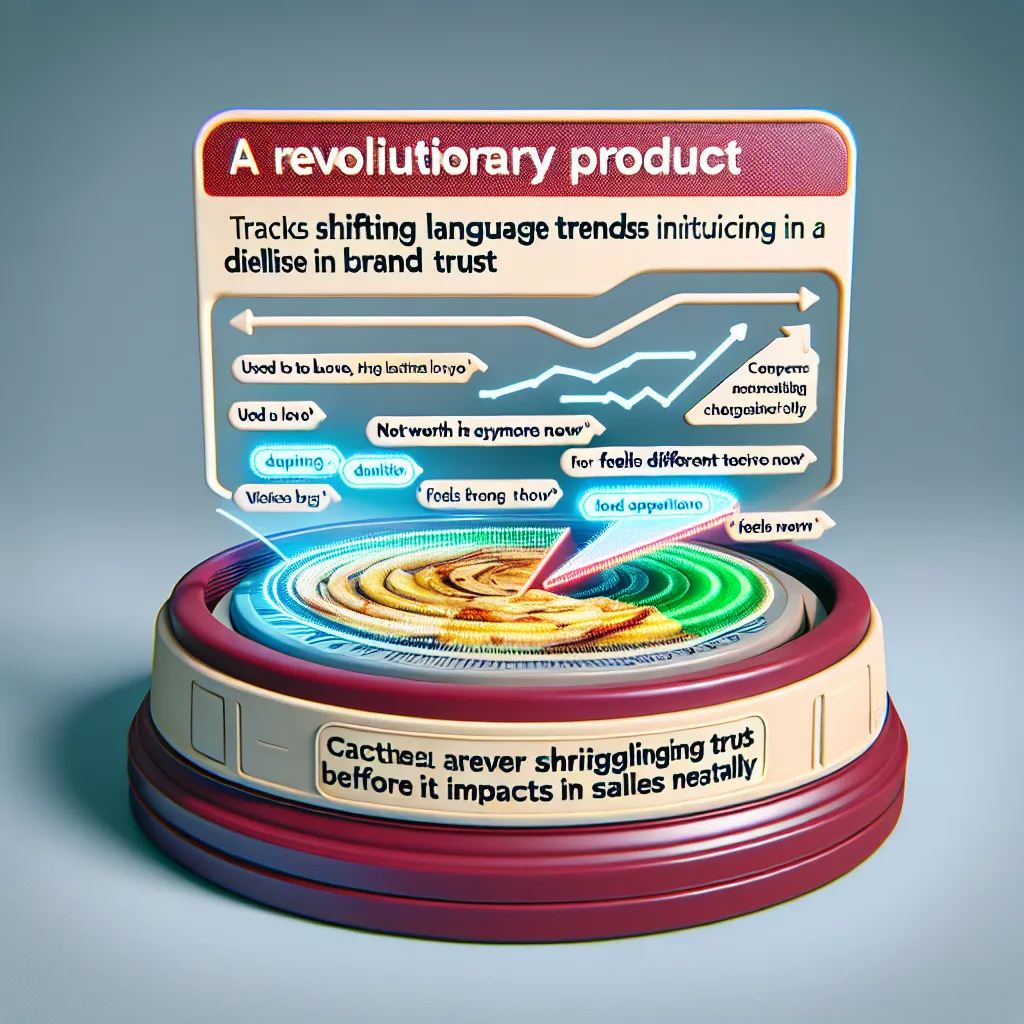
Brands usually notice trust loss only after sales fall, but erosion starts earlier in subtle language shifts. This product tracks when praise turns into skepticism — “used to love,” “not worth it anymore,” “feels different now.” It’s relevant now because trust breaks faster in a transparent, social world. A food brand could spot early concern about ingredient quality and correct messaging before a backlash forms.
Description
No additional description provided.
The Pitch
Many brands consider the loss of consumer trust as a sudden event, only realizing its significance when sales begin to decline. However, the subtle signs of eroding trust often appear much earlier, manifesting in nuanced shifts in the language consumers use. In a digital age characterized by transparency and rapid information dissemination, public perception of brands can change swiftly. For instance, a food brand could detect early concerns regarding ingredient quality through consumer feedback. By proactively tailoring their messaging, they could address issues before they snowball into major public relations challenges or declining sales figures.
**The Problem**
Trust is foundational to brand loyalty, yet its erosion can be insidious. Often, it's detected only after significant damage has occurred, evident in negative reviews, declining sales, or widespread consumer dissatisfaction. At that point, rebuilding trust becomes an uphill battle, necessitating costly marketing campaigns or rebranding efforts. For businesses to thrive, especially within competitive markets, an early warning system is vital to detect trust issues before they escalate publicly.
**The Solution**
An early detection platform designed to monitor the semantic shifts in consumer feedback related to trust. This system will use natural language processing (NLP) to analyze consumer reviews, social media comments, and customer service interactions, identifying phrases and sentiments indicative of diminishing trust. By highlighting phrases such as “used to love,” “not worth it anymore,” and “feels different now,” brands can take timely corrective measures. The primary goal is to provide businesses with actionable insights to maintain and enhance consumer trust proactively.
**Product Details**
- **Core Feature**: A dashboard powered by AI-driven sentiment analysis to track changes in consumer sentiment across various digital platforms.
- **Data Input**: Integration with social media, product review sites, and customer service chat logs to gather comprehensive data.
- **Analytics**: Advanced NLP algorithms to identify negative semantic changes and categorize them according to severity and potential impact.
- **Alerts System**: Customizable alert settings that notify brand managers of emerging issues in real-time.
- **Reporting Tools**: Detailed reports that outline trends in consumer feedback, helping brands to craft informed responses and strategic messaging.
**Tools for MVP Launch**
- **NLP Library**: Leverage open-source tools like spaCy or Hugging Face Transformers for developing language processing functionalities.
- **Data Aggregation**: Use APIs from social media platforms and review sites to pull data.
- **Dashboard Framework**: Tools such as Tableau or Microsoft Power BI for visualization, alongside backend services like Firebase or AWS for data management.
- **Prototyping & Full Stack Development**: Platforms like Figma for UI/UX design and a full-stack framework like Django or Node.js for building the initial product framework.
**Go-To-Market Strategy**
- **Initial Target Audience**: Medium to large consumer-facing brands, particularly in sectors with a high emphasis on consumer trust, such as food, cosmetics, and healthcare.
- **Marketing Approach**: Digital marketing campaigns focusing on the importance of trust maintenance, leveraging case studies and testimonials from pilot users.
- **Sales Strategy**: Direct sales approach targeting brand managers and decision-makers with personalized demos and free trials.
- **Partnerships**: Collaborating with digital marketing agencies to offer this tool as an add-on service for their clients.
**Business Model**
- **Subscription-Based**: Tiered pricing model based on the size of the brand and volume of data processed, offering different features and capabilities at each level.
- **Freemium Offering**: Basic monitoring services available for free with premium features requiring paid subscriptions, encouraging businesses to first experiment with the platform.
- **Consulting Services**: Additional revenue streams through consulting services to help brands interpret insights and integrate this tool within their existing systems.
Effective trust management remains imperative for brands to navigate rapidly shifting consumer landscapes. Developing a solution to detect trust erosion early can provide businesses with a competitive edge, ensuring long-term success in a transparent and socially-connected environment.