E-Skin OS: Standardizing Neuromorphic Touch Interface
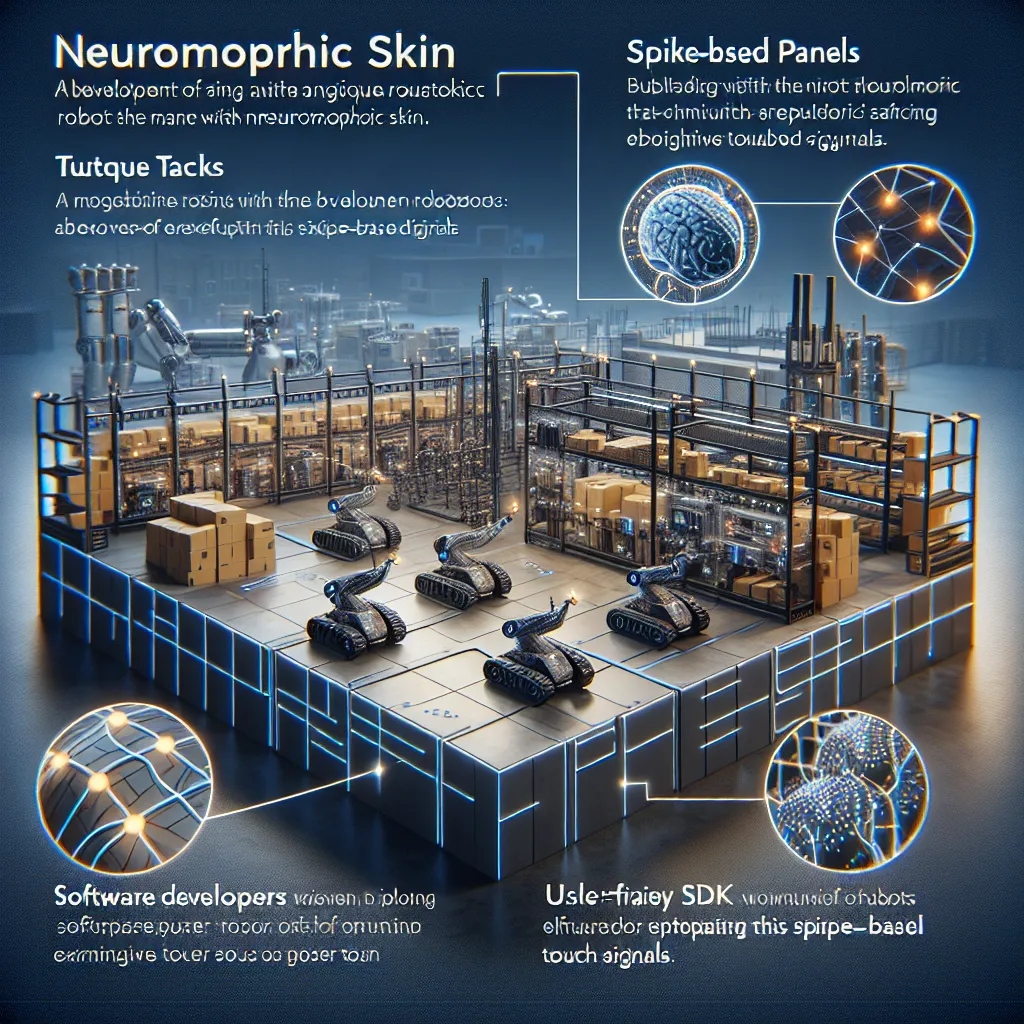
Neuromorphic skin exists — but only in labs, wired into custom robots. No standard hardware. No developer ecosystem. E-Skin OS would be the missing platform: modular tactile panels plus an SDK that lets developers interpret spike-based touch signals easily. Why now: every robotics wave stalls without standardization. Example: a startup building warehouse robots can add reflexive safety touch in weeks instead of years — and developers can build “touch apps” the way they build vision models today
Description
No additional description provided.
The Pitch
In recent years, neuromorphic skin, or electronic skin (E-Skin), has emerged as a groundbreaking innovation in the field of robotics. Capable of mimicking the human sense of touch, E-Skin has the potential to revolutionize how robots interact with their environment. However, its current application is primarily restricted to laboratories where it's integrated into custom robots. The lack of standard hardware and a cohesive developer ecosystem hampers the widespread adoption of E-Skin technology.
The Problem: Despite the promising capabilities of neuromorphic skin, the robotics industry faces a significant bottleneck—standardization. As with past waves in technology, robotics are hitting a plateau due to the lack of uniform platforms. This stalls innovation, especially for companies relying on robotics solutions, such as warehouse automation, where the need for safe, intuitive, and tactile interactions is crucial.
The Solution: Enter E-Skin OS, a unifying platform designed to bring E-Skin technology to the mainstream. E-Skin OS provides a dual-component solution:
1. Modular tactile panels: These hardware units can be easily incorporated into various robotics applications, offering plug-and-play solutions that eliminate the need for extensive customization.
2. An SDK (Software Development Kit): This enables developers to effortlessly interpret spike-based touch signals. By simplifying the integration and interpretation of tactile feedback, developers can craft novel touch apps akin to the current development of vision models in artificial intelligence.
Product Details: E-Skin OS's core product offerings focus on flexibility, scalability, and ease of integration.
- Modular Design: The tactile panels are designed for easy interchangeability and expansion, ensuring adaptability to a wide range of robotics systems.
- Comprehensive SDK: The development kit provides extensive libraries and tools that facilitate the quick creation of applications interpreting tactile data.
- Developer Support: To foster an innovative ecosystem, E-Skin OS offers extensive documentation, tutorials, and community forums for developers to collaborate and share insights.
Tools for an MVP Launch: To streamline the development and launch of E-Skin OS as a Minimum Viable Product (MVP), several tools and strategies can be employed:
- Cloud-Based Development Environment: Utilize cloud infrastructure to host SDK resources and enable collaborative development.
- Modular Hardware Kits: Create prototype kits that potential adopters and developers can use to build and test applications.
- Community Building Platforms: Host webinars, hackathons, and online forums to engage with developers and gather feedback.
Go-To-Market Strategy (GTM): The GTM strategy for E-Skin OS should be focused on penetrating both the developer community and industries that could benefit immediately from tactile technology.
1. Partnerships: Forge alliances with leading robotics manufacturers to establish E-Skin OS as the standard for tactile interaction.
2. Developer Engagement: Launch developer incentives such as contests and grants to increase uptake and innovation on the platform.
3. Industry-Specific Applications: Tailor solutions for sectors such as warehousing, healthcare, and consumer electronics, demonstrating clear benefits and value propositions.
Business Model: E-Skin OS will adopt a hybrid business model that combines elements of hardware sales, subscription-based SDK access, and a revenue-sharing model for applications developed and deployed on the platform.
- Hardware Sales: Revenue from the sale of modular tactile panels.
- Subscription Fees: Monthly or yearly fees for access to enhanced SDK features and developer support.
- Marketplace Model: A touch application marketplace where developers can sell their apps, with E-Skin OS taking a percentage of each transaction.
In conclusion, E-Skin OS represents a significant leap forward in the quest for standardized tactile solutions in robotics. By offering an integrated platform with both hardware and software elements, it addresses key pain points and promises to catalyze a new era of innovation, where touch is as vital as sight and sound in robotics.