Dynamic, Privacy-Preserving Access for Modern Software
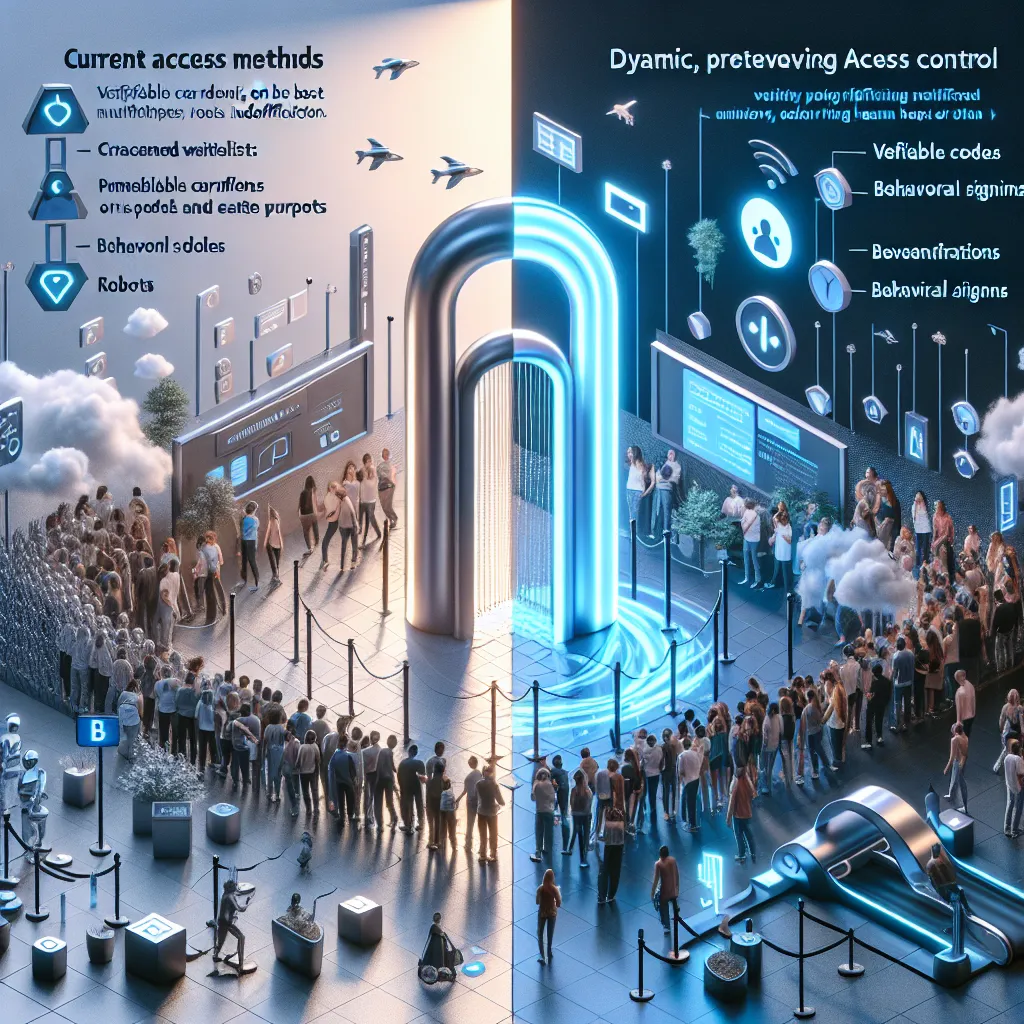
Access today is still governed by blunt, static systems—waitlists, invite codes, and whitelists that reward early arrival rather than trust, relevance, or intent. These mechanisms are easily gamed by bots, leaked through resale or sharing, and force users to overshare identity just to prove eligibility. As software becomes more powerful and sensitive—AI models, financial tools, marketplaces, and regulated platforms—the cost of letting in the wrong users increases, while teams lack the ability to adapt access as behavior changes over time. The solution is a dynamic, privacy-preserving access engine that replaces static lists with continuous eligibility decisions. Instead of asking who signed up first, it determines who should have access right now, using verifiable credentials, behavioral signals, and time-based rules. Access is scoped, non-transferable, and automatically expires, while users can prove they qualify without exposing unnecessary personal data. This shift is happening now because AI and API-driven products require fine-grained access control, privacy expectations have hardened, and regulation increasingly demands selective disclosure rather than blanket identity checks. For example, an AI platform could replace its waitlist with a system that grants temporary model access only to verified humans who are active, within allowed regions, and under usage thresholds—revoking or renewing access automatically as behavior changes—resulting in better users, lower abuse, and trust built into the product itself.
Description
No additional description provided.
The Pitch
In today's fast-evolving digital landscape, the issue of access management in software platforms is becoming increasingly complex and critical. Traditional access control methods—such as static waitlists, invite codes, and whitelists—are proving to be inadequate for the needs of modern applications. These systems often prioritize early adopters over users with genuine intent or relevant credentials, creating vulnerabilities that can be exploited by bots and other malicious actors. Additionally, they require users to share excessive amounts of personal information just to prove eligibility, which goes against rising privacy expectations and regulatory demands for selective disclosure.
The problem is particularly acute for sophisticated and sensitive platforms, including AI-driven applications, financial systems, online marketplaces, and other regulated environments. In these domains, granting access to inappropriate users not only leads to potential abuse but also jeopardizes the integrity and trustworthiness of the platform. As dynamic and powerful software solutions continue to emerge, there's an urgent need for access systems that can adapt to user behavior and context in real time.
The solution is the development of a dynamic, privacy-preserving access engine. Unlike traditional access control mechanisms, this engine operates by continuously evaluating a user's eligibility based on a combination of verifiable credentials, behavioral data, and predefined time-based rules. Access is designed to be specifically scoped—limited to relevant actions or parts of the platform—and non-transferable, ensuring that only intended users gain entry. Furthermore, access rights are set to expire automatically based on certain criteria, such as inactivity, location changes, or behavior patterns, requiring no manual intervention from the platform operators.
This approach aligns well with current trends and requirements. As more products are built upon AI and API-driven architectures, the demand for tailored, nuanced access control grows stronger. Users increasingly expect privacy to be preserved by default, and regulations are moving towards supporting selective information disclosure rather than broad identity verification.
To illustrate, consider a scenario with an AI platform. This platform might traditionally use a waitlist to manage user access. However, employing this new access engine allows for granting temporary access based on verified, dynamic criteria: confirming the user is a human, located in permissible regions, and adhering to predefined usage limits. This system would automatically adjust access in response to any change in user behavior or status, ensuring only qualified users remain engaged. This approach enhances user quality, reduces potential abuse, and intrinsically builds trust into the product.
For those interested in bringing this solution to market, there are several tools and strategies to facilitate a minimum viable product (MVP) launch. Key technology components might include identity verification APIs, behavioral analytics tools, and secure credential storage solutions. Leveraging cloud platforms that offer scalable security and compliance features can also ease the implementation process.
The go-to-market (GTM) strategy should focus on targeting industries and applications where sensitive data and critical interactions occur, such as in fintech, health tech, or AI services. Demonstrating the value of privacy-preserving access control in these contexts can build credibility and trust among target users.
A subscription-based business model could provide recurring revenue while allowing for flexibility as the product matures. Enterprises could be offered tiered pricing structures based on user volume or access sophistication. Partnering with key stakeholders in target industries for pilot implementations might also promote early adoption and scale.
Ultimately, the development and launch of a dynamic access engine have the potential to redefine how access control is managed in digital platforms, aligning seamlessly with contemporary needs for privacy, security, and agility.