Dynamic Pricing: Transforming Pricing into Interactive Experience
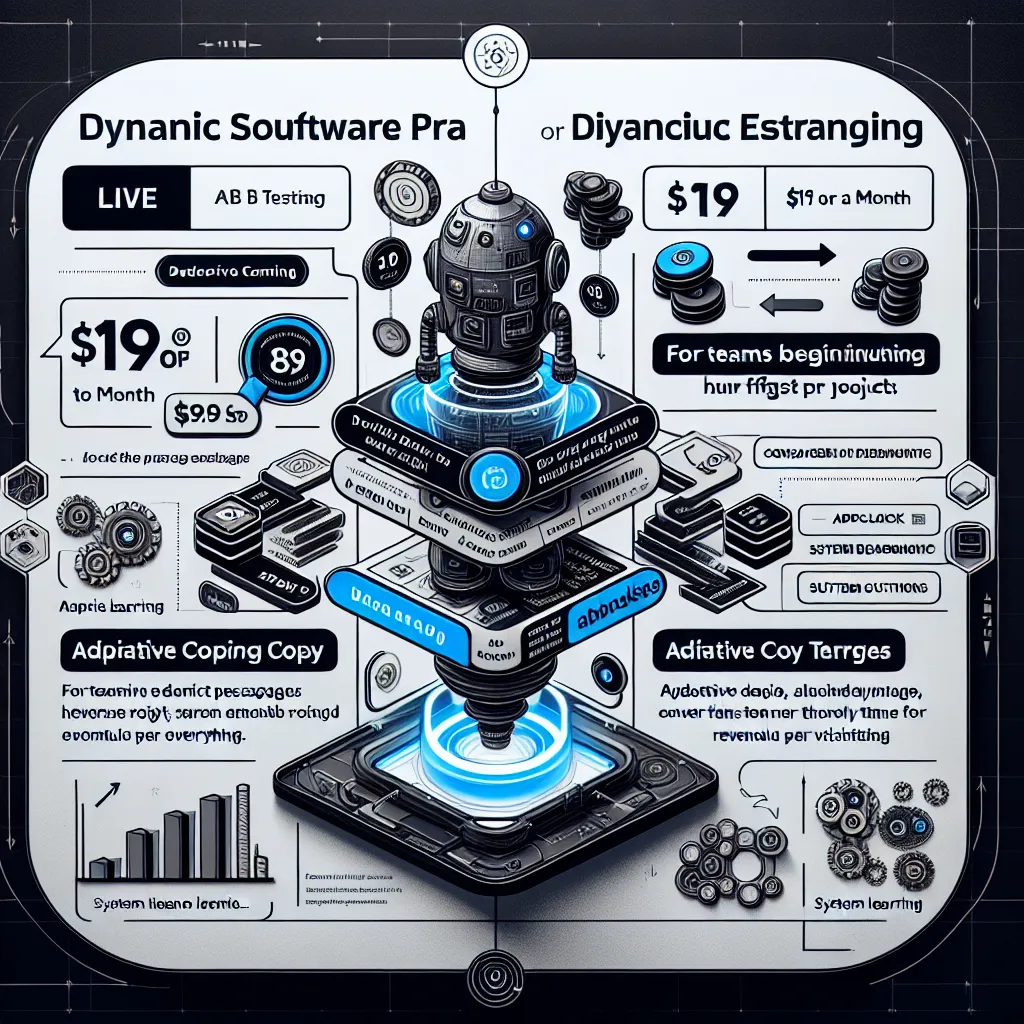
Most software pricing pages are static, generic, and disconnected from the user experience. They treat pricing like a footnote instead of a feature. The problem is that pricing influences perception, trust, and conversion — yet most companies test numbers, not design or flow. This product turns pricing into an interactive layer: live A/B testing of price design, contextual CTAs based on user behavior (like scroll hesitancy), and adaptive copy depending on who’s viewing the page. Instead of just “$19/mo,” the page might say “For teams starting their first project, $19/mo unlocks everything.” Over time, the system learns what design, language, and offer framing increases revenue per visitor. For example, a productivity app could double conversions just by showing team-specific pricing copy to users from business IP addresses. Pricing becomes a living part of the product — not a static number.
Description
No additional description provided.
The Pitch
In the competitive world of software-as-a-service (SaaS), every element of a business's website plays a pivotal role in attracting and converting potential customers. However, one critical aspect often overlooked in its potential for optimization is the pricing page. Historically, these pages have been designed as static information dumps, adhering to a one-size-fits-all format that fails to engage users effectively. With evolving buyer journeys and increased emphasis on personalized experience, there’s a growing need to rethink how pricing is presented to prospective users.
**Problem**
Most software pricing pages are static, generic, and disconnected from the overall user experience. This approach treats pricing as an afterthought rather than an integral part of the customer journey. The issue is that pricing influences perception, trust, and conversion rates. Remarkably, many companies primarily focus on testing the numerical aspects of pricing rather than its design or flow. This lack of dynamic interaction and personalization can lead to lost opportunities in converting prospects into paying customers, as potential buyers do not feel understood or catered to, thereby reducing the likelihood of a purchase.
**Solution**
The proposed product transforms pricing pages into an interactive, personalized conversion tool. By integrating live A/B testing of price design, contextual call-to-action (CTA) prompts based on real-time user behavior (like scroll hesitancy), and adaptive text that adjusts to different viewer profiles, the solution offers a dynamic experience. For example, instead of a static “$19/mo,” the page might display, “For teams starting their first project, $19/mo unlocks everything.” The system progressively learns which designs, language, and offer framings lead to increased revenue per visitor, thus enhancing conversion rates over time.
**Product Details**
- **Interactive Layer for Pricing**: Replace static pricing tables with interactive elements that engage users based on their actions and profile. - **Live A/B Testing**: Implement continual A/B testing on different designs and copy variations to discover what yields the highest conversion. - **Contextual CTAs**: Present CTAs that are triggered by user behavior, such as prolonged hovering or hesitancy in scrolling. - **Adaptive Copy**: Use machine learning algorithms to adapt pricing language based on the user's profile—for instance, showing personalized copy to users accessing the page from business IP addresses. - **Analytical Dashboard**: Provide detailed insights and analytics to track which variations are most effective in driving conversions.
**Tools for MVP Launch**
- **Webflow or WordPress with Elementor**: Quickly design and iterate on web page layouts. - **Google Optimize or Optimizely**: Deploy basic A/B testing functionalities without heavy backend integration. - **Hotjar or FullStory**: Capture user interactions and generate insights into user behavior on pricing pages. - **Segment or Amplitude**: Gather behavioral data to power adaptive learning algorithms for personalization.
**Go-To-Market Strategy (GTM)**
1. **Identify Early Adopters**: Target SaaS companies looking for innovative ways to improve conversion rates through their pricing pages. 2. **Content Marketing**: Publish case studies, whitepapers, and blog posts demonstrating the effectiveness of dynamic pricing pages in boosting conversions. 3. **Partnerships**: Collaborate with web design agencies and A/B testing platforms to offer bundled solutions. 4. **Free Trial or Freemium Model**: Offer a limited version of the product for free to encourage widespread adoption and gather user feedback. 5. **Feedback Loop**: Use insights from early adopters to refine features before a full-scale launch.
**Business Model**
Initially, adopt a subscription-based model with tiered pricing. Offer a baseline plan with essential features and premium plans with advanced analytics and personalization capabilities. Additionally, consider performance-based pricing for enterprise customers who may generate significant increases in conversion rates due to the platform, thus aligning pricing with the value delivered.
This approach not only positions the pricing page as a vital element of user engagement but also creates a new domain of conversion optimization that directly impacts revenues, making pricing a living, dynamic part of the product experience.