Dynamic Color-Changing Coatings Inspired by Nature
Every surface we interact with—cars, buildings, furniture—has been frozen in time since paint was invented. Colors fade, heat builds, and nothing ever adapts. The world around us changes by the second, yet our environments stay static. Now imagine a coating that behaves like an octopus’s skin: shifting tone, color, and reflectivity depending on weather, light, or mood. Scientists at UC San Diego just cracked how to mass-produce xanthommatin, the pigment behind cephalopod camouflage, using engineered bacteria at 1,000× efficiency. That makes scalable, nature-inspired color change finally possible. Picture an electric car that turns white to stay cool in summer and dark in winter to absorb heat—or a building façade that adjusts its color to cut energy costs by 30%. Paint stops being decoration and becomes a living, reactive layer between people and the planet.
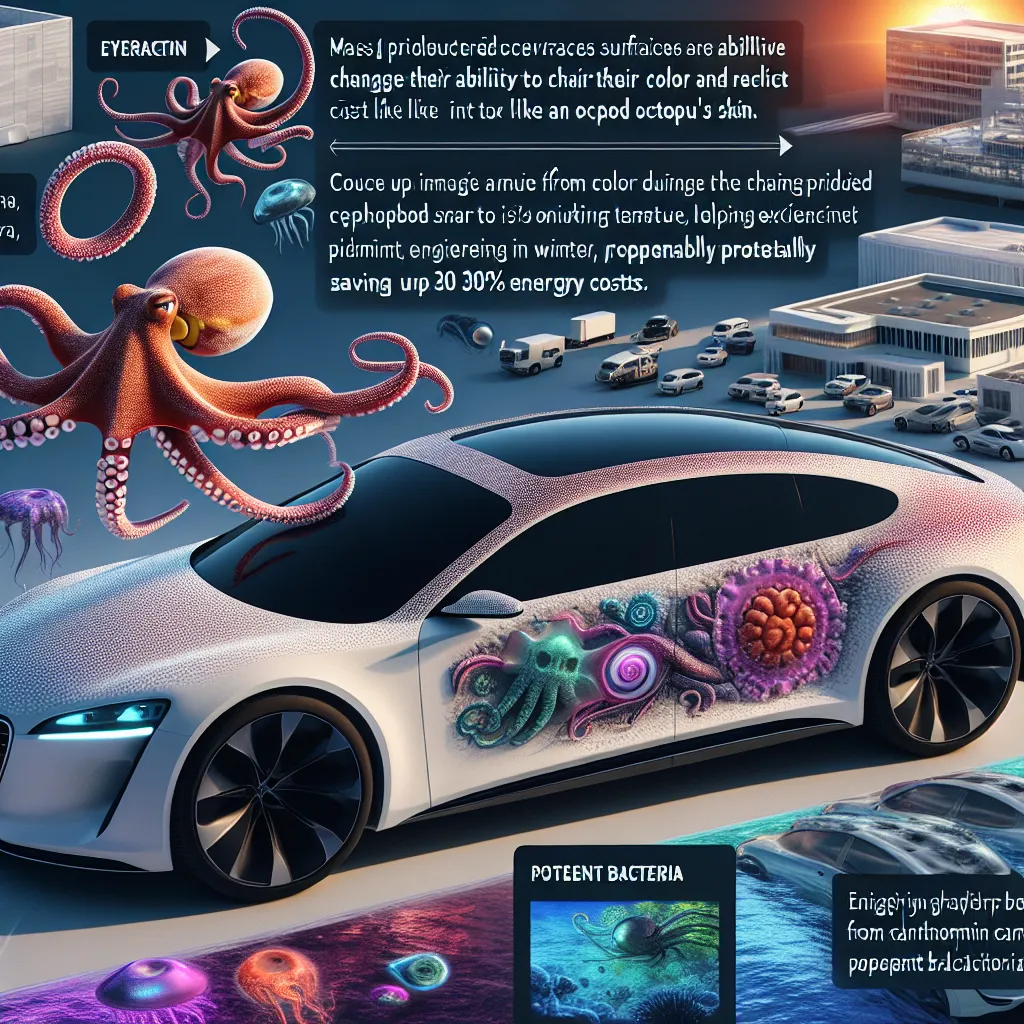
Description
No additional description provided.
The Pitch
In a world where innovation remains constant, one aspect that has remained largely unchanged is the static nature of the surfaces we interact with daily. Our surroundings, whether it's cars, buildings, or furniture, are often unchanging and non-responsive to the dynamic world we live in. The colors of paint fade, heat accumulates, and our environments remain constant and unadaptable.
Recent scientific breakthroughs at UC San Diego have challenged this norm. Researchers have discovered a way to mass-produce xanthommatin, the pigment responsible for the remarkable camouflage abilities of cephalopods, using engineered bacteria at a thousand times the efficiency previously known. This development opens the door to scalable, nature-inspired color-changing technology.
Imagine the possibilities: an electric vehicle that turns white in the summer to reflect sunlight and stay cool, and transforms to a darker shade in the winter to absorb heat. Envision building facades that adapt their hue to optimize energy use, potentially reducing costs by up to 30%. This innovation goes beyond mere aesthetics; it introduces a dynamic, interactive layer that bridges people and the environment.
For those inspired to bring this technology to market, the journey begins with developing a minimum viable product (MVP). The MVP would primarily target the automotive and construction industries, where the benefits of adaptive surface technology promise significant impact. By focusing on pilot projects with select car manufacturers and eco-conscious architecture firms, the MVP can demonstrate the tangible benefits of adaptive surface technology in real-world settings.
Tools such as prototyping software, 3D modeling, and advanced material testing facilities will be crucial for refining the product. Collaborations with experts in biomimicry and material science can ensure that the product is both cutting-edge and practical for mass production.
The go-to-market (GTM) strategy will focus on forming strategic partnerships with forward-thinking automotive companies and construction firms committed to sustainability. Attending industry-specific trade shows, engaging with green building coalitions, and leveraging digital marketing channels to reach eco-conscious consumers will be key components of the GTM approach.
The business model could be based on a B2B licensing strategy. Licensing the technology to manufacturers allows for widespread adoption without the need for an extensive production infrastructure on the part of the innovator. Additionally, the model could include a subscription service for regular updates and maintenance of the adaptive coating technology, ensuring it continues to perform at optimum levels.
In summary, this pioneering approach transforms static surfaces into dynamic, responsive entities, making our interaction with the world more sustainable and aligned with the ever-changing natural environment. With the right tools, strategic partnerships, and a robust business model, this innovation has the potential to redefine how we conceptualize and interact with the spaces around us.