Dynamic Camouflage: Bio-Engineered Adaptive Defense Technology
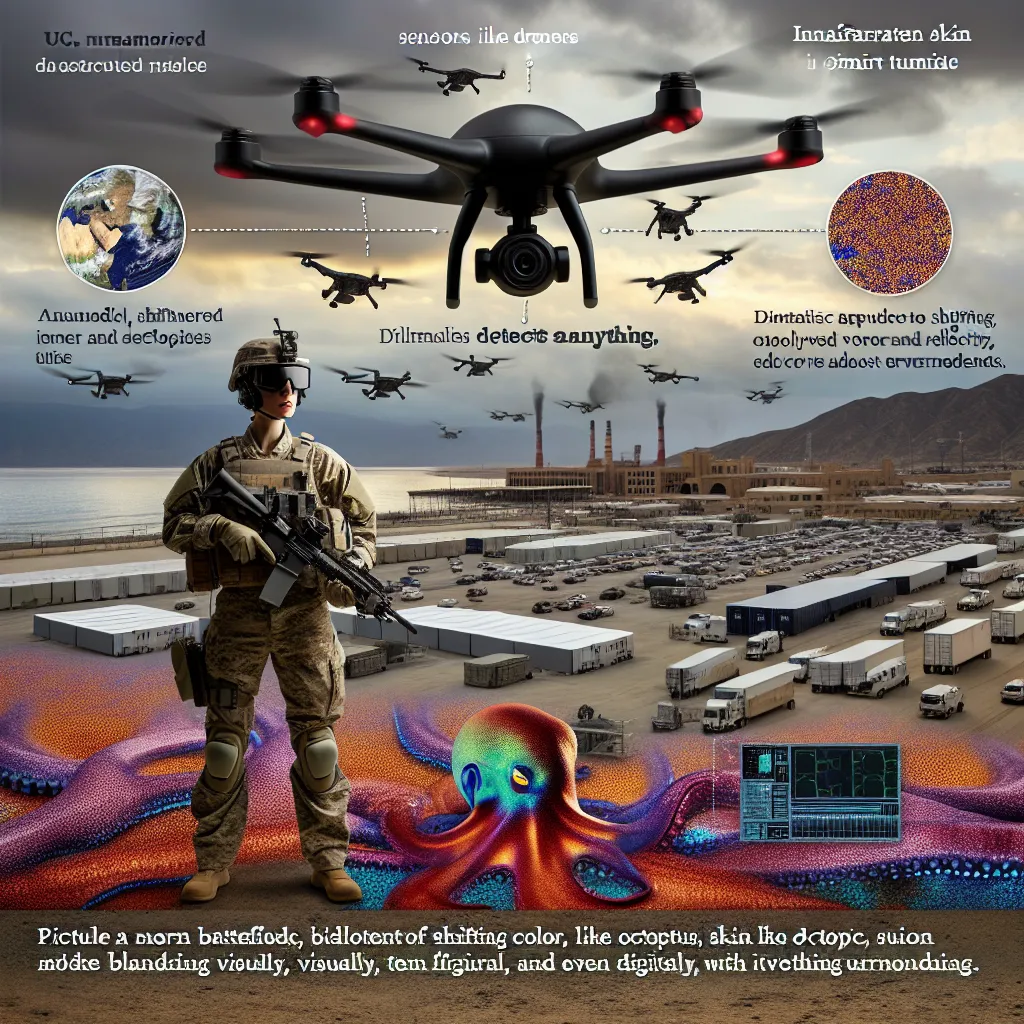
Modern warfare is fought by sensors, not soldiers. Heat signatures, drones, and infrared cameras can detect almost anything—except what can adapt. Today, camouflage is just patterned fabric, useless against multi-spectrum detection. Enter bio-engineered xanthommatin: a pigment that dynamically shifts color and reflectivity like octopus skin. UCSD’s breakthrough makes it manufacturable at scale, enabling smart materials that blend visually, thermally, and even digitally with their surroundings. Why now? The Department of Defense is already funding early research, recognizing that biological pigments might outperform synthetic coatings. Imagine a drone whose surface adjusts mid-flight to match the landscape or a soldier’s uniform that automatically mirrors its background across environments. Defense tech becomes organic—learning from biology instead of brute-forcing it.
Description
No additional description provided.
The Pitch
The landscape of modern warfare has evolved dramatically. Today's battles are increasingly determined by technological advancements rather than sheer manpower. Surveillance and detection technologies such as heat-signature tracking, drones, and infrared cameras are now at the forefront. However, they have also highlighted a critical shortcoming in traditional camouflage techniques, which rely heavily on static patterns and colors. Once effective, these are now easily penetrated by advanced multi-spectrum detection technologies.
At the heart of this challenge lies the need for an adaptive solution. The key problem is that traditional camouflage methods are primarily passive, relying on fixed patterns that are easily detected when viewed across various spectrums. As detection technologies become more sophisticated, there’s an urgent need for camouflage that can actively adapt to its environment.
Enter bio-engineered xanthommatin—a pigment inspired by the dynamic skin capabilities of the octopus. This groundbreaking material can change its color and reflectivity on-demand, allowing for seamless blending across visual, thermal, and digital spectrums. The recent breakthrough at UCSD has made it possible to produce this pigment at scale, paving the way for advanced applications in defense technology.
The potential applications of this technology are both groundbreaking and diverse. Imagine a drone whose surface can adapt mid-flight to mimic the landscape below, or a soldier’s uniform that dynamically alters its appearance in response to the surrounding environment. This would represent a significant leap forward in stealth technology and situational adaptation, reducing detection risk and enhancing operational effectiveness.
Given the promising nature of this innovation, the Department of Defense has already started funding preliminary research, acknowledging the advantages of biological pigments over synthetic coatings. The recognition and financial support from such a prestigious entity is both validation of the technology's potential and a catalyst for its development.
For entrepreneurs and inventors interested in bringing this technology to market, here’s a roadmap to developing an MVP (Minimum Viable Product) and strategizing its entry:
1. **Solution Development**: - **Research and Development**: Partner with academic institutions like UCSD to refine the production process and tailor the properties of bio-engineered xanthommatin for specific defense applications. - **Prototype Design**: Develop prototypes of various adaptive materials using xanthommatin, focusing on high-potential applications such as drones and military uniforms.
2. **Tools for MVP Launch**: - **Material Science Software**: Utilize platforms such as Ansys or COMSOL Multiphysics for modeling and simulations to optimize material performance. - **Prototyping Labs**: Leverage facilities at academic centers or startup incubators to accelerate prototype development.
3. **Go-To-Market Strategy (GTM)**: - **Strategic Partnerships**: Collaborate with defense contractors and technology companies that can integrate adaptive materials into existing platforms. - **Initial Markets**: Target initial product launches within defense sectors that are open to innovation and have a pressing need for advanced stealth technology.
4. **Business Model**: - **B2B Sales**: Focus on selling the technology directly to defense agencies and contractors. - **Licensing Agreements**: Consider licensing the technology to established manufacturers in the defense and aerospace sectors to spur wider adoption.
By fusing cutting-edge biological research with the pressing needs of modern defense, the potential of bio-engineered xanthommatin is vast. This innovation not only represents a new horizon in camouflage technology but also sets a precedent for organic solutions in advanced technology sectors. As we look to the future, learning from the intricacies of nature can lead to advancements that were once deemed impossible, positioning this technology as a pivotal force in modern defense strategies.