Dynamic AI Memory Layer for Continuous Learning
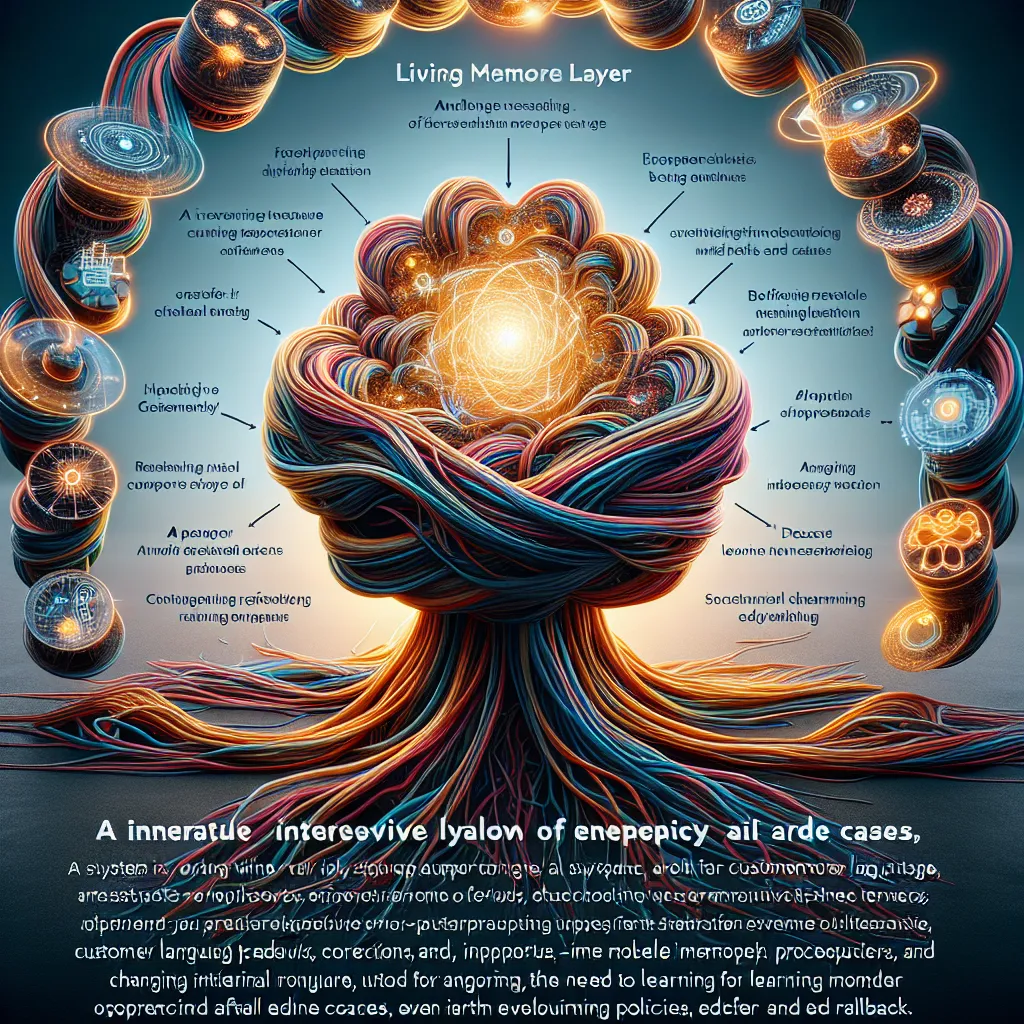
Most enterprise AI systems quietly rot the moment they’re deployed. Customer language shifts, internal processes evolve, edge cases stack up — and the model slowly drifts out of relevance until someone budgets a painful retraining cycle. This startup builds a “living memory layer” that sits between production AI systems and real-world usage, capturing feedback, corrections, and outcomes in real time and deciding what should be learned, what should be ignored, and what should decay. Instead of retraining models, it continuously updates a structured, auditable learning substrate that models query at inference time. The timing works because enterprises now run dozens of AI agents in production, but none have a principled way to evolve safely. Imagine a support AI that learns new refund policies the same day they change — without retraining, without hallucinating, and with a full rollback history if it gets it wrong.
Description
No additional description provided.
The Pitch
The rapid evolution of AI technology has enabled enterprises to deploy AI systems across various business functions. These systems provide immense value by automating processes, providing insights, and enhancing decision-making. However, a significant challenge arises once these systems are deployed. They often begin to deteriorate as customer language changes, internal processes adapt, and new edge cases emerge. The AI models, in their static nature, lose relevance over time, leading to decreased performance until a costly and complex retraining cycle is initiated.
### Problem Statement
Most enterprise AI systems suffer from model drift after deployment. This drift occurs because:
- Customer language and preferences change over time. - Internal processes and policies are frequently updated. - Accumulation of edge cases that the model wasn't initially trained on.
These factors contribute to the AI system's declining performance, resulting in inaccurate predictions, poor user experience, and often significant business impacts. Traditional solutions focus on periodic retraining, which is resource-intensive and often too slow to keep up with real-world changes.
### Solution Overview
Our startup addresses this issue by introducing a living memory layer for AI systems. This layer sits between the production AI model and its real-world usage environment, capturing real-time feedback, corrections, and outcomes. It intelligently decides which information should be reinforced within the model, what can be safely ignored, and what outdated information should decay. This dynamic learning process ensures that models remain relevant without the need for full retraining cycles.
### Product Details
The living memory layer offers the following key features:
- **Real-Time Feedback Capture**: Continuously gathers data, corrections, and outcomes from interactions involving the AI system. - **Dynamic Learning Substrate**: Utilizes a structured and auditable framework to update the model's knowledge based on real-world changes in processes and language. - **Inference Time Integration**: Models query this layer during each inference, accessing the most up-to-date knowledge and adjustments without requiring a full retrain. - **Rollback Capability**: Maintains a full change history, enabling rollback to previous states in case of errors or misadjustments.
### Tools for MVP Launch
The following tools and technologies can be utilized to develop and launch this solution as a Minimum Viable Product (MVP):
- **Data Collection**: Use event streaming platforms like Kafka or cloud services like AWS Kinesis to capture real-time feedback. - **Machine Learning Frameworks**: Implement adaptive learning algorithms using TensorFlow or PyTorch. - **Data Storage and Management**: Employ scalable databases such as AWS DynamoDB or Google BigQuery to maintain the structured learning substrate. - **APIs**: Develop RESTful APIs to facilitate seamless integration between the living memory layer and existing AI systems.
### Go-To-Market Strategy
1. **Identify Target Customers**: Focus initially on large enterprises with multiple AI agents in production, such as financial services, healthcare, and retail sectors. 2. **Partnerships and Alliances**: Collaborate with established AI platform providers to co-market the solution as an enhancement to their existing offerings. 3. **Educational Campaigns**: Conduct webinars, workshops, and publish whitepapers to raise awareness about the importance of continuous learning in AI models. 4. **Pilot Programs**: Offer pilot implementations to showcase the benefits and value proposition through tangible results.
### Business Model
Our business model revolves around a subscription-based platform as a service (PaaS) structure. Key components include:
- **Subscription Tiers**: Tiered pricing based on the number of AI agents and data volume processed. - **Professional Services**: Additional customization and integration support at an hourly or project-based rate. - **Performance Success Fees**: Bonuses or fees based on the measurable improvements in AI system performance and business outcomes.
By tackling the pervasive issue of model drift with a dynamic learning solution, our startup stands to revolutionize how enterprises maintain the relevance and effectiveness of their deployed AI systems.