Drones with Laser-Based Communication and Scanning
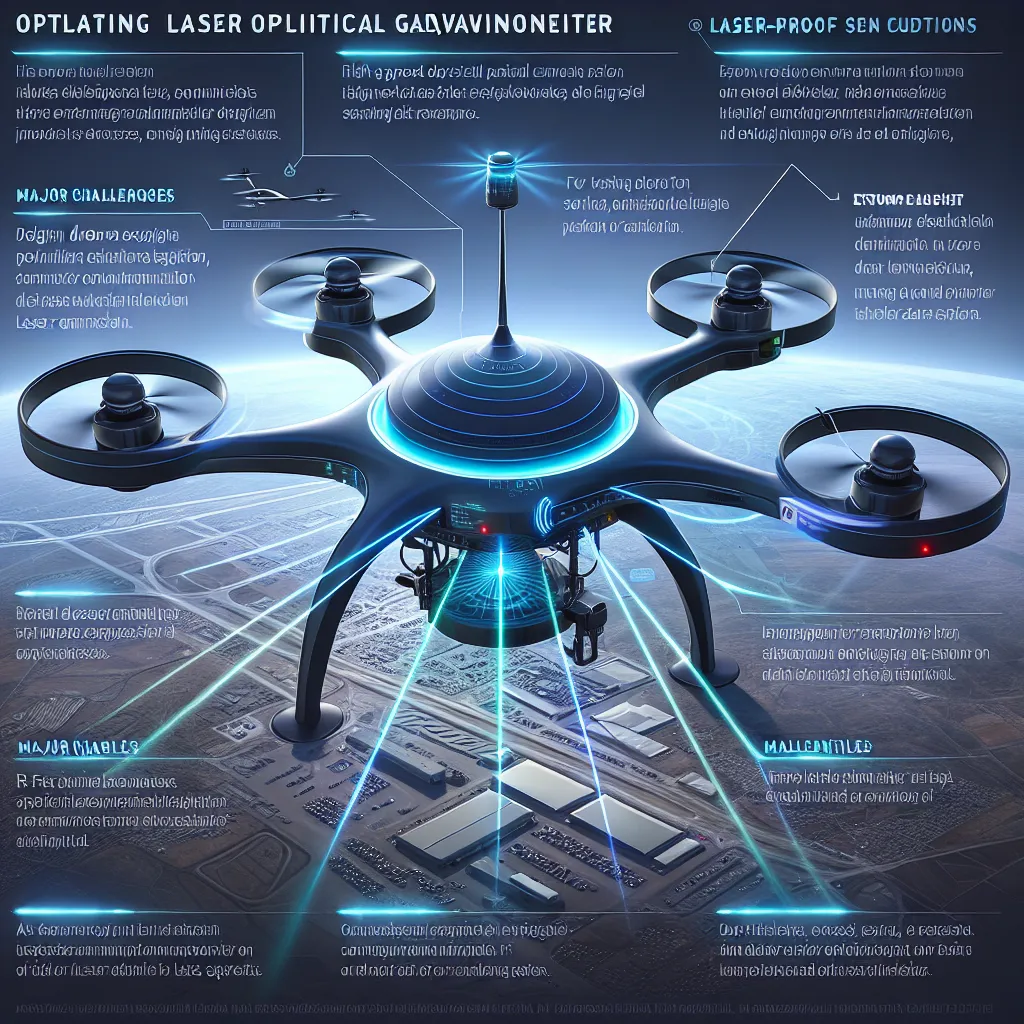
Traditional drone communication and scanning systems often rely on RF signals or fiber optics, both of which come with limitations — RF can be jammed or intercepted, and fiber optics require physical tethering, limiting mobility. A novel alternative is mounting a rotating laser galvanometer to a drone, enabling high-speed optical communication or 3D scanning without the vulnerabilities of RF or the constraints of cables. This setup allows for precise, secure, and jam-resistant data transmission — ideal for environments where signal integrity is critical, like military zones or disaster sites. The only major challenge is extreme dust or smoke interfering with the laser path, but in clear conditions, the benefits are unmatched. Think of a drone that can scan complex terrains or beam data across long distances with pinpoint accuracy, unaffected by crowded radio spectrums. It’s a futuristic but feasible leap in airborne comms and sensing.
Description
No additional description provided.
The Pitch
In recent years, advancements in drone technology have catalyzed numerous innovations, yet traditional communication and scanning systems predominantly rely on RF signals or fiber optics. These technologies, while effective, have notable limitations. RF signals are susceptible to jamming or interception, posing significant security risks, especially in sensitive environments. Fiber optics, on the other hand, require physical connections, restricting the mobility of drones and constraining their operational range.
Problem Identification
The primary issues with existing drone communication and scanning systems are threefold: vulnerability to RF jamming and interception, limited mobility due to tethering, and challenges in maintaining signal integrity in environments with physical obstructions. In sectors like military operations or disaster management, where communication reliability and security are paramount, these limitations can hinder effective deployment and operations.
Proposed Solution
A novel solution to these challenges is the integration of a rotating laser galvanometer mounted on drones. This cutting-edge approach enables high-speed optical communication and 3D scanning capabilities, free from the vulnerabilities and constraints of RF signals and physical cables. By leveraging laser technology, drones can achieve precise, secure, and jam-resistant data transmission, enhancing their effectiveness in environments where traditional systems fall short.
Product Details
The proposed system involves equipping drones with a rotating laser galvanometer, enabling them to perform in conditions requiring exceptional signal integrity and transmission security. Key features include:
1. **High-Speed Optical Communication**: Utilizing laser beams, the system ensures robust and rapid data transmission, immune to common RF disruptions. 2. **3D Scanning Capabilities**: The rotating galvanometer allows for comprehensive terrain mapping and object scanning, crucial for applications in complex environments. 3. **Jam-Resistant and Secure**: Optical communication reduces the risk of interception, providing a secure channel for data transfer. 4. **Unrestricted Mobility**: Unlike fiber optics, the laser system offers wireless operation, enhancing drone flexibility and operational range.
Implementation Tools for MVP
To swiftly bring this innovation to market as a Minimum Viable Product:
1. **Laser Components**: Procure high-quality photon sources and galvanometer systems. 2. **Drone Platforms**: Utilize existing drone models that can withstand additional payloads for testing and development. 3. **Development Software**: Leverage software for optical path simulation and data analysis. 4. **Rapid Prototyping Kits**: Use 3D printing and assembling kits for prototyping the mounting mechanisms.
Go-To-Market Strategy
For market entry, focus on industries where communication integrity and advanced scanning capabilities offer significant benefits:
1. **Target Sectors**: Military and defense, disaster response teams, and remote surveying companies. 2. **Strategic Partnerships**: Collaborate with drone manufacturers and optical technology firms to enhance product integration and credibility. 3. **Pilot Programs**: Initiate trials with potential clients to demonstrate the system's capability and gather performance feedback. 4. **Marketing Narrative**: Highlight the security, efficiency, and innovative nature of the system, centering around the unique benefits over traditional technologies.
Business Model
Revenue can be generated through a hybrid model, combining direct sales with subscription-based services:
1. **Product Sales**: Direct sales of the drone system to commercial and governmental entities. 2. **Maintenance Contracts**: Offer post-sales support and scheduled servicing to ensure system performance. 3. **Data Services**: Provide data analytic services for scanned information, creating an additional revenue stream. 4. **Licensing**: Explore opportunities to license technology for use in other related applications.
Conclusion
This innovative approach to drone communication and scanning presents a transformative opportunity, addressing critical flaws in current systems. By capitalizing on the benefits of laser technology, the solution promises to redefine standards in secure and reliable airborne operations, paving the way for a new era in drone capabilities.