Drones Deliver Emergency Aid in Critical Situations
Every minute counts in emergency medical situations, but first responders can’t always reach remote or blocked-access sites fast enough. Building on the popularity of enterprise-ready drones like DJI’s Matrice 400 this startup deploys a fleet of high-speed UAVs equipped with AEDs, bleeding-control kits, and epinephrine injectors. Users trigger a dispatch via app, the drone navigates autonomously using 5G-LiDAR, hovers, and drops the kit accurately within feet. EMTs or bystanders receive live instructions via video feed. Similar to drone delivery trials, this concept adapts drone logistics to critical healthcare needs, saving lives in ski resorts, marathons, or congested urban areas—for example, delivering an AED to a collapsed runner before arrival of the ambulance.
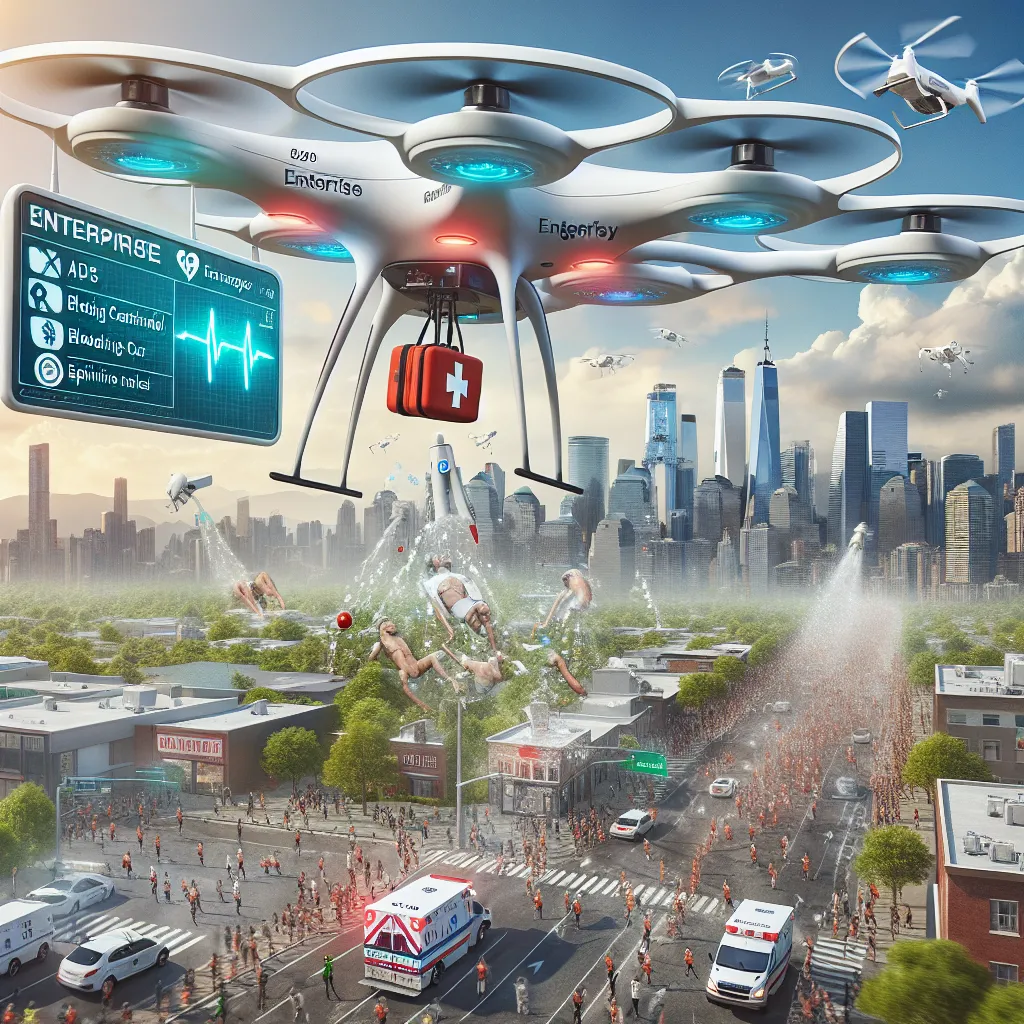
Description
No additional description provided.
The Pitch
In emergency medical situations, every second can mean the difference between life and death. Unfortunately, first responders face significant challenges when trying to reach remote or blocked-access areas in time. There's a critical need for faster and more efficient emergency response solutions that can cover these hard-to-reach locations.
Imagine a scenario where a runner collapses in a crowded marathon, or a skier suffers a cardiac arrest on a remote slope. The time it takes for paramedics to arrive could be too late. This is where the concept of using drones, specifically tailored for medical emergencies, can provide a transformative solution.
This initiative focuses on deploying a fleet of high-speed UAVs equipped with essential medical supplies, such as Automated External Defibrillators AEDs, bleeding-control kits, and epinephrine injectors. Users can trigger a dispatch using a mobile application, prompting a drone to autonomously navigate using advanced technologies like 5G-LiDAR. Once the drone reaches its target location, it hovers and accurately drops the medical kit within feet of the emergency. This allows Emergency Medical Technicians EMTs or bystanders to begin immediate life-saving interventions, guided by live video instructions from trained professionals.
Given the advancements in drone technology, particularly with enterprise-ready models such as the DJI Matrice 400, this application adapts logistical capabilities of existing drones for critical healthcare purposes. The primary aim is to bridge the gap between the onset of a medical emergency and the arrival of healthcare professionals, thereby improving survival rates in scenarios such as ski resorts, marathons, or densely packed urban environments.
For those interested in bringing this concept to life, there are several key aspects to consider:
**Product Details and Tools for Launching an MVP** 1. **Drone Technology**: Leverage enterprise-grade drones with payload capabilities for carrying medical equipment. 2. **Autonomous Navigation**: Incorporate 5G-LiDAR and GPS technologies to ensure precise navigation and drop-off. 3. **Mobile Application**: Develop a user-friendly app for dispatch requests and provide real-time video feed and instructions. 4. **Regulatory Compliance**: Ensure adherence to aviation and healthcare regulations for drone operations.
**GTM Strategy** - **Partnerships**: Form partnerships with emergency medical services, local governments, and healthcare providers. - **Pilot Programs**: Initiate pilot tests in strategic locations, such as high-traffic public events or isolated communities, to demonstrate the system’s effectiveness. - **Awareness Campaigns**: Launch campaigns to educate the public and stakeholders on the benefits and operation of the drone system. - **Feedback Loop**: Collect and integrate user and stakeholder feedback to improve service delivery and functionality.
**Business Model** - **B2G/B2B Sales**: Offer services to government bodies and businesses responsible for public safety and emergency response. - **Subscription Model**: Implement a subscription model for continuous service access demonstrating clear value over time. - **Service Customization**: Provide tailor-made solutions based on location-specific needs and emergency response requirements.
By addressing critical response time issues in medical emergencies, this drone-based solution holds the potential to significantly improve outcomes and save lives. With strategic planning and deployment, this innovation could revolutionize how urgent medical aid is delivered, establishing a new standard in emergency response.