Drone Delivery Neighborhood Impact Platform
A platform that analyzes proposed drone delivery routes to predict their impact on residential neighborhoods, addressing issues like noise, privacy, and community concerns before launching operations. It helps companies identify optimal flight paths and generate reports to facilitate community discussions and approvals, ultimately reducing potential disruptions.
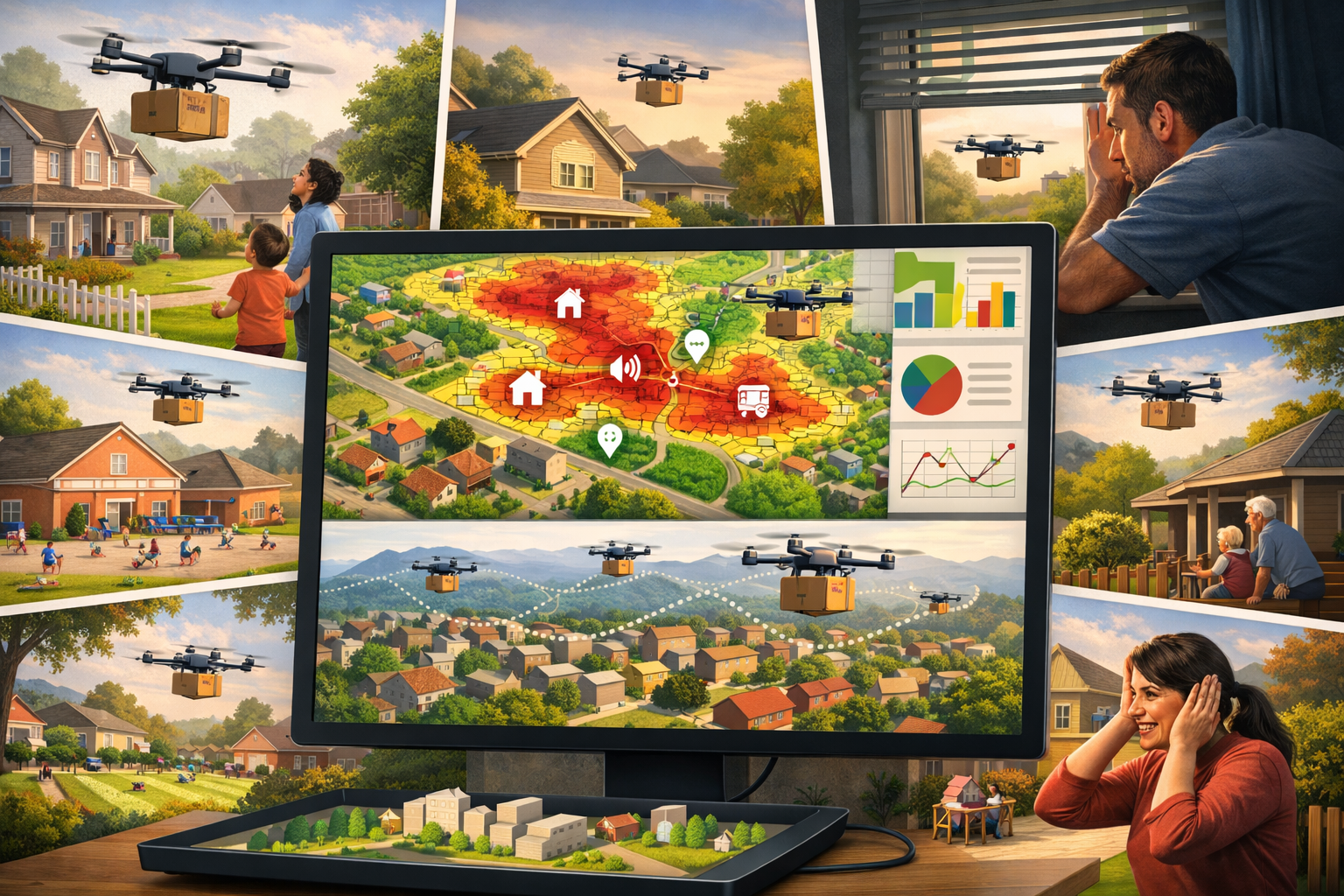
Description
As drone delivery expands into residential neighborhoods, companies face a growing challenge: figuring out where their drones can operate without creating noise complaints, privacy concerns, or community opposition. Traditional flight-planning software focuses on safety and efficiency, but rarely considers how repeated drone flights affect the people living underneath them. Imagine a platform that predicts the neighborhood impact of drone delivery operations before companies launch them. By analyzing proposed flight routes, residential density, schools, noise levels, and delivery frequency, the platform could identify potential problem areas and recommend quieter routes, better operating hours, and more suitable launch locations. A drone delivery company planning to enter a new city could compare multiple operating scenarios, estimate which neighborhoods are most likely to experience disruption, and generate reports to support community discussions and local approvals. As companies like Uber and Zipline bring drone delivery to more communities, operators will need better ways to expand without creating friction with the people they're flying over.
The Pitch
In an era where convenience often clashes with community sentiment, envisioning a platform that predicts the social ramifications of drone deliveries opens new avenues for harmony between innovation and residential comfort. This concept fundamentally reshapes how drone delivery companies engage with neighborhoods. By leveraging data analytics to forecast the local impact of drone activities, the platform empowers companies to sidestep potential conflicts before they arise, fostering goodwill and smoother integrations into urban landscapes.
Communities are growing more vigilant about noise and privacy, and as drone technology advances, so does the need for companies to be socially responsible. Unlike traditional flight-planning tools that emphasize logistics over human experience, this platform acknowledges the human element, offering valuable insights that can mitigate complaints and foster positive relationships. When companies have the ability to visualize which areas may react negatively to drone traffic, they can make informed decisions that enhance their reputation and client satisfaction, ultimately preserving their operational viability in increasingly crowded skies.
Moreover, this platform could transform local regulatory interactions. It addresses the gap between emergent technology and existing community standards, serving as a bridge that encourages responsible expansion. By generating detailed reports that articulate the anticipated community experience, drone delivery companies empower local leaders with data-driven arguments that promote understanding and acceptance. This proactive approach not only smooths the path for regulatory approvals but also helps to establish the drone industry as a thoughtful participant in urban development conversations.
As the demand for faster delivery options continues to rise, those who embrace a framework that values community input will stand apart from competitors that overlook the societal context of their technologies. By innovating through a lens of empathy rather than solely efficiency, this platform presents a compelling case for a future where technological advancement aligns seamlessly with the lived experiences of urban residents. In a world rapidly growing accustomed to noise and intrusion, the ability to foresee and mitigate community concerns is not just advantageous; it’s essential for sustainable growth in the age of drone delivery.