Domain-Specific AI Search Engines for Experts
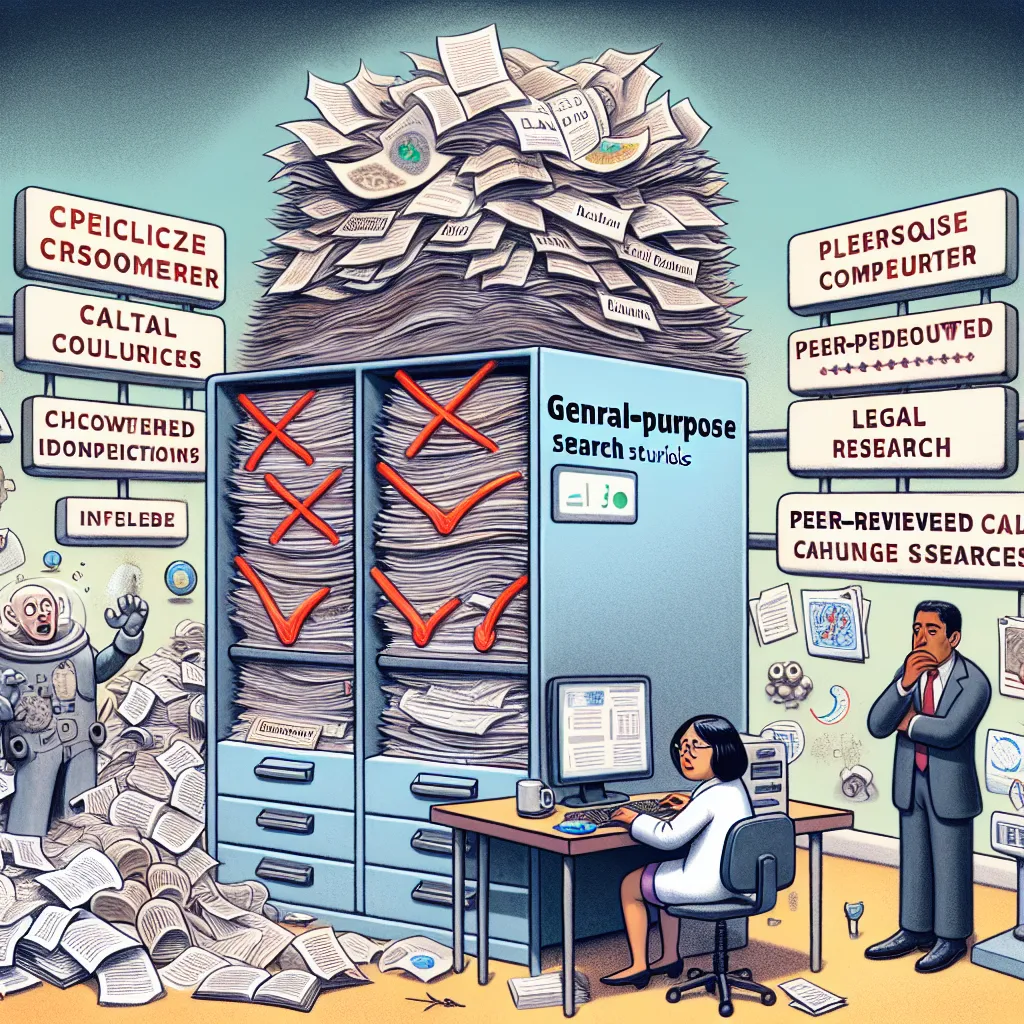
Traditional search engines fail for deep technical queries — researchers, scientists, and lawyers waste hours sifting through irrelevant data. Problem: General-purpose AI search models lack domain context and accuracy. Solution: AI-powered domain-specific search engines — for areas like climate science, biotech, legal research — trained on curated, high-quality datasets. Why Now: Retrieval-Augmented Generation (RAG) pipelines can now build focused, hyper-accurate answer engines cost-effectively. Example: A climate researcher could search for “peer-reviewed carbon capture studies published after 2022” and receive instant, high-precision summaries instead of endless PDFs.
Description
No additional description provided.
The Pitch
Understanding the challenges faced by professionals in specialized fields often centers around one common barrier: access to precise information. Traditional search engines, while powerful, frequently fall short when handling deep technical queries. This challenge is notably prevalent for researchers, scientists, and legal professionals who regularly sift through an overwhelming amount of irrelevant data to find the information they need.
The core issue lies within the lack of domain-specific context and accuracy in general-purpose AI search models. These models often operate on vast datasets without the granular, targeted knowledge necessary to cater to specialized fields. Consequently, experts spend excessive time and resources navigating through expansive data, detracting from their primary focus and productivity.
To address this issue, the solution proposed is the development of AI-powered, domain-specific search engines. These specialized engines would be tailored for distinct fields such as climate science, biotechnology, and legal research, leveraging curated and high-quality datasets. The emergence of Retrieval-Augmented Generation (RAG) pipelines provides the technology needed to build these hyper-accurate answer engines, offering relevant results swiftly and efficiently.
The value of such an innovation can be exemplified through the needs of a climate researcher. If this researcher seeks peer-reviewed carbon capture studies published after 2022, a domain-specific search engine can provide precise summaries rapidly, eliminating the tedious process of combing through countless documents. This capability not only saves time but enhances the quality of research by delivering high-precision data directly to the expert.
Building an MVP for this AI-powered search engine involves some key steps. Start by identifying a specific domain to target initially—climate science, for instance. Collect a dataset of high-quality, peer-reviewed articles and studies within this field. Use existing AI tools and platforms that support the development of RAG pipelines and machine learning models, such as TensorFlow or PyTorch, to build and train the search model on this dataset.
Next, assemble a team consisting of domain experts, data scientists, and machine learning engineers to ensure the model's accuracy and relevance. Create a user-friendly interface through which users can input their queries and receive tailored results, possibly incorporating visualization tools that enhance data interaction.
The GTM (Go-To-Market) strategy should emphasize collaborations with academic institutions, research firms, and legal entities that would benefit significantly from enhanced search capabilities. Consider offering a freemium model to stimulate initial interest, providing basic search features for free while offering advanced functionalities under a subscription tier. This approach not only attracts a broad user base but also aligns with the goal of educational empowerment.
The business model could revolve around subscription-based access, with tiered pricing based on the number of searches, data volume, or additional analytical features. Strategic partnerships with publishers and data providers can further enhance the model's value proposition by ensuring access to the latest and most comprehensive data.
To launch and scale effectively, focus on iterative development and audience feedback to refine the product continuously. As the engine proves successful within its initial domain, explore expansions into other specialized fields, leveraging the scalable nature of the underlying AI technology.
This strategic approach not only promises to revolutionize how specialized information is accessed but also establishes a dynamic framework for ongoing innovation across various knowledge-intensive sectors.